Adventure Sports Safety: Skydiving, Bungee Jumping,
Adventure sports offer an extraordinary rush, but they come with real risks. This guide covers essential safety considerations for skydiving, bungee jumping, and other extreme activities popular with young adults.

Adventure Sports Safety: Skydiving, Bungee Jumping,
“Adventure sports offer an extraordinary rush, but they come with real risks. This guide covers essential safety considerations for skydiving, bungee jumping, and other extreme activities popular with young adults.”
The Appeal and the Risk
Adventure sports occupy a unique place in young adult culture. The desire to push boundaries, experience adrenaline, and collect moments that feel genuinely alive is deeply human. Skydiving, bungee jumping, white-water rafting, paragliding, base jumping, free climbing, and similar activities have grown enormously in global popularity over the past two decades, driven partly by bucket-list culture and social media.
This growth in participation has been accompanied by a parallel growth in the professionalism of the industry, but not uniformly. The safety standards, regulatory oversight, and operator quality vary enormously between countries, regions, and individual operators. For young adults planning their first or second extreme sports experience, understanding how to evaluate the safety of a provider and how to prepare your own body and mind is genuinely important knowledge.
This article covers the major adventure sports popular with young adults, the specific risks associated with each, and practical guidance for making safe choices.
Understanding Risk in Adventure Sports
All adventure sports involve inherent risk. No regulatory framework, equipment check, or instructor briefing eliminates risk entirely, and it is important to go in with honest expectations rather than reassuring yourself that because something is commercially available, it must be safe.
Risk in adventure sports falls into several categories. Operator risk relates to the competence, training, and professionalism of the company or individual running the activity. Equipment risk relates to the maintenance, quality, and correct use of gear. Environmental risk relates to weather, terrain, and conditions. Human risk relates to the participant's physical health, experience, and decision-making. Understanding which of these risks you can influence and which you cannot is the foundation of good adventure sports decision-making.
Skydiving
Tandem skydiving, where a novice jumper is attached to an experienced instructor for a freefall from altitude, is one of the most accessible forms of skydiving globally. Commercial tandem operations exist on every inhabited continent. Fatality rates for tandem skydiving are very low in well-regulated markets, typically around one fatality per 500,000 jumps in countries with strong regulatory oversight such as the United Kingdom, United States, and Australia.
However, skydiving fatalities do occur, and the majority are associated with equipment malfunction, human error, and, critically, operators who do not adhere to safety standards.
What to Check Before Booking a Skydive
Verify that your operator is accredited by the national parachuting association for the country where the jump is taking place. In the United Kingdom, this is the British Parachute Association. In the United States, it is the United States Parachute Association. In Australia, it is the Australian Parachute Federation. These bodies set and enforce safety standards, require regular equipment inspections, and maintain records of instructor qualifications.
Ask specifically about your instructor's jump count and tandem rating. A qualified tandem instructor will have completed several hundred solo jumps before tandem certification and should hold a current rating. Ask about the age and maintenance record of the parachute equipment. Parachutes are highly reliable when properly maintained, but they require regular packing by qualified riggers and periodic equipment inspections.
Be cautious of operators offering unusually low prices or minimal briefing times. A proper tandem briefing should take thirty minutes to an hour and cover ground training, exit position, freefall body position, altitude awareness, and landing procedures. A briefing that takes ten minutes and covers almost nothing is a warning sign.
Medical Considerations for Skydiving
Most healthy young adults are medically suitable for tandem skydiving, but certain conditions warrant consideration. These include heart conditions, epilepsy, recent surgery, back and neck injuries, and severe anxiety disorders. If you have any of these conditions, consult your doctor before booking. Most reputable operators will ask you to complete a medical declaration and may decline to take you if you disclose a contraindicated condition.
Bungee Jumping
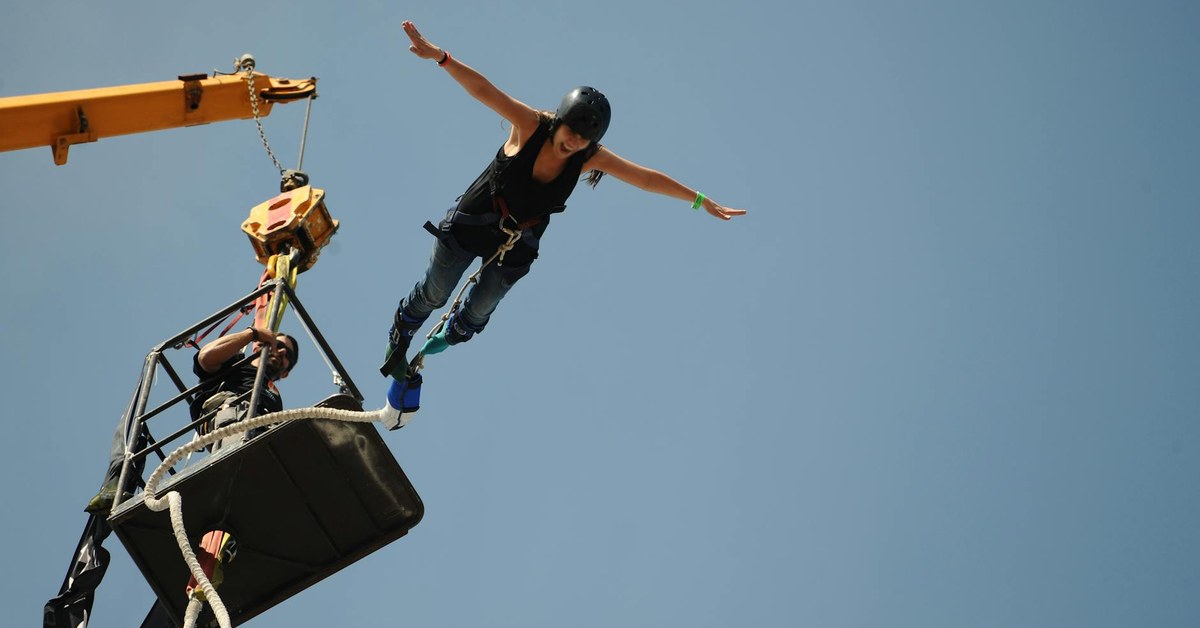
Commercial bungee jumping operations are found across the world, from the classic Kawarau Gorge in New Zealand to purpose-built towers in cities across Europe and Asia. Bungee jumping is generally considered safe in well-regulated operations, but the margin for error is less forgiving than many people appreciate.
The most serious injuries in bungee jumping involve eye injuries from the sudden pressure changes during rebound, neck and spinal injuries from poor form or miscalculated cord length, and cord failures in poorly maintained operations. Fatalities are rare but have occurred in operations where cord weight ratings were miscalculated or where equipment was inadequately inspected.
Evaluating a Bungee Operator
Ask about the operator's inspection and certification process. In countries with strong adventure tourism regulation, such as New Zealand and Switzerland, commercial operators are subject to regular independent audits. In countries with weaker regulatory frameworks, you will need to do more of your own due diligence.
Check that weight limits are taken seriously. A reputable bungee operator will weigh you accurately on site, not simply take your word for it, and will select a cord rated for your weight with an appropriate safety margin. Ask how recently the cord was last inspected and replaced. Most high-quality operators have clear policies on this.
Be sceptical of very cheap bungee operations in destinations with limited regulatory oversight. Adventure tourism in some popular travel destinations operates with minimal external oversight, and price is often a reasonable proxy for the level of investment in safety.
White-Water Rafting
White-water rafting is graded on a scale from Class I (calm, easy) to Class VI (extremely dangerous and typically considered unraftable commercially). Commercially operated rafting on Class III and IV rivers is popular globally and, with competent guides and proper equipment, is relatively safe for healthy young adults.
Key safety questions for rafting operators include the guide-to-guest ratio, the quality and condition of personal flotation devices and helmets, whether guests receive a pre-trip safety briefing covering how to swim rapids safely and self-rescue techniques, and the operator's emergency response plan and first aid provision. Check that guides hold current swift-water rescue certifications.
Environmental risk is particularly relevant in white-water rafting. River conditions change dramatically with rainfall and season. Reputable operators monitor conditions and will cancel or modify trips when conditions exceed safe parameters. If an operator is pressuring you to raft in conditions that seem dangerous or that their own guides appear uncomfortable with, trust your instincts.
Paragliding and Hang Gliding
Tandem paragliding, where a novice flies attached to a certified pilot, is widely available in mountain destinations across Europe, Asia, and the Americas. It is a remarkable experience with a strong safety record in commercial operations using certified pilots and well-maintained gliders.
Verify your pilot's certification with the relevant national authority. In the United Kingdom, the British Hang Gliding and Paragliding Association certifies pilots and operators. Check that the glider has been recently inspected, and ask about the pilot's total flight hours and experience with the specific site where you will be flying. Site knowledge matters significantly in paragliding, where local weather patterns, thermals, and topography are crucial variables.
Weather is the dominant safety variable in paragliding. Competent pilots will not fly in unsuitable conditions regardless of commercial pressure. Be wary of any operator whose pilots seem reluctant to ground flights even in borderline conditions.
Via Ferrata, Rock Climbing, and Mountain Activities
Via ferrata routes, which use fixed iron rungs and cables to allow relatively inexperienced climbers to navigate mountain terrain, have grown dramatically in popularity across European alpine regions and beyond. With proper equipment, including a via ferrata-specific harness and energy-absorbing lanyard, and basic instruction, they are accessible to fit young adults without climbing experience.
However, altitude, weather, and physical condition all present real hazards. Route grades vary significantly, and routes graded D (difficult) or ED (extremely difficult) require good fitness, head for heights, and ideally prior experience on easier routes. If hiring equipment, verify that the lanyards include an energy absorber, as older-style lanyards without this feature can cause serious injury in a fall. Do not attempt via ferrata in wet or icy conditions, when routes are significantly more dangerous.
General Principles for Adventure Sports Safety
Across all adventure sports, several principles apply consistently.
Research your operator independently and look for reviews from multiple sources rather than relying solely on the operator's own website. Look for reviews that mention safety briefings, equipment condition, and the professionalism of staff. Tripadvisor, Google Reviews, and activity-specific forums often surface important information.
Never let social pressure override safety concerns. It is very common for young adults in groups to feel pressure to participate even when they have reservations. Declining an activity that does not feel safe, or that you are simply not ready for, is always the right call. The friend who mocks you for declining a sketchy bungee jump in a poorly regulated market will not be the one dealing with the consequences.
Check whether your travel insurance covers the activity you are planning. Many standard travel policies exclude adventure sports or require a specific add-on. Comprehensive adventure sports coverage is important and relatively inexpensive. Read the policy carefully, as exclusions vary significantly.
Disclose relevant medical information honestly to operators. This is not about being excluded from activities; it is about ensuring that the operator can take appropriate precautions and that you have been advised of any specific risks relevant to your health.
Preparation and Physical Readiness
Most adventure sports do not require elite fitness, but they do benefit from basic physical readiness. Activities involving significant exertion, such as mountain biking, kayaking, or multi-day trekking, require cardiovascular fitness that should be built gradually rather than assumed. Arrive well-rested, properly hydrated, and having eaten appropriately. Fatigue and dehydration significantly impair judgement and physical performance, increasing risk in already demanding environments.
Altitude is a particular consideration for mountain activities. If you are not acclimatised to altitude and are planning activities above 2,500 metres, allow adequate acclimatisation time and be familiar with the symptoms of acute mountain sickness. Many adventure sports fatalities in mountain environments involve altitude-related illness that was not taken seriously early enough.
The Mindset of a Safe Adventure Seeker
The young adults who get the most out of adventure sports over the long term are those who approach risk with intelligence rather than bravado. The goal is not to eliminate all risk, which is impossible, but to take informed risks with operators you trust, equipment you have verified, and a clear understanding of what you are undertaking.
Adventure and safety are not opposites. The best operators in the world combine extraordinary experiences with meticulous attention to safety. Seeking out these operators, asking the right questions, and refusing to compromise on the fundamentals is how you build a lifetime of remarkable experiences.