Bullying in the Teenage Years: Social Exclusion
Bullying among teenagers has evolved significantly with social media and smartphones. This guide addresses the specific forms of bullying most common among teenagers, why they hurt so much, and what actually helps.

Bullying in the Teenage Years: Social Exclusion
“Bullying among teenagers has evolved significantly with social media and smartphones. This guide addresses the specific forms of bullying most common among teenagers, why they hurt so much, and what actually helps.”
Why Teenage Bullying Is Different
Bullying during the teenage years is qualitatively different from what happens at primary school, not because it is more or less real, but because the stakes of social belonging are higher, the methods have expanded into digital spaces that follow you everywhere, and the dynamics of peer groups at this age make standing up against bullying more socially risky.
Teenagers also often encounter a gap between adult responses to bullying and the actual experience of being bullied. Adults may say "just ignore it" or "tell a teacher" in response to situations that are far more complex than those instructions can address. This guide is an attempt to be more honest than that about what bullying among teenagers actually looks like and what actually helps.
Social Exclusion: The Bullying That Leaves No Marks
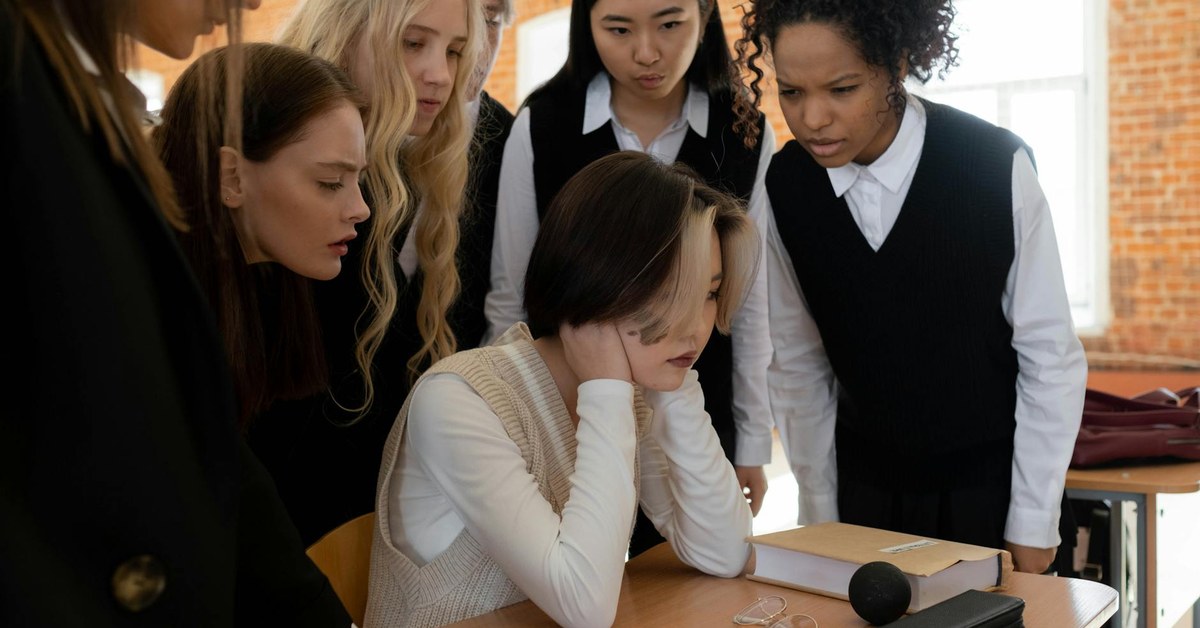
Social exclusion is one of the most common and most underrecognised forms of teenage bullying. It does not involve physical contact. It often does not involve direct verbal insults. It works through exclusion, through the deliberate organisation of social life to leave one person out.
This looks like being the only person in your friend group not invited to something. It looks like a group chat that you discover everyone else is in. It looks like people going quiet when you sit down, leaving conversations that were happening without you, organising plans in front of you that do not include you. It looks like being visible but not seen, present but not included.
Social exclusion is painful in a way that is difficult to explain to people who have not experienced it, because it operates on the most fundamental human need there is: the need to belong. Research on the neuroscience of social rejection shows that it activates the same brain regions as physical pain. When adults dismiss it as minor because nothing visibly happened, they are missing something important about the experience.
Online Bullying: When There Is No Safe Space
Before smartphones, a person who was bullied at school had the respite of home. Now, the same devices that connect teenagers to everything else also connect them to their bullies around the clock. Online bullying follows you into your bedroom, it happens while you are trying to sleep, and it is visible to an audience that extends far beyond the school gates.
Online bullying among teenagers takes several specific forms. Group chat bullying involves targeting someone in a messaging group, sharing humiliating content, or organising exclusion through chat platforms. Public humiliation involves posting, sharing, or reacting to content designed to embarrass or expose someone. Pile-on involves organising or joining in with mass negative responses to someone's social media posts. Fake accounts are created to harass without accountability. Screenshots of private conversations are shared without consent.
Each of these is more damaging than its description suggests because of the audience, the permanence, and the 24-hour availability. A humiliating post can be seen by hundreds of people before it is reported or removed. The evidence of social rejection is visible and countable in likes and comment numbers. The distance of a screen removes the social inhibitions that might prevent the same behaviour in person.
Why It Is So Hard to Tell Someone
Most teenagers who are being bullied do not tell an adult, at least not quickly. Understanding why is important for everyone who wants to help. Telling feels like it might make things worse: the bullying escalates, the social situation becomes more humiliating, the person being bullied gets labelled as someone who told. These fears are not irrational; they reflect real risks in the social environment of secondary school.
There is also shame involved in being bullied: a sense that being targeted reflects something wrong with you rather than with the person doing it, which is a distortion but a deeply felt one. And there is the practical complexity of explaining a social dynamic to an adult who may respond with well-meaning but ineffective actions.
None of this means that not telling an adult is the right choice. It means that the decision to tell is more complex than it appears from the outside, and that responses from adults need to be thoughtful enough to be worth the risk of disclosure.
What Actually Helps
If you are being bullied, the most important thing to know is that it is not your fault and it says nothing true about your worth as a person. This is not a platitude. The people who are bullied are not, as a group, people who deserve it. They are people who have been targeted, often for being different in some way, which is something the world generally needs more of, not less.
Tell someone you trust, even if it feels risky. A parent, a teacher you actually trust, a school counsellor, a relative. Choose someone who will listen before they react, and if the first person's response does not help, tell someone else. The goal is not just to report; it is to get genuine support and a plan for making the situation better.
Document what is happening online. Screenshot anything that constitutes evidence of the bullying before it is deleted. This documentation is useful for formal complaints, for police reports if the behaviour crosses into criminal territory (which some online bullying does, including harassment and malicious communications), and for understanding the pattern of what is happening.
Report content that constitutes bullying to the platform it is on. Most major platforms have specific reporting mechanisms for bullying and harassment, and under the Online Safety Act 2023, platforms have legal obligations to protect users from harassment. Block accounts that are targeting you; this does not resolve the underlying situation but removes one vector of access.
Talk to someone outside your immediate social environment. A therapist or counsellor, a Childline advisor (0800 1111, free and confidential for under 19s), or an online support community can provide perspective and support that people inside your school social environment cannot, because they have no stake in its politics.
If a Friend Is Being Bullied
One of the most powerful things you can do for someone who is being bullied is simply to stay close. Continue to include them in plans. Sit with them. Check in. Send a message that says you noticed and that you are there. These small acts of solidarity reduce the isolation that bullying is designed to create, and they mean more to the person receiving them than the giver often realises.
If the bullying is happening in your presence, saying something, even something brief and clear, changes the social calculus. It signals that the behaviour is not approved of by everyone. It tells the person being bullied that they are not invisible. If a direct response feels too risky, going to an adult or reporting the behaviour separately is another option that still constitutes action rather than silence.