Arts and Crafts Safety for Young Children: Materials
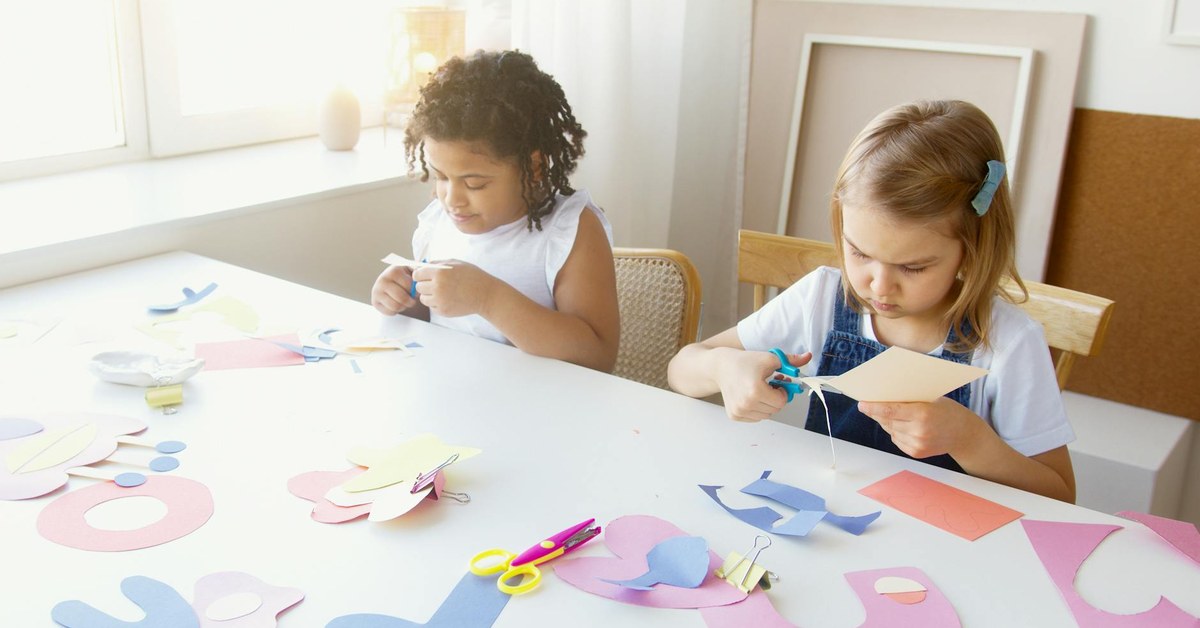

Arts and Crafts Safety for Young Children: Materials
Arts and Crafts: Essential Benefits, Real Risks
Creative activities are a cornerstone of early childhood development. Drawing, painting, cutting, sticking, modelling, and making engage children's fine motor skills, stimulate imagination, build concentration, and provide a valuable outlet for self-expression. Early years educators and child development researchers consistently identify arts and crafts among the most developmentally valuable activities available to young children. The benefits are well established and significant.
However, arts and crafts activities for young children also carry safety risks that are sometimes underestimated by parents and carers. These risks range from choking on small components through accidental ingestion of potentially toxic materials to cuts from scissors or craft knives. Many of these risks are easily managed with appropriate preparation, supervision, and material selection, but they require awareness. This article provides a comprehensive guide to the safety hazards associated with common arts and crafts activities for children aged approximately two to seven, and practical strategies for managing them.
Choking Hazards in Craft Materials
Young children, particularly those under the age of five, are at significant risk of choking on small objects. The trachea (windpipe) of a young child is narrow, and objects that appear too small to pose a risk can in fact cause fatal obstruction. This is not limited to craft materials that look like food; any small object placed in the mouth, whether accidentally or deliberately, can cause choking.
Common craft materials that present choking hazards include:
- Googly eyes: Available in a range of sizes, the smallest of which are a significant choking hazard and also present a risk of eye injury if thrown or projected.
- Small beads: Threading beads, pony beads, seed beads, and similar items are a serious choking risk for children under four and should be used only with close supervision for children aged four to six.
- Buttons: Button crafts are popular but buttons are a classic choking hazard for young children.
- Pom-poms: Small craft pom-poms can be inhaled as well as swallowed.
- Sequins: Very small and thin, sequins are easily ingested without immediate obvious choking.
- Foam stickers and small foam shapes: These may compress and then expand in the throat.
- Craft wire and small fasteners: Metal components can cause injury as well as obstruction if swallowed.
The general guideline for choking hazard assessment is that any object that can fit inside a standard toilet paper roll tube is a potential choking hazard for children under four. Many commercially produced craft kits include age guidance for exactly this reason, and these recommendations should be followed.
For children under three, arts and crafts activities should use only large-format materials: large crayons, thick paintbrushes, large foam stamps, playdough, and similar items. Even with older children, small components should be kept separate from the general activity area and introduced only under close supervision.
Scissors and Sharp Tools
Scissors are one of the most important fine motor skills tools in early childhood, but they require careful introduction and supervision. Children's safety scissors with rounded blades are appropriate for children learning to cut, typically from around three years of age with close supervision. These scissors significantly reduce the risk of cuts, though they do not eliminate it entirely.
Key principles for safe scissor use with young children:
- Always use scissors specifically designed for the child's age group. Safety scissors for young children have blunt, rounded tips.
- Teach the correct carrying posture (blades closed, held by the blades with the handle pointing outward) before scissors are used independently.
- Establish and consistently enforce the rule that scissors are only used when sitting at a table, never while walking or running.
- Supervise closely while children are using scissors, particularly in the early stages of learning.
- Store scissors in a designated location and ensure they are returned there after use, rather than being left accessible on a craft table.
- Never allow young children access to adult scissors, craft knives, scalpels, or rotary cutters, even briefly.
As children develop cutting skills and approach school age, they can be introduced to slightly sharper scissors with more pointed blades, but always under supervision and with continued reinforcement of safe handling rules. The transition from safety scissors to more capable cutting tools should be gradual and matched to the child's demonstrated skill and judgment.
Art Materials and Toxicity: What "Non-Toxic" Really Means
A widespread assumption among parents is that materials labelled as suitable for children are automatically safe for ingestion. This is not accurate. The "non-toxic" label on art materials means that the material is not classified as acutely toxic at the concentrations present, not that it is entirely safe if eaten, inhaled, or repeatedly absorbed through the skin.
In practice, most children's art materials, including crayons, watercolour paints, and basic poster paints, are formulated to be as safe as possible for use by children and are unlikely to cause serious harm if small amounts are ingested accidentally. However, not all products marketed for children's use meet the same standards, and the standards themselves vary by country.
In the United States, the ASTM D-4236 standard is the primary reference for art material safety, and products bearing the AP (Approved Product) seal from the Art and Creative Materials Institute (ACMI) have been reviewed by a toxicologist. In the European Union, the EN 71 standard covers toy safety including craft materials. In Australia, products must comply with mandatory consumer product safety standards. Parents in other regions should seek equivalent guidance or look for products meeting one of these internationally recognised standards.
Materials that warrant particular caution include:
- Acrylic paints: While most children's acrylics are formulated to be safer, professional-grade acrylics may contain pigments that are genuinely toxic. Keep adult art materials away from children's craft areas.
- Permanent markers: Many contain solvents that can cause harm if inhaled or ingested in quantity. Use washable markers for children.
- Solvent-based glues: Including some contact adhesives and superglues. These are not appropriate for young children's use and should be stored well out of reach.
- Spray paints and varnishes: These are entirely unsuitable for use by or around young children due to inhalation risk.
- Epoxy resins: Popular in some craft trends, these are not appropriate for use by children and require adult handling with appropriate respiratory and skin protection.
Glitter: Inhalation and Eye Risks
Glitter is a beloved craft material that presents several safety concerns for young children. Fine craft glitter can be inhaled easily, particularly when poured or used enthusiastically by young children. While a single small inhalation is unlikely to cause serious harm, regular or significant exposure is not ideal for developing lungs. More seriously, glitter can cause eye injuries: fine particles can scratch the cornea, and larger pieces of conventional glitter can cause more significant eye damage.
For children under three, glitter use is best avoided entirely. For children aged three to seven:
- Use larger-format chunky glitter rather than ultra-fine glitter dust where possible
- Apply glitter by sprinkling over glue rather than blowing or tipping from containers
- Ensure the child does not rub their eyes during or after glitter use, and wash hands thoroughly afterwards
- Conduct glitter activities in a well-ventilated space
Biodegradable glitter alternatives, including plant-based glitters, have become more widely available and are generally similar in safety profile to conventional glitter. Neither type is ingestible without consequence.
Paint Ingestion
Young children, particularly toddlers and children at the younger end of the preschool range, commonly mouth objects and materials during creative activities. Paint ingestion is therefore a realistic consideration. Most children's paints (finger paints, poster paints, watercolours) are formulated to be relatively safe in small quantities. However, regular or substantial ingestion is not advisable, and parents should discourage the practice.
Practical strategies for reducing paint ingestion include:
- Using washable, child-safe paints rather than any adult or craft paints without explicit child-safety certification
- Using smocks or aprons to reduce the temptation to lick paint from hands and arms
- Providing regular hand-washing breaks during extended craft sessions
- Supervising closely during activities where young children are known to mouth materials
If a child ingests a significant quantity of any art material, contact a poisons information service. Most countries have a national poisons hotline (for example, the National Poisons Information Service in the UK, Poison Control in the US, or equivalent services in other countries) that can provide immediate advice.
Balloon Hazards in Craft Activities
Balloons are commonly incorporated into craft activities, including papier-mache sculptures, balloon animals, and various decoration projects. While balloons are a generally recognised hazard for young children in other contexts, their risk in craft settings is sometimes overlooked.
The primary balloon hazard is the risk of choking on burst balloon fragments. When a balloon pops or is deflated, it breaks into pieces of thin latex that can be aspirated. This is a well-documented cause of child choking deaths. Children under eight should never put an uninflated or burst balloon in their mouth.
For craft activities involving balloons:
- Inflate balloons away from children and use them in their inflated form, not as something children handle extensively or inflate themselves
- Remove burst or deflated balloon fragments from the craft area immediately
- Consider whether the balloon element of a craft activity is necessary, and whether a balloon could be substituted with a paper or foam ball
- Be aware that children with latex allergies may react to contact with balloons; this is relatively uncommon but can be severe
Glue Gun Safety
Hot glue guns are commonly used in craft activities and are often available in "low-temperature" versions described as suitable for children. The safety of hot glue guns for children requires careful consideration.
Standard hot glue guns operate at temperatures between 120 and 200 degrees Celsius and are entirely unsuitable for use by children. Low-temperature glue guns operate at around 80 degrees Celsius, which is sufficient to cause burns, particularly to the sensitive skin of a child's fingers.
For children under ten, glue guns of any type should be operated by a supervising adult, with the child applying glue that has already been dispensed. For children in the seven to ten range, very close supervision and explicit instruction about not touching the nozzle or freshly applied glue is essential if they are using a low-temperature gun at all. No child under seven should handle a glue gun independently under any circumstances.
Alternative adhesives, including PVA glue (which is safe for young children), glue sticks, and double-sided tape, are appropriate substitutes for glue guns in most children's craft projects.
Choosing Age-Appropriate, Non-Toxic Materials
The following principles guide the selection of safe craft materials for young children:
- Purchase from established manufacturers with a track record in children's products
- Look for safety certification marks relevant to your country (ASTM AP, EN 71, or equivalent)
- Follow age guidance on packaging; these guidelines are based on safety assessments
- Keep adult art and craft materials physically separate from children's materials
- When in doubt about a product's safety, do not use it with young children
- Opt for water-based over solvent-based products wherever possible
- Choose washable versions of paints and markers for young children
Supervising Creative Activities
Supervision is the most effective single safety measure for children's craft activities. Many of the hazards described in this article can be managed, reduced, or eliminated by an attentive adult who is present and engaged during the activity. The level of supervision required decreases as children grow older and more experienced, but for children in the two to five age range, close, continuous supervision during craft activities is appropriate.
Supervision does not mean hovering or controlling every movement. Children need the freedom to explore and create. What it means is remaining close enough to intervene if a child puts a small object in their mouth, attempts to use scissors unsafely, or accesses a material they should not use independently. An adult who is in the same room but fully engaged with their phone or another task is not providing effective supervision.
As children approach school age and have demonstrated reliable judgment about craft safety, supervised independence, in which the adult is present and available but not continuously watching every action, becomes appropriate. This transition should be gradual and matched to the individual child's development.
Storing Craft Materials Safely
Craft materials should be stored in a way that prevents unsupervised access by young children. Small items such as beads, sequins, and googly eyes should be stored in sealed containers, out of reach of children under four. Scissors, craft knives, and other sharp tools should be stored in closed drawers or boxes, not left loose on surfaces.
Paints, glues, and solvents should be stored with lids firmly secured, out of reach when not in use. Any product that is not intended for children's use should be stored in a locked cupboard or in a location entirely inaccessible to children.
Craft areas that are shared between children and adults, such as a family table, should be cleared of adult materials before children's craft activities begin, and cleared of all craft materials, including small items, before children play unsupervised in the area.
Regular reviews of the craft materials stored at home are worthwhile. Materials that have been opened and partially used should be checked for integrity, as lids may fail to close properly over time. Expired or deteriorated materials should be disposed of safely.
Making Craft Activities Both Safe and Joyful
The goal of attending to craft safety is not to make creative activities stressful or to restrict children's engagement with materials. Most of the safety measures described in this article are simple to implement and, once established as habit, require little additional effort. The result is a craft environment in which children can engage freely, parents can supervise without anxiety, and the genuine developmental benefits of creative activity can be fully realised.
Children who learn safe habits around craft materials, including safe scissor handling, not putting materials in their mouths, and asking an adult for help with tools they cannot use independently, carry these habits forward as they become increasingly independent creators. Safety and creativity are not in conflict; they are complementary aspects of a well-supported early childhood experience.