Cycling Safety Gear: Why Helmets and High-Visibility
Cycling is one of the most popular and sustainable forms of transport worldwide, but it also carries real risks. The right safety gear, particularly helmets and high-visibility clothing, dramatically reduces the chance of serious injury or death.

Cycling Safety Gear: Why Helmets and High-Visibility
“Cycling is one of the most popular and sustainable forms of transport worldwide, but it also carries real risks. The right safety gear, particularly helmets and high-visibility clothing, dramatically reduces the chance of serious injury or death.”
Why Cycling Safety Deserves Serious Attention
Cycling has experienced a remarkable global resurgence over the past decade. In cities across Europe, Asia, the Americas, and beyond, more people are choosing bicycles as their primary or supplementary mode of transport, driven by concerns about cost, sustainability, health, and urban congestion. With this growth in cycling has come a corresponding responsibility to take road safety seriously.
The statistics are sobering. According to the World Health Organisation, road traffic injuries are among the leading causes of death and serious injury worldwide, and cyclists are among the most vulnerable road users. In the United Kingdom, thousands of cyclists are killed or seriously injured on public roads each year. Comparable figures exist in Australia, the United States, continental Europe, and many other countries. The majority of serious cycling injuries involve the head.
The encouraging news is that a significant proportion of serious injuries and deaths can be prevented or mitigated through the consistent use of appropriate safety gear. Helmets and high-visibility clothing are not infallible protections, but the evidence for their effectiveness is substantial and well-documented. This guide explains how these items work, how to choose them, and how to use them correctly.
How Bicycle Helmets Work
To understand why helmets matter, it helps to understand the mechanics of a cycling head injury. When a cyclist falls or is struck, the head may impact a hard surface such as tarmac, a kerb, a vehicle, or street furniture. Without protection, the skull and brain absorb the full force of that impact. A traumatic brain injury can result from relatively low-speed impacts, and the consequences range from concussion to permanent cognitive impairment to death.
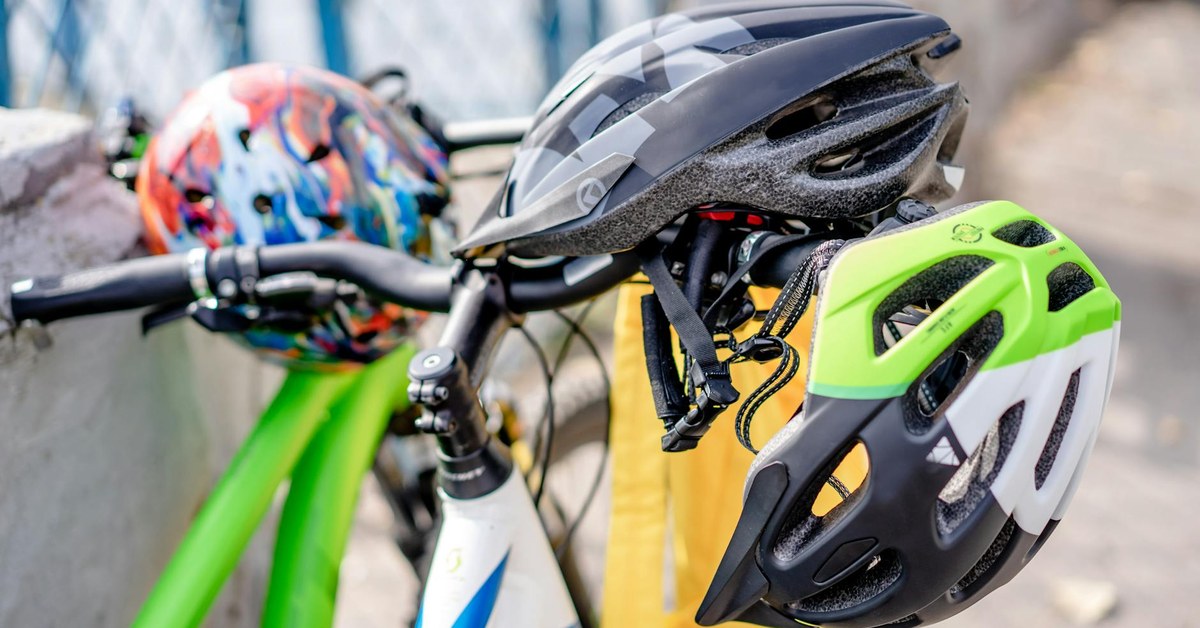
A bicycle helmet is designed to absorb and redistribute the energy of an impact before it reaches the skull. The outer shell, typically made from polycarbonate, is hard and smooth to allow the helmet to slide across a surface rather than catching and twisting the neck. The inner liner, usually made from expanded polystyrene (EPS), is the crucial protective element. On impact, the EPS compresses, absorbing energy that would otherwise be transmitted to the brain. This deformation is what makes the helmet effective, and it also means that a helmet involved in a significant impact should be replaced, even if no visible damage is apparent, because the EPS structure may be compromised.
Modern helmets must meet specific safety standards before they can be sold in most markets. In Europe, the relevant standard is EN 1078. In the United States, helmets must comply with Consumer Product Safety Commission (CPSC) regulations. Australia uses the AS/NZS 2063 standard. When purchasing a helmet, always check that it meets the appropriate standard for your country. The certification marking will be printed inside the helmet or on a label.
Choosing the Right Helmet
A helmet that does not fit correctly offers significantly less protection than one that does. Fit is arguably the most important factor in helmet effectiveness.
Measure your head circumference using a flexible measuring tape placed approximately 2.5 centimetres above the eyebrows and around the widest part of the back of the head. Most helmets are sold in small, medium, and large size ranges corresponding to head circumference in centimetres. Use the manufacturer's sizing guide to identify the correct size, and try the helmet on before purchasing where possible.
A correctly fitted helmet should sit level on the head, approximately two finger-widths above the eyebrows. It should not tilt backwards or forwards. When you shake your head vigorously, the helmet should move with your head, not independently. The side straps should form a V-shape just below the ear, and the chin strap should be adjusted so that only two fingers fit between the strap and your chin.
Many helmets include a retention system at the back, typically a dial or ratchet that can be tightened to improve fit. This is not a substitute for choosing the correct size, but it can help achieve a more secure fit within the appropriate size range.
For urban cycling, a round or multi-directional impact protection (MIPS) helmet provides good all-round protection. MIPS technology incorporates a low-friction layer inside the helmet that allows the helmet shell to rotate slightly on impact, reducing rotational forces that can cause brain injury. Research suggests that MIPS helmets provide meaningfully better protection against certain types of injury, and they are now widely available across a range of price points.
Wearing Your Helmet Every Single Time
The most expensive helmet in the world provides no protection if it is not being worn. This may seem obvious, but research consistently shows that helmet use remains inconsistent among cyclists of all ages, including adults. Common reasons for not wearing a helmet include inconvenience, discomfort, not wanting to affect hairstyle, and the perception that the journey is too short or low-risk to warrant it.
The evidence does not support the idea that short journeys are inherently safer. A significant proportion of serious cycling accidents occur within a short distance of the rider's home, on familiar roads, during routine journeys. The notion that a quick trip to the shops does not require a helmet is a cognitive bias, not a statistical reality.
If discomfort is a barrier, it is worth investing in a higher-quality helmet with better ventilation and padding. Modern helmets designed for urban commuting are substantially more comfortable and less cumbersome than older designs. Some newer designs are also considerably more stylish, which matters to many cyclists and is a legitimate reason to seek out a helmet you will actually want to wear.
In a number of countries and jurisdictions, wearing a cycle helmet is a legal requirement. Australia, for example, mandates helmet use for all cyclists of all ages under national road laws. New Zealand has similar requirements. In the United Kingdom and much of Europe, helmet use is not currently a legal requirement for adults, but the safety evidence remains clear regardless of legislation.
The Case for High-Visibility Clothing
A significant proportion of serious cycling accidents involving motor vehicles occur because the driver did not see the cyclist. This is particularly common at night, in poor weather, at junctions, and in low-light conditions such as dawn and dusk. High-visibility clothing addresses this risk directly by making cyclists substantially more conspicuous to other road users.
High-visibility or hi-vis clothing incorporates fluorescent colours, retroreflective materials, or both. Fluorescent materials, typically in yellow-green, orange, or red, are highly effective in daylight by reflecting more light than ordinary clothing. They do not, however, provide significant benefit in darkness. Retroreflective materials, which appear bright when illuminated by headlights or other direct light sources, are the critical element for night and low-light visibility. The most effective cycling clothing combines both elements.
Research conducted by road safety organisations in the United Kingdom, Scandinavia, and the Netherlands has consistently shown that cyclists wearing high-visibility clothing are detected at greater distances by drivers, allowing more time for avoidance manoeuvres. One widely cited study found that cyclists wearing retroreflective clothing on their ankles and knees, areas that move distinctively when cycling, were detected sooner than those wearing hi-vis vests alone, because the movement pattern aids recognition.
Choosing and Wearing Hi-Vis Gear
For cycling, the most practical forms of high-visibility clothing include cycling-specific jackets and gilets, reflective bands worn around the arms or ankles, and retroreflective elements integrated into backpacks or bags. Many cycling jackets designed for commuting incorporate both waterproofing and reflective panels, making them a practical all-round investment.
When choosing hi-vis gear, look for items that meet recognised standards. In the United Kingdom and Europe, EN ISO 20471 is the standard for high-visibility clothing, though this is primarily designed for professional use in traffic environments. For cyclists, items certified to this standard offer excellent visibility, though cycling-specific products with high reflectivity are also widely available and appropriate for most riders.
Coverage matters. A small reflective strip on a backpack is better than nothing, but the more of your body that is visible, the greater the effect. Prioritise coverage of your upper body and, where practical, your legs. Front and rear visibility are both important; many cyclists focus on being seen from behind and neglect the importance of being visible to oncoming traffic and drivers emerging from side roads.
Hi-vis clothing should be worn consistently, not just in the rain or at night. Overcast days, winter afternoons, and heavily shaded urban streets all create conditions where visibility is significantly reduced. Getting into the habit of always wearing reflective or high-visibility clothing removes the need to make a judgment call each time you cycle.
Lights: An Essential Complement to Visibility Gear
High-visibility clothing is most effective when combined with good lighting. In most countries, riding a bicycle on public roads at night without lights is illegal and represents a serious safety risk. A front white light and a rear red light are the standard minimum requirement, and in many jurisdictions this is a legal obligation.
Modern LED bicycle lights are extremely bright, long-lasting, and available at low cost. Rechargeable options have largely replaced battery-powered lights and are more economical and convenient over time. Lights should be mounted securely, positioned so they are visible to other road users, and set to a mode appropriate for the conditions. Flashing modes are highly effective for visibility in urban environments, while steady beams are better suited for illuminating the road ahead on unlit paths or rural routes.
Daytime running lights, which use a bright flashing mode even in daylight, are increasingly popular among urban cyclists. Studies from multiple countries suggest that daytime lights significantly improve cyclist visibility and reduce collision risk. This is a low-cost enhancement to visibility that is worth adopting as a standard practice.
Maintaining Your Safety Gear
Safety equipment is only effective if it is maintained in good condition. Inspect your helmet regularly for cracks, dents, or damage to the outer shell or inner foam. If your helmet has been involved in a significant impact, even one where no damage is visible, replace it. The EPS liner may have been compromised in ways that are not externally apparent, and a damaged helmet may offer substantially less protection in a subsequent impact.
Most manufacturers recommend replacing helmets every three to five years, even in the absence of damage, as the materials can degrade over time through exposure to UV light, sweat, and heat.
Reflective clothing should be washed according to the manufacturer's instructions. Some detergents can degrade the reflective properties of retroreflective materials over time. After washing, check that reflective panels still appear bright when illuminated; if they look dull, the clothing's effectiveness may be reduced and replacement should be considered.
Building a Safety-First Cycling Culture
Individual choices about safety gear matter, but they exist within a broader culture of cycling safety that is shaped by education, infrastructure, regulation, and social norms. Countries with the lowest rates of cycling fatalities, including the Netherlands, Denmark, and Finland, combine high rates of helmet and visibility gear use with infrastructure that physically separates cyclists from motor traffic and traffic calming measures that reduce vehicle speeds.
As an individual cyclist, your choices are meaningful both for your own safety and as a contribution to broader norms. Wearing a helmet and high-visibility clothing consistently, maintaining your lights, and riding with awareness of your own visibility are practical habits that significantly reduce your personal risk. Encouraging the same habits in friends and fellow cyclists extends that benefit further.
Cycling is a healthy, sustainable, and enjoyable mode of transport and recreation. The equipment needed to do it safely is modest in cost and considerable in benefit. Making the right gear a non-negotiable part of every ride is one of the most straightforward and effective safety decisions a cyclist can make.