Carjacking and Road Rage: How Young Drivers Can Stay Safe
Young drivers face specific risks on the road beyond accidents. This guide covers how to recognise and respond to carjacking attempts and road rage incidents, and how to develop safer driving habits.

Carjacking and Road Rage: How Young Drivers Can Stay Safe
“Young drivers face specific risks on the road beyond accidents. This guide covers how to recognise and respond to carjacking attempts and road rage incidents, and how to develop safer driving habits.”
The Risks Young Drivers Face Beyond Accidents
Most road safety education focuses on the mechanics of safe driving: following the highway code, avoiding distractions, managing speed and stopping distances. These are genuinely important. But there is a category of road-related risk that receives far less attention in driver training: the threat posed by other people. Carjacking and road rage incidents occur in every country in the world, and while statistics vary significantly by region, both pose real risks that any driver can benefit from understanding and preparing for.
Young drivers are not necessarily more targeted than older ones, but they may be less experienced in recognising warning signs, less confident in asserting themselves, and less familiar with what to do when a situation begins to escalate. This guide is intended to change that. The goal is not to make you fearful of driving, but to give you practical knowledge that helps you stay safe and respond effectively if you ever find yourself in a difficult situation on or around the road.
Understanding Carjacking: What It Is and How It Happens
Carjacking is the theft of a vehicle from its driver, typically through force or the threat of force. It is distinct from ordinary vehicle theft, in which the car is stolen when the driver is not present. Because carjacking involves a direct confrontation with the driver, it carries risks beyond the loss of property, and understanding how and where it typically occurs can significantly reduce your vulnerability.
Carjackings are rarely random. They tend to occur in specific circumstances and locations. Understanding these patterns is one of the most effective forms of prevention.
The most common moments of vulnerability are when you are stationary or moving slowly. Traffic lights and junctions, parking lots and car parks, petrol stations and fuel forecourts, drive-throughs, and moments when you are loading or unloading items are all points where a car is accessible and the driver is distracted or slow to respond. This is when carjackers typically act.
In terms of location, carjackings are more frequent in urban areas, particularly in areas with higher general crime rates, in poorly lit or isolated car parks, near ATMs, and in areas where traffic regularly slows to a stop. Late night and early morning hours carry elevated risk in many cities globally.
It is also worth noting that in many parts of the world, particularly in parts of sub-Saharan Africa, Latin America, and some urban areas of North America and South Africa, carjacking occurs with weapons, and the risk of physical harm is significant. In other regions, the perpetrators may rely more on surprise and intimidation. Understanding the local risk environment where you live and travel is important context.
Prevention: The First Line of Defence
The most effective safety strategy is avoiding situations that create vulnerability in the first place. This is not about avoiding driving or living in fear; it is about developing habits that reduce your exposure to risk without significantly inconveniencing you.
Stay aware of your surroundings. When approaching your parked car, look around before you get in. Check the back seat before entering. Be conscious of people who seem to be paying unusual attention to you or who are loitering without an obvious reason near your vehicle. Awareness is not paranoia; it is a basic safety habit.
Keep doors locked and windows up in slow or stationary traffic. Many carjackings occur through an unlocked door at a traffic light. This simple habit eliminates a common opportunity. Modern cars lock automatically when moving in many models, but it is worth checking and adopting this as a conscious habit if not.
Park thoughtfully. Wherever possible, park in well-lit, busy areas. In car parks, try to park close to entrances or near CCTV cameras. Avoid isolated corners of car parks, especially at night. If a car park feels wrong when you enter it, trust that instinct and find another.
Avoid distraction when getting into and out of your car. The moments of unlocking, opening, and settling into your vehicle are moments of divided attention. Try to put your phone away before reaching your car and be fully present as you approach and enter it.
Keep valuables out of sight. Bags, electronics, and other valuables visible through the window can attract attention. Keep them in the boot or covered. This applies both when the car is parked and when you are driving.
Trust your instincts. If something about a situation feels wrong, act on that feeling. Do not pull over in a dark or isolated location if you are uncertain about the road conditions ahead. If a car seems to be following you, drive to a well-lit, busy public place or a police station rather than home. Your instincts are a form of accumulated pattern recognition, and they are worth listening to.
If a Carjacking Attempt Occurs
Despite all precautions, carjacking attempts can still occur. Knowing in advance how you would respond removes the paralysis that often comes with shock, and makes it more likely you will make good decisions under pressure.
The single most important principle is this: your safety matters more than the car. A vehicle is replaceable. Do not resist a carjacking at the cost of being seriously harmed. If someone approaches your car with a weapon and demands the keys, the safest response in most circumstances is to comply, move away from the vehicle, and contact the police as soon as it is safe to do so.
If you are in a stationary position and someone approaches aggressively, consider whether you can drive away. If the road ahead is clear and you can move, doing so may be the safest option. Do not wait to see what happens.
If you are pulled out of the car, move away from the vehicle immediately. Do not try to get back in or follow the car. Get to a safe public location and call the emergency services.
If there are children in the car, make absolutely clear they are there. In the vast majority of cases, carjackers do not want passengers, especially children, and will stop or instruct you to remove them. Never leave a child in a car that is being taken.
After any incident, seek medical attention if needed, report to the police immediately, and contact your insurance provider. If you are emotionally shaken, which is entirely normal and expected, speak to someone you trust or contact a support service. A threatening encounter of this kind can produce genuine trauma responses, and these deserve to be taken seriously.
Understanding Road Rage
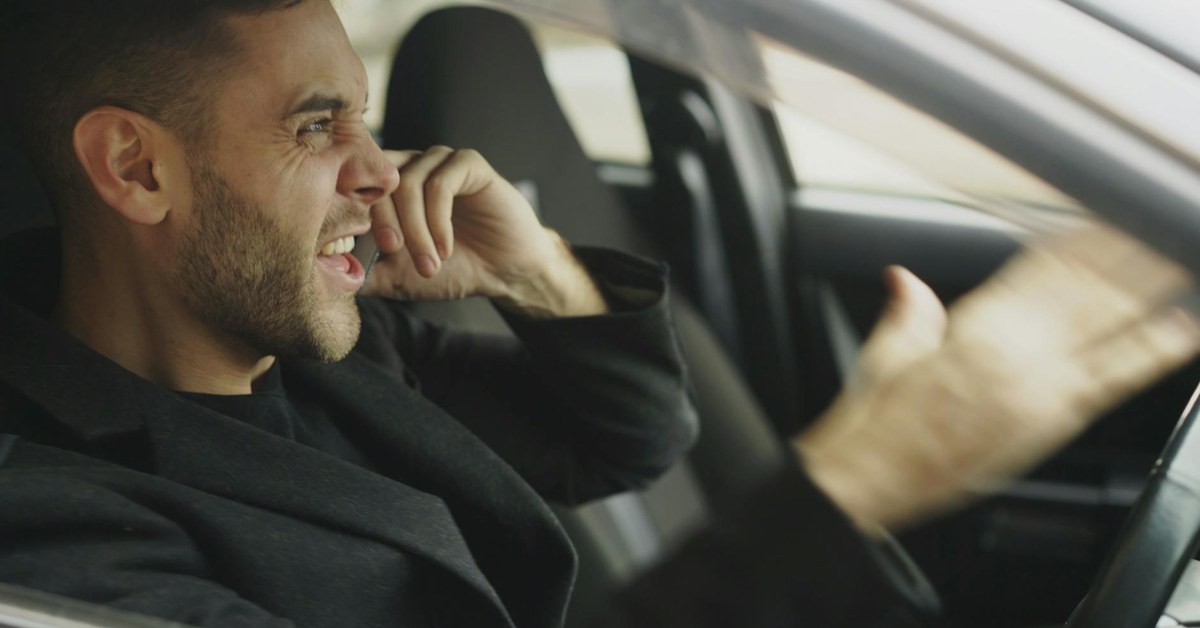
Road rage refers to aggressive or violent behaviour by a driver in response to a perceived slight or provocation on the road. It ranges from verbal abuse and aggressive gesturing to tailgating, deliberate near-misses, and in extreme cases, physical confrontations. Road rage incidents can escalate with frightening speed, and understanding the psychology behind them helps you manage both your own reactions and those of other drivers.
The driving environment creates a specific psychological context that makes aggression more likely. Drivers are in an enclosed space, often stressed or in a hurry, unable to communicate clearly with other road users, and experiencing the anonymity of being behind glass and metal. Minor misunderstandings that in a face-to-face context would be resolved with a word or a look instead get amplified because the other person cannot hear you and you cannot fully read their intent.
Research on road rage consistently shows that it is not primarily caused by genuinely dangerous driving behaviour. It is more often triggered by perceived disrespect: someone cutting in front of you, not thanking you for giving way, driving slowly in the wrong lane, or using their phone at a light. The emotional response is disproportionate to the actual incident, which is why road rage is particularly dangerous.
Managing Your Own Anger on the Road
Young drivers are, statistically, more susceptible to aggressive driving behaviour than older drivers. This is not necessarily a character failing; it reflects the fact that emotional regulation continues to develop into the mid-twenties, and that the driving environment is genuinely frustrating at times.
The most important step is recognising when you are becoming angry behind the wheel and having a strategy for managing it. Physical signs of escalating anger include a tighter grip on the wheel, a raised heart rate, an impulse to accelerate or get close to another driver, and an internal narrative that frames other drivers as deliberately provoking you.
When you notice these signs, some techniques that genuinely help include taking several slow, deliberate breaths; reminding yourself that you do not know what is happening in the other driver's life; choosing not to make eye contact with a driver who has upset you; increasing the distance between yourself and the other vehicle; and adjusting your music or podcast if what you are listening to is increasing your agitation.
It also helps to build in time. A significant proportion of aggressive driving is driven by running late. Leaving earlier, especially for journeys in heavy traffic, removes one of the most common triggers for frustration.
Responding to Road Rage from Other Drivers
If another driver is behaving aggressively towards you, the priority is to de-escalate and separate yourself from the situation. Do not retaliate. This is the most important rule. Responding to aggression with aggression almost always makes a situation worse and sometimes dramatically so.
Avoid eye contact with an aggressive driver. Eye contact can be read as a challenge and can intensify the interaction. Do not make gestures. Do not block the road or prevent an aggressive driver from passing. Let them go. The momentary frustration of allowing someone to bully their way past is far preferable to an escalating situation.
If you believe another driver is following you or is likely to confront you, do not drive home. Drive to a busy public place, ideally near a police station or a petrol station with staff present. Do not get out of the car in an isolated area. If the situation feels genuinely threatening, call the emergency services while continuing to drive safely.
If an incident occurs at a junction or car park and someone gets out of their vehicle in an aggressive posture, keep your doors locked and windows up. Do not engage. If the situation feels dangerous and you are able to drive away, do so. If you cannot move, call the emergency services.
Dashcams and Documentation
A dashcam is one of the most practical tools for protecting yourself on the road. Front-facing and rear-facing cameras that record continuously while you drive provide objective evidence in the event of an accident or an incident with another driver. This evidence can be decisive in insurance disputes, police reports, and, in more serious cases, legal proceedings.
Dashcam footage has been used successfully to disprove false insurance claims, to support prosecutions for dangerous driving and road rage, and to help police identify carjacking suspects. They are widely available at reasonable cost and are a worthwhile investment for any driver.
Know the laws around dashcam use in your country. In most jurisdictions, dashcam footage from your own vehicle is entirely legal. Be aware of privacy regulations around footage that captures other individuals if you are considering sharing it publicly.
Building Safer Habits for the Long Term
Road safety, in its broadest sense, is a matter of ongoing habit development. The drivers who are most consistently safe over their lifetimes are not those who are never frightened or never confronted with difficult situations. They are those who have developed the awareness to read developing situations early, the emotional regulation to respond thoughtfully rather than reactively, and the practical knowledge to act effectively when something does go wrong.
For young drivers who are still relatively new to the road, building these habits early creates a foundation that will serve you well for decades. The skills involved, situational awareness, impulse management, and principled decision-making under pressure, are valuable far beyond the driving context. They are, in the deepest sense, life skills.