Seatbelt Safety for Children Aged 4 to 7
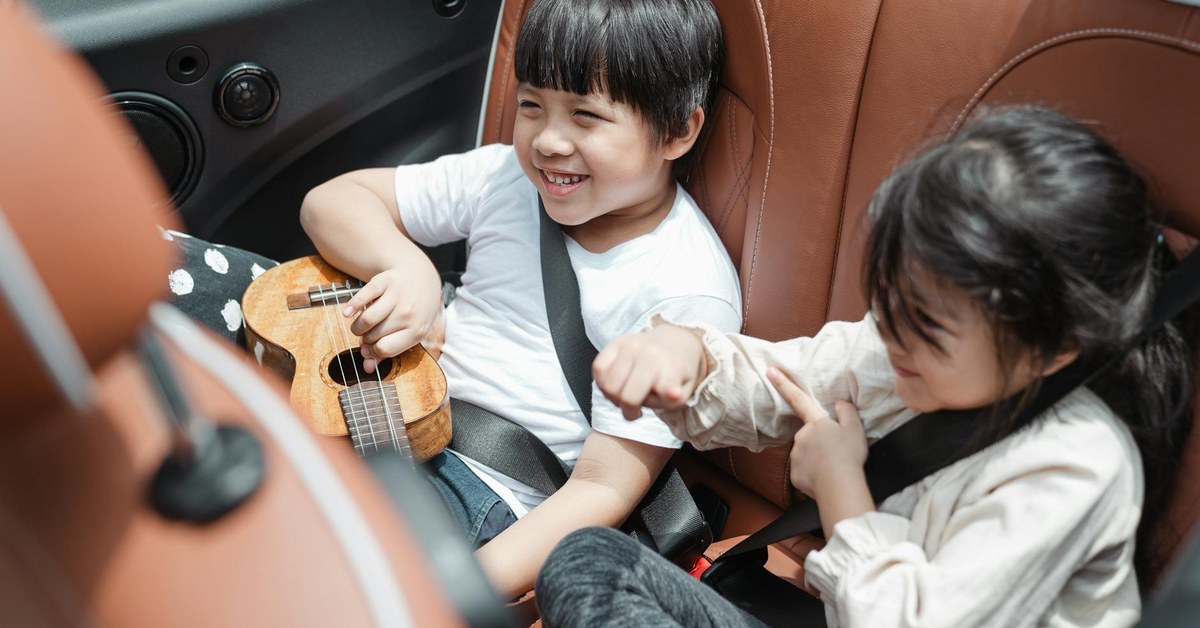

Seatbelt Safety for Children Aged 4 to 7
Introduction
One of the most consequential decisions a parent makes on every car journey is whether their child is properly restrained. For children aged four to seven, this often means navigating the transition from a high-back booster seat to using a seatbelt alone. This transition is frequently made too early, with parents assuming readiness based on age rather than the physical measurements that actually determine safety. This guide outlines the evidence-based approach to seatbelt transitions, the correct way to fit a seatbelt on a young child, and the global standards that underpin child passenger safety.
Why the Transition Should Not Happen Too Early
The design of an adult seatbelt assumes a body of a certain size and proportion. A standard three-point seatbelt is engineered to distribute crash forces across the strongest parts of the adult body: the chest, the shoulder, the pelvis, and the upper thigh. In a young child, the skeletal structure is still developing, and the proportions are fundamentally different. A belt that sits correctly on an adult will often rest across a child's abdomen rather than the pelvis, and across the neck rather than the chest.
In a collision, a seatbelt that is incorrectly positioned can cause severe internal injuries, a pattern of injury known in emergency medicine as seatbelt syndrome. This includes damage to the intestines, spine, and abdominal organs that occurs when a lap belt rides up over soft tissue rather than restraining the pelvis. These injuries can be life-threatening and are entirely preventable by ensuring children remain in appropriate restraints until they are genuinely ready.
Child safety organisations worldwide, including the American Academy of Pediatrics, the Royal Society for the Prevention of Accidents in the UK, and the European Child Safety Alliance, consistently advise that children should remain in a booster seat until they pass specific physical readiness tests, regardless of their age.
When Children Are Ready: Height, Not Age
The critical measure for seatbelt readiness is height, not age. In the United Kingdom, legal guidelines state that children can use an adult seatbelt when they reach 135 centimetres in height or the age of 12, whichever comes first. In practice, most children do not reach 135 centimetres until somewhere between nine and twelve years of age, meaning very few children aged four to seven will be ready to use a seatbelt without a booster.
However, height alone is not sufficient. A child must also pass the five-step seatbelt readiness test to confirm that the belt will position correctly on their body.
The Five-Step Test for Seatbelt Readiness
The five-step test, developed by child passenger safety researchers, evaluates whether a child can sit correctly in a standard vehicle seat with a seatbelt. All five conditions must be met simultaneously:
- The child sits with their back flush against the vehicle seat back, without slouching or leaning forward.
- The child's knees bend comfortably over the edge of the seat cushion, without needing to slide forward to achieve this.
- The lap belt lies flat and low across the upper thighs, over the bony pelvis, not across the soft abdomen.
- The shoulder belt crosses the centre of the chest and shoulder, not the neck or face.
- The child can maintain this position for an entire journey without fidgeting, slumping, or adjusting the belt.
If any of these conditions is not met, the child is not yet ready to use a seatbelt without a booster. Most children aged four to seven will fail this test, particularly conditions one, three, and four.
Correct Seatbelt Positioning for Young Children
When a child is in a booster seat and using a seatbelt, correct positioning is still essential. A booster seat works by raising the child so that the seatbelt fits their body appropriately. This means the following positioning is required:
Lap Belt Placement
The lap belt must lie flat and low across the child's upper thighs, sitting over the hip bones. It should never cross the abdomen or the soft tissue of the stomach. The booster seat's belt guides, if fitted, should be used to maintain this position. Parents should check this at the start of every journey, as children often adjust belts during travel.
Shoulder Belt Placement
The shoulder belt must cross the centre of the child's shoulder and run diagonally across the centre of the chest. It should not rest against the neck, as this is both uncomfortable and dangerous in a collision. If the belt consistently rides up to the neck despite a booster seat, the seat may not be appropriate for that child's height, and a different model should be considered.
Never Letting a Child Place the Shoulder Belt Behind Their Back
One of the most dangerous habits that can develop during seatbelt use is a child placing the shoulder belt behind their back. This is often done because the belt is uncomfortable, positioned awkwardly, or simply because the child does not want it across their body. While it may seem like a minor issue, it fundamentally compromises the safety system.
A seatbelt worn only as a lap belt in a frontal collision will not restrain the upper body. The child's torso will pitch forward with enormous force while the lap belt holds the pelvis, creating extreme flexion of the spine and dramatically increasing the risk of severe abdominal and spinal injury. This is precisely the seatbelt syndrome described earlier.
If a child repeatedly places the shoulder belt behind their back, it is a signal that the belt is not fitting correctly. This should be addressed by reviewing the booster seat configuration, adjusting the belt height guides, or consulting a certified child passenger safety technician. It should never be allowed as a compromise.
Types of Booster Seats and When to Use Them
There are two main categories of booster seat relevant to children in the four to seven age range:
High-Back Booster Seats
High-back boosters provide head and neck support in addition to raising the child to the correct height. They are recommended for children who have outgrown their forward-facing harness seat but are not yet ready to use a seatbelt alone. Many high-back boosters include integrated belt guides that help position both the lap and shoulder belt correctly. These seats are appropriate for most children in the four to seven age group.
Backless Booster Cushions
Backless boosters are simpler devices that raise the child's seating position without providing head support. They are generally appropriate only for older, taller children who already have good posture and do not need the shoulder belt guidance offered by a high-back model. For most four to seven year olds, a high-back booster will provide more reliable protection.
Legal Requirements Around the World
Child car seat laws vary by country, but the direction of travel in most regions is towards stronger protections and extended requirements for booster use.
- United Kingdom: Children must use an appropriate child car seat until they reach 135 cm or turn 12. Using an adult seatbelt in a booster seat is required until these thresholds are met.
- European Union: EU Regulation ECE R129 (i-Size) governs child restraint systems, with requirements linked to height rather than weight or age.
- United States: Requirements vary by state, but most mandate booster seat use until a child reaches the height and weight requirements specified by the seat manufacturer, and the five-step test is passed.
- Australia: Children must use a forward-facing restraint with a harness until they are at least four years old, and a booster seat from four to seven years of age.
- Canada: Regulations differ by province but generally require booster seats until children reach 36 kg or 145 cm in height.
Reinforcing Seatbelt Habits
Forming consistent seatbelt habits in young children is one of the most lasting safety investments a parent can make. Children who are accustomed to wearing a seatbelt correctly from the earliest age rarely resist it later. A number of approaches help to build and maintain these habits:
- Make buckling up the very first thing that happens after entering the car, before any other conversation or activity begins.
- Model the behaviour yourself. Children who observe adults consistently wearing seatbelts are significantly more likely to do so themselves.
- Use straightforward language: explain that the seatbelt is there to keep them safe, in the same way that a helmet protects their head.
- Never start driving until all passengers are correctly buckled, regardless of journey length.
- If a child unbuckles during a journey, pull over safely and wait until they are re-buckled before continuing.
- Praise correct behaviour without making the process feel like a battle.
Checking Your Child's Current Seat
It is worth periodically reviewing whether your child's current seat is still appropriate for their size. Children grow quickly, and a seat that fitted well six months ago may no longer provide optimal protection. Check the manufacturer's height and weight limits for the seat, and compare these against your child's current measurements. Look also for signs of wear, fraying straps, or damage to the shell, which may reduce the seat's effectiveness in a collision.
In many countries, certified child passenger safety technicians offer free or low-cost seat checks. These professionals can verify installation, belt routing, and fit, and are an excellent resource for parents who are uncertain about their setup.
Conclusion
The decision to transition a child from a booster seat to a seatbelt alone should be driven entirely by physical readiness, not convenience or social pressure. Most children aged four to seven are not yet ready to use a standard seatbelt safely. Keeping children in the right seat for the right amount of time, and ensuring correct belt positioning at every journey, is one of the most effective things a parent can do to protect their child on the road.