Crowd Safety at Events and Concerts
Most large events pass safely, but crowds can become dangerous with very little warning. Understanding how crowd crushes happen and what to do when pressure builds could save your life.

Crowd Safety at Events and Concerts
“Most large events pass safely, but crowds can become dangerous with very little warning. Understanding how crowd crushes happen and what to do when pressure builds could save your life.”
Why Crowd Safety Deserves Your Attention
Large events, concerts, festivals, sporting fixtures, and public gatherings are among the most joyful experiences life offers. For most people who attend them, they pass without incident. But crowd disasters, events in which large numbers of people are injured or killed due to crowd pressure or crush, happen with tragic regularity around the world, and they happen in places that feel safe and well-managed until very suddenly they do not.
The defining characteristic of crowd safety incidents is that they escalate extremely quickly. People at the back of a crowd cannot see what is happening at the front. The compression that builds through a large crowd can reach dangerous and fatal pressures within minutes, and by the time people in the crush understand what is happening, movement may already be very limited.
Understanding how these incidents develop, recognising the early warning signs, and knowing what to do before pressure becomes serious are skills that could save your life and the lives of people around you.
How Crowd Crushes Actually Happen
The most important thing to understand about crowd crushes is that they are not caused by panic, despite what early news reports often suggest. They are caused by crowd density: when the number of people in a given space exceeds approximately four to five people per square metre, individuals lose the ability to move independently. Each person's movement becomes determined by the movement of the people immediately around them.
At densities above six or seven people per square metre, the forces generated by the movement of a crowd can exceed the ability of the human body to withstand them. People can be compressed to the point where they cannot breathe, even while remaining upright. Death from asphyxiation in a standing crowd, without anyone intending to cause harm, is the mechanism behind most crowd crush fatalities.
These densities are reached in specific situations: when large numbers of people move toward a single point of attraction (the stage, an entrance, an exit), when crowd flow is restricted by physical barriers, when a surge from the back compresses people at the front, or when an event of some kind causes a sudden mass movement within the crowd.
Choosing Your Position at Events
The safest position at any large event is one where you can see multiple exit routes and where you are not in the densest part of the crowd. At a concert, this typically means the sides and rear of the crowd rather than the front and centre. The experience may be slightly less immersive, but the safety margin is significantly better.
Within the first thirty seconds of entering any venue, locate the exits. Not just the one you came in through, but the nearest emergency exits, the secondary exits, the exits that are furthest from the stage or main attraction. This habit takes seconds and may matter enormously later. Note which exits are closest to where you are standing and how you would reach them if you needed to move quickly.
Be aware of barriers: metal crowd barriers, walls, and bottlenecks where crowd flow is restricted. These are the points where pressure builds first. Positioning yourself away from barriers and bottlenecks reduces the risk of being trapped against a hard surface if the crowd compresses.
Reading the Warning Signs
Dangerous crowd conditions develop before they become critical, and there are signs that experienced crowd safety professionals watch for. Learning to read these signs gives you time to move before the situation becomes serious.
The first sign is involuntary movement: when you find yourself being moved by the crowd in ways you did not choose, pushed forward, sideways, or backward by the collective motion of people around you, the density is already approaching dangerous levels. At this point, you should begin moving toward the edges of the crowd.
Crowd ripples, visible waves of movement spreading through the crowd from a central point, are another indicator of high density and potential instability. Difficulty breathing, or finding that you need to take shallower breaths because your chest is being compressed, is a serious warning sign. Any of these signs should prompt immediate movement toward less dense areas.
How to Move Through a Dense Crowd
Moving through a very dense crowd requires a specific approach. Do not push directly against the crowd flow; you will generate resistance and use energy rapidly. Instead, use natural gaps in the crowd movement, moving sideways when you can, gradually working toward the edge rather than pushing directly to an exit.
Keep your arms up and in front of your chest, with your forearms roughly parallel to your body and your hands near your chin. This creates a protected space around your chest and helps prevent full compression of your ribcage. It also prevents you from being pushed completely off your feet.
Avoid falling. If you fall in a dense crowd, getting back up can be very difficult and being on the ground is extremely dangerous. If you feel yourself losing balance, try to grab onto something or someone to stay upright. If you do fall, get into the foetal position and protect your head with your arms until there is space to stand again.
Attending Events with Groups
Attending large events with friends or family adds complexity to crowd safety. Groups have a natural tendency to stay together even when conditions change, which can mean moving toward danger rather than away from it because the group has not yet reached a shared assessment of the risk.
Agree in advance where you will meet if you become separated. Make it a specific, fixed point that is easy to find and that will not itself be in the path of a crowd surge, such as a named gate, a specific food vendor, or a landmark outside the venue. Agree that safety takes priority over staying together: if one person needs to move to a safer area, the others follow or meet at the agreed point later.
Be aware that mobile phone networks at large events are frequently overloaded, which means calls and messages may not get through. Having a pre-agreed meeting point that does not require phone communication removes the dependence on unreliable networks.
If You Are Caught in a Crush
If you find yourself in a crowd crush that you cannot escape, the immediate priority is protecting your ability to breathe. Maintain the arm position described above to protect your chest space. Go with the flow of the crowd rather than fighting it; fighting uses energy and can cause falls. Shout to alert people around you to the danger and to help break the psychological paralysis that crowd situations sometimes create.
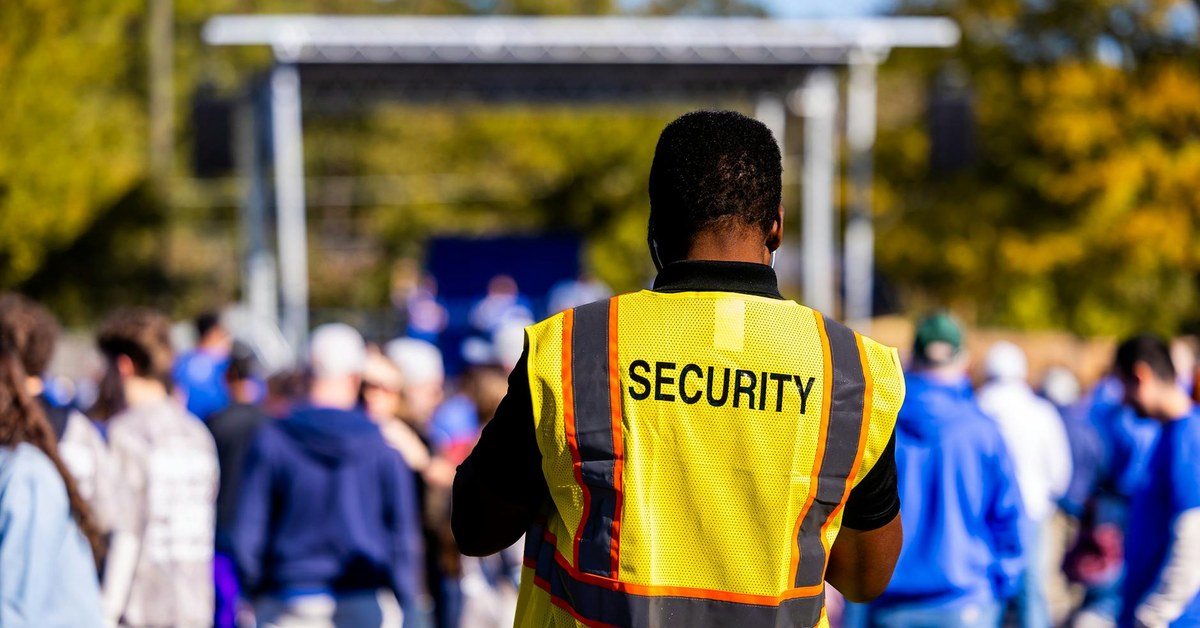
Look for safety zones: areas near barriers or walls where the crowd may be thinner, or where venue staff might be located. Venue security and first aid staff are trained for crowd safety situations and can help manage crowd pressure if they know it is building.
After any serious crowd incident, report your experience to venue staff and, if appropriate, to the event organiser or local authority. Crowd safety data from event-goers' experiences helps prevent future incidents. You witnessed something important, and your account matters.