Crowd Safety at Concerts, Stadiums, and Events
Large events and concerts are some of life's most memorable experiences, but crowd dynamics can become dangerous quickly. Understanding crowd safety could one day save your life or someone else's.
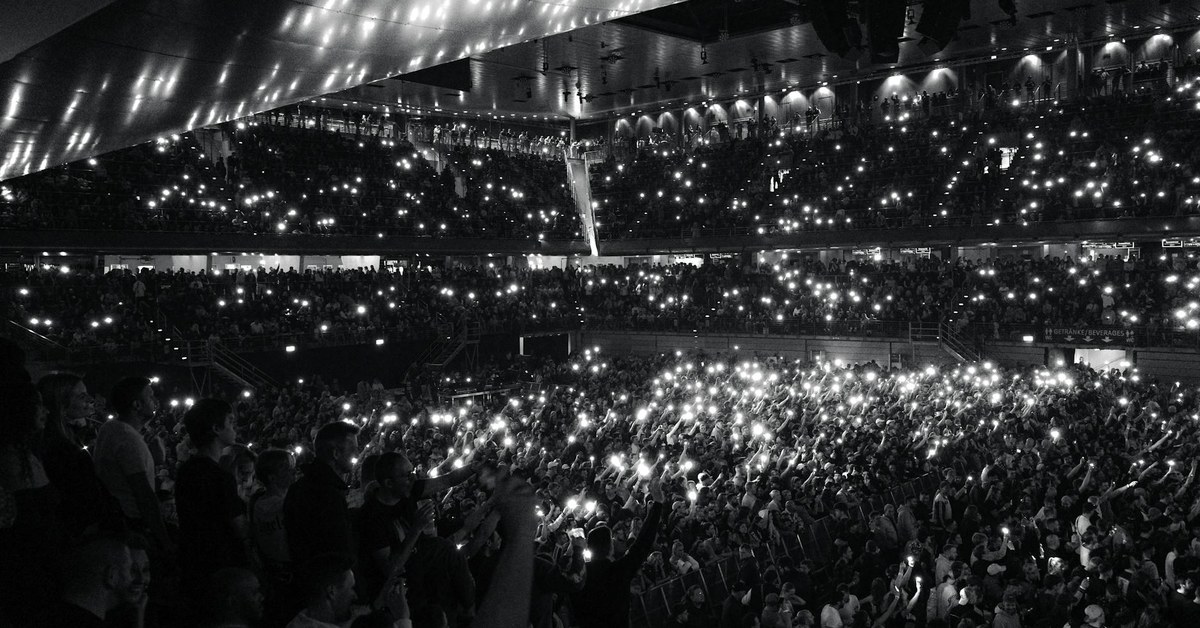

Crowd Safety at Concerts, Stadiums, and Events
“Large events and concerts are some of life's most memorable experiences, but crowd dynamics can become dangerous quickly. Understanding crowd safety could one day save your life or someone else's.”
Why Crowd Safety Is More Important Than You Think
For most people, attending a concert, music festival, sports match, or large public event is a joyful experience. Large gatherings bring energy, shared excitement, and memories that last a lifetime. But they also carry risks that many attendees, particularly young people at their first large events, are not fully aware of.
Crowd disasters have occurred at events all over the world. From the Hillsborough disaster in Sheffield in 1989, to the Love Parade tragedy in Duisburg in 2010, to the crowd crush at the Astroworld Festival in Houston in 2021, and the Halloween crush in Itaewon, Seoul in 2022, history shows that crowds can become lethally dangerous in a matter of minutes. These incidents claimed dozens to hundreds of lives in each case, and the victims were overwhelmingly ordinary people who had no warning that something was about to go wrong.
Understanding how crowd dynamics work, what warning signs to look for, and how to behave in a large crowd are not niche interests for safety professionals. They are practical skills that everyone who attends large events should have, and that are rarely taught explicitly anywhere.
How Crowd Crushes Happen: The Science
The term "crowd crush" is sometimes misunderstood. People often assume that crushes are caused by panic, with individuals running and trampling each other. Research by crowd safety experts, most notably Professor G. Keith Still, who has studied crowd dynamics for decades, shows that this is largely a myth. Most crowd crush deaths are caused not by trampling but by compressive asphyxia, where people are pressed together so tightly that they cannot breathe or their circulation is compromised.
Crowd crushes typically develop slowly, often without individual members of the crowd realising what is happening. As a venue fills, pressure builds from the back and sides. People near the front may be pressing forward voluntarily towards a stage or attraction, not realising that the people in front of them have nowhere to go. The compressive forces in a crowd can reach levels equivalent to hundreds of kilograms of pressure per square metre, making it physically impossible for people to stand upright or breathe even without any intention to harm on anyone's part.
A key concept in understanding crowd safety is crowd density. At low densities of around one person per square metre, movement is easy and comfortable. As density increases to three or four people per square metre, movement becomes more restricted and uncomfortable. At six or more people per square metre, crowd dynamics change fundamentally. Individuals lose the ability to move independently, and the crowd begins to behave more like a fluid than a collection of individuals. At this density, crowd waves, surges, and shockwaves can propagate through the crowd, knocking people off their feet and creating dangerous pile-ups.
Before the Event: Planning for Safety
Good crowd safety begins long before you arrive at the venue. Taking a few minutes to plan ahead can significantly improve your safety and your ability to respond if something goes wrong.
Research the venue in advance. Look at the layout, identify the locations of exits, and note where the first aid stations are. If a venue map is available online or in an app, familiarise yourself with it before you arrive. Knowing where you are going and how to get out means that if you do need to leave quickly, you will not be trying to navigate an unfamiliar space under pressure.
Consider where you want to be in the venue. For standing events, the area closest to the front and in the centre of the crowd will always be the most densely packed. If you are concerned about crowd density, choosing a position towards the back or the sides of the standing area, near a barrier or exit route, gives you more space and more options.
Tell someone who is not attending the event where you are going, which venue, and roughly when you expect to be back. This is basic safety practice but is frequently overlooked for events because they feel low-risk.
Wear appropriate clothing and footwear. Flip-flops and open-toed shoes are not suitable for standing events. If you lose a shoe or stumble in a dense crowd, sandals can make it very difficult to keep your footing. Wear comfortable, closed-toe shoes with a reasonable grip. Avoid clothing with strings or lanyards that could become caught.
If you are taking a bag, use a compact bag worn close to your body rather than a large backpack that takes up space and can create pressure on people around you. Many venues restrict the size of bags that can be brought in, so checking the event's bag policy in advance will save you problems at the entrance.
Arriving at the Venue
The arrival and entry process at large events is one of the highest-risk periods for crowd incidents. Large numbers of people converging on a limited number of entry points creates the conditions for dangerous compression.
Arrive either early, before the main rush, or later, after the initial surge has passed. Arriving precisely at the time when the majority of the crowd is trying to get in means you will be in the densest and least controlled part of the entry process.
As you approach the venue, be aware of the crowd around you. If you notice that the crowd is becoming very dense and movement is beginning to feel restricted, stop moving forward. Do not join a crowd that feels uncomfortably packed. If there is a bottleneck at an entrance, wait at a distance until it clears rather than pushing forward into it.
Once inside the venue, take a few minutes before moving towards your chosen position to locate the exits. This is particularly important in indoor venues. Note not just the main entrance you came through, but the nearest two or three alternative exits to wherever you plan to be standing or sitting.
Recognising Danger Signals in a Crowd
One of the most important crowd safety skills is the ability to recognise when a crowd is becoming dangerous before an incident occurs. The following warning signs should prompt you to move towards the edges of the crowd or an exit.
The first and most reliable warning sign is when you can no longer freely choose to move in any direction. In a safe crowd, you should be able to turn around, step sideways, and move backward if you choose to. If you feel that you are being carried along by the movement of the crowd and cannot independently choose to stop or change direction, the crowd has reached a dangerous density.
Crowd waves and surges are another warning sign. These are sudden movements that propagate through the crowd like a wave, often causing people to stumble or lose their footing. Occasional small surges in a standing area are normal, but frequent, strong, or unpredictable surges suggest dangerous crowd dynamics are developing.
Difficulty breathing or a sensation of pressure on your chest are immediate indicators of dangerous compression. Do not wait to see if it improves. Begin working towards the edge of the crowd immediately.
If you see people falling and not immediately getting back up, or if there is shouting or distress not connected to the performance, treat this as a serious warning sign and move away from that area.
Unusual noise from the crowd, such as screaming that is distinct from normal excitement, can also indicate that something is wrong in a part of the crowd that is not immediately visible to you.
What to Do If You Are Caught in a Crush
If you find yourself in a crowd that has become dangerously dense, your actions in the next few minutes matter enormously. The following guidance is based on the recommendations of crowd safety researchers and emergency services.
Do not fight against the crowd. Moving directly against a crowd surge is physically very difficult and can cause you to fall. Instead, move diagonally towards the edges of the crowd, working with the flow while gradually angling towards a less dense area or a barrier.
Protect your chest. In a compressed crowd, the risk is asphyxia rather than trampling. Raise your arms to chest height with your elbows bent, as if in a boxing guard position. This creates space in front of your chest and protects your ribcage. It also helps you maintain balance.
Stay on your feet. If you fall in a dense crowd, getting back up can be very difficult and the risk of serious injury is high. Focus on maintaining your balance. If you feel yourself falling, try to grab onto someone near you and communicate loudly that you need help.
If you do fall, protect your head and curl into a foetal position if possible, covering your head with your arms. Try to get to the barrier or wall edge as quickly as you can and push yourself back up.
Communicate. If you or someone near you is in distress, shout clearly for help. Other members of the crowd near you may be able to create space if they understand what is happening. Many crowd safety incidents are worsened because people do not realise that others around them are in danger.
If you witness someone else in distress, try to communicate to those around you and create space. If you are near a barrier or a security steward, alert them immediately. Security and event staff can communicate with venue management to reduce crowd pressure at specific points.
Festival-Specific Safety Considerations
Multi-day music festivals present a distinct set of safety considerations compared to single-day events at fixed venues. The combination of camping, extended periods without sleep, alcohol and substance use, and large crowd environments creates a specific risk profile.
Fatigue significantly impairs your ability to make good decisions, including safety-related ones. If you have not slept properly over multiple festival days, your ability to recognise warning signs in a crowd and respond appropriately is reduced. Being realistic about your physical state and choosing lower-density areas of a crowd when you are tired is a sound practical approach.
Stay hydrated, particularly at outdoor summer festivals. Heat, exertion, and alcohol all increase the risk of dehydration and heat-related illness. Most large festivals have water points throughout the site, and making regular use of them is important.
Know where the medical facilities are. Most large festivals have first aid stations distributed across the site, and some have field hospitals for more serious incidents. Saving the festival's emergency contact number in your phone, and knowing the grid reference or area code of the first aid station nearest to your campsite, can save critical time if an emergency occurs.
If you attend festivals with friends, establish a meeting point at the start of each day in case you become separated. Mobile phone coverage at large festivals is often very poor due to network congestion, so do not rely on being able to call or message each other.
Stadium Events: Specific Considerations
Seated stadium events carry different risks to standing events, but crowd safety is still relevant, particularly during entry and exit when large numbers of people are moving through limited spaces simultaneously.
At football matches and other sports events where significant rivalry exists between supporters, additional considerations around the behaviour of individuals and groups in the crowd are relevant. Being aware of the atmosphere and moving away from areas where tension or aggression is developing is a straightforward safety measure.
During emergency evacuations, follow the instructions of stewards and do not attempt to go against the direction of crowd movement to retrieve belongings or reach a different exit. Your safety takes priority over your possessions.
At outdoor stadiums, weather can change conditions significantly. Rain-wet surfaces become slippery, particularly on terraced or stepped areas. Lightning is a serious risk at outdoor events and should prompt you to seek covered shelter rather than remaining in an open area.
The Role of Event Organisers and Stewarding
While this guide focuses on what individual attendees can do to stay safe, it is worth acknowledging that the primary responsibility for crowd safety rests with event organisers. Good event management includes thorough crowd modelling before the event, trained and adequately staffed stewarding teams, clear signage, effective communications systems, and plans for managing medical emergencies and evacuations.
If you attend an event and notice poor stewarding, blocked exits, inadequate medical provision, or signs that the organisers are not managing crowd density appropriately, you have every right to raise this with event staff and to leave the event if you feel unsafe. Many crowd disasters have been preceded by warning signs that attendees noticed but felt unable to act on because they did not want to seem alarmist or miss the performance.
Your safety matters more than any performance. If something feels wrong, trust that instinct and act on it.
After the Event: Safe Departure
The post-event period is another high-risk time for crowd incidents. Large numbers of people leaving a venue simultaneously through limited exits creates compression risks similar to those at entry.
If you are not in a rush to leave, consider waiting in the venue for fifteen to thirty minutes after the event ends, until the main exit rush has subsided. This simple strategy significantly reduces your exposure to the most densely packed periods of crowd egress.
Follow the directions of stewards during the exit process. Stewards are positioned to manage the flow of people and prevent dangerous bottlenecks. Deviating from directed exit routes to find a shorter way out can contribute to dangerous concentration at certain points.
Once outside the venue, continue to be aware of crowd density. Large outdoor areas around venues can still become dangerously crowded, particularly near transport hubs.
Building a Habit of Crowd Awareness
The skills described in this guide are not difficult to develop, but they do require attention and practice. Making a habit of noticing exit locations when you enter any large building or space, whether a shopping centre, a train station, or a concert venue, gradually builds the kind of spatial awareness that makes you a safer person in any crowd environment.
Sharing this knowledge with friends who attend events with you is also valuable. A group of people who are all aware of crowd safety principles is collectively safer than a group where only one person has given it thought.
Large events are among the most vibrant and enjoyable experiences available to us. The goal of crowd safety awareness is not to make them seem frightening but to ensure that your enjoyment of them is built on a foundation of genuine knowledge, so that if something does go wrong, you are prepared to respond in a way that keeps you and those around you safe.