Family Mealtimes: Why They Matter and How to Protect Them
A guide for parents on the evidence for family mealtimes as a protective factor for children and teenagers, covering what the research shows, practical strategies for families with busy schedules, and how to make mealtimes genuinely positive.
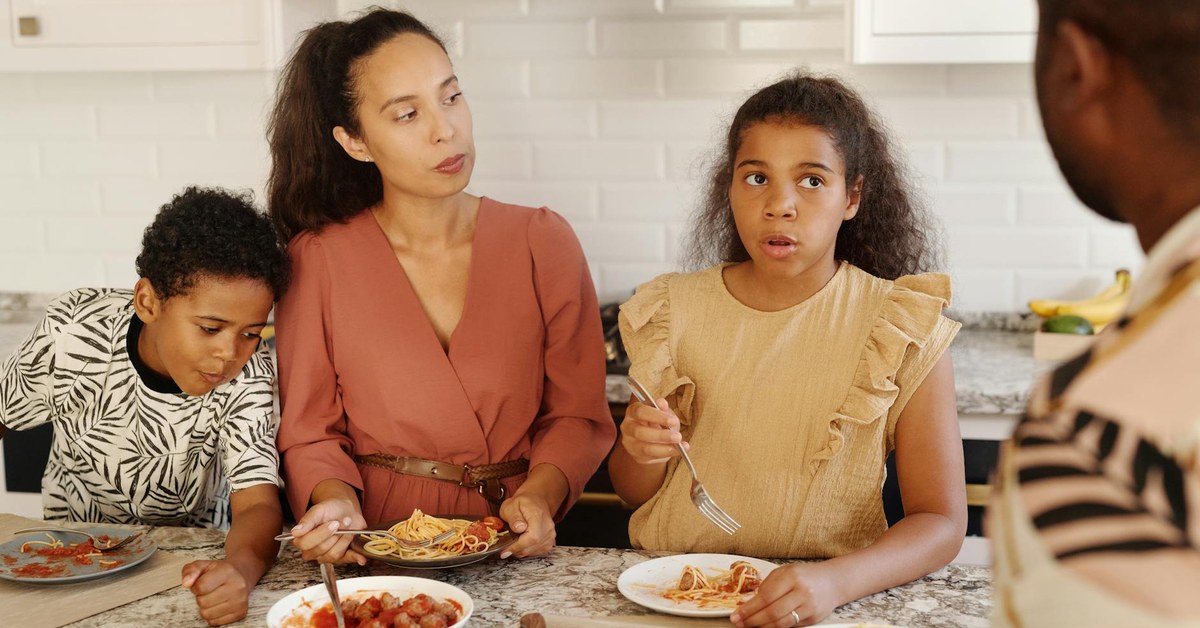

Family Mealtimes: Why They Matter and How to Protect Them
“A guide for parents on the evidence for family mealtimes as a protective factor for children and teenagers, covering what the research shows, practical strategies for families with busy schedules, and how to make mealtimes genuinely positive.”
The Evidence for Family Mealtimes
Family mealtimes have an unusually strong evidence base as a protective factor for children and teenagers. Research spanning several decades and multiple countries has consistently found associations between regular family meals and a range of positive outcomes for young people, including better mental health, lower rates of eating disorders, reduced substance use, better academic performance, and greater family cohesion and communication.
These associations hold across different family structures, income levels, and cultural backgrounds, and remain significant even after controlling for other family variables such as general quality of family relationships. The mealtime itself appears to have specific value, not just as a proxy for overall family functioning, though family functioning and meal frequency are of course related.
The specific mechanisms are not entirely clear, but several are plausible. Regular family meals provide a predictable, repeated context for family communication and connection. They create opportunities for children to feel heard and involved in the family conversation. They provide an anchor point in the day that structures family life and provides a sense of belonging. And the eating together aspect itself may reinforce positive patterns of food intake and attitudes toward eating.
What Makes Mealtimes Beneficial
Not all family mealtimes are created equal. Research distinguishes between mealtimes that are positive experiences characterised by warm engagement, conversation, and a reasonably relaxed atmosphere, and those that are characterised by conflict, pressure, criticism, or silence. The protective associations are found primarily with the former.
Several factors seem to be particularly important:
- Conversation: Mealtimes at which conversation flows, in which children are genuinely included and their contributions valued, are significantly more beneficial than those at which adults dominate or at which screens provide background noise that prevents real engagement.
- Positive atmosphere: Mealtimes that are relaxed and pleasant in tone, even if not without conflict, are associated with better outcomes than those characterised by tension, criticism, or argument. Mealtimes that have become battlegrounds over food, homework, or behaviour lose their protective value.
- Regularity: The frequency matters. Occasional special meal occasions do not produce the same outcomes as regular, predictable shared mealtimes. Research typically finds that the benefits are associated with eating together several times per week rather than occasionally.
- Device-free time: Phones and other screens at the table fundamentally undermine the connection and conversation that produce the benefits. A consistent family norm of devices away during meals is one of the most important structural supports for beneficial mealtimes.
The Challenge for Contemporary Families
Regular shared family mealtimes are genuinely difficult to achieve in many contemporary family situations. Varying work schedules, children's activities, commuting, and the general busyness of family life mean that the traditional image of the family sitting down to a shared meal every evening is not the reality for many families. This is not moral failure: it is the logistical reality of contemporary life.
The research on this is somewhat reassuring: families that eat together regularly but not daily still show benefits. The aim is not an unrealistic ideal but a realistic increase in the frequency of shared mealtimes that is manageable within the specific family's situation. For some families, this means protecting three or four evenings per week for family dinner. For others, shared breakfast may be more achievable than shared dinner. For families with very young children, the logistics are different from those with teenagers who have their own social schedules.
Practical Strategies for Protecting Mealtimes
Increasing the frequency and quality of family mealtimes requires both structural changes and relational attention. Practical strategies include:
- Identify which meal is most achievable: Rather than trying to make every mealtime shared, identify which meal, given your specific family's schedule, is most consistently achievable as a shared experience. For many families, this is breakfast or a weekend meal rather than the weekday dinner.
- Schedule it: Treating family meals as appointments that are protected from other commitments gives them the same status as other scheduled activities. A commitment to two or three shared meals per week, treated as non-negotiable, is more achievable than an aspiration to eat together every day.
- Make devices genuinely absent: A household norm that phones are not at the table, applied to all family members including parents, removes the most significant barrier to genuine mealtime engagement.
- Share the preparation: Involving children in food preparation, at an age-appropriate level, extends the positive experience beyond the meal itself and builds practical skills. A child who has helped make a meal is often more engaged with eating it and with the mealtime conversation around it.
- Keep the focus on connection, not topics of conflict: If mealtimes have become associated with difficult conversations, homework arguments, or behavioural conflict, shifting the norm requires deliberate attention. Choosing genuinely engaging mealtime conversation topics, such as a rotating question, the best and worst part of the day, or interesting things that happened, redirects mealtimes toward connection.
Making Mealtimes Positive for Children of Different Ages
The character of a family mealtime that works well varies across childhood. With very young children, mealtimes involve managing the unpredictability and mess of early eating, which is not inherently compatible with relaxed adult conversation. Keeping expectations realistic at this stage, focusing on including young children in the mealtime experience rather than expecting them to conform to adult mealtime behaviour, preserves the positive association with family mealtimes that builds over time.
With school-age children, mealtimes can become a genuine context for conversation about the day, for storytelling, humour, and the exchange of information and ideas that builds family communication. Being genuinely curious about children's experiences at school, with their friends, and in their wider lives, and making space for their contributions to the conversation alongside adult input, makes children feel valued in the family conversation.
With teenagers, mealtimes can become more fraught as adolescent developmental needs and family expectations come into tension. Teenagers who resist family mealtimes or who attend but are minimally engaged are often more influenced by them than they appear. Maintaining the expectation of attendance without making compliance the entire focus of the meal, and finding conversation topics that teenagers find genuinely interesting rather than only asking about school, preserves the connection value even when the teenager is not overtly enthusiastic.
Food and Mealtimes: Separating the Issues
The protective effects of family mealtimes are associated with the social and relational aspects of eating together, not with the content of what is eaten. Families who share regular, positive mealtimes over simple food achieve the benefits just as well as those sharing elaborate meals. The pressure to provide nutritionally optimal meals at every shared sitting can itself become a barrier: the pursuit of the perfect family dinner can crowd out the good-enough shared meal that is actually achievable.
Similarly, mealtimes that have become dominated by conflict over food, pressure to eat, or battles over dietary preferences, lose their protective value. If mealtimes in your family are primarily associated with food conflict, addressing the food dynamics directly, potentially with support from a professional, is worth prioritising before the relational benefits of the mealtime can be reclaimed.