Basic First Aid Every Young Adult Should Know
Knowing basic first aid can be the difference between life and death in an emergency. Every young adult living independently should know how to respond to the most common urgent situations.

Basic First Aid Every Young Adult Should Know
“Knowing basic first aid can be the difference between life and death in an emergency. Every young adult living independently should know how to respond to the most common urgent situations.”
Why Every Young Adult Needs Basic First Aid Knowledge
First aid skills are among the most practically valuable knowledge any person can have, yet formal first aid training is surprisingly rare among young adults who have not specifically sought it out. Emergencies happen without warning, often in contexts where professional medical help is minutes away. What you do, or do not do, in those minutes can make the difference between a full recovery and a permanent injury, or between life and death.
You do not need to be a medical professional to make a meaningful difference in an emergency. A small number of skills, learned and practised, give you the ability to keep someone alive and stable until emergency services arrive. This guide covers the most important first aid knowledge for young adults living independently, spending time in social settings, and navigating the world.
The Emergency Response Framework
Before diving into specific situations, understanding the general framework for emergency response helps you act systematically rather than panicking. The priorities in any emergency are: ensure safety for yourself and the casualty, assess the situation, call for help, and provide appropriate first aid until professional help arrives.
Never put yourself in danger to help someone else. If a scene is dangerous, your safety comes first. You cannot help others if you become a casualty yourself.
The emergency services number varies by country. In many countries it is 999 or 911. In European Union countries, 112 works across all member states. If you are abroad, know the local number before you need it. When you call, stay calm and provide the location as specifically as possible, what has happened, how many people are affected, and the condition of the casualty. Follow the operator's instructions, as they will guide you through what to do while help is on the way.
Cardiopulmonary Resuscitation (CPR)
CPR is the most important first aid skill. When someone's heart stops, the window for successful resuscitation without brain damage closes rapidly. Bystander CPR performed before emergency services arrive dramatically improves survival rates in cardiac arrest.
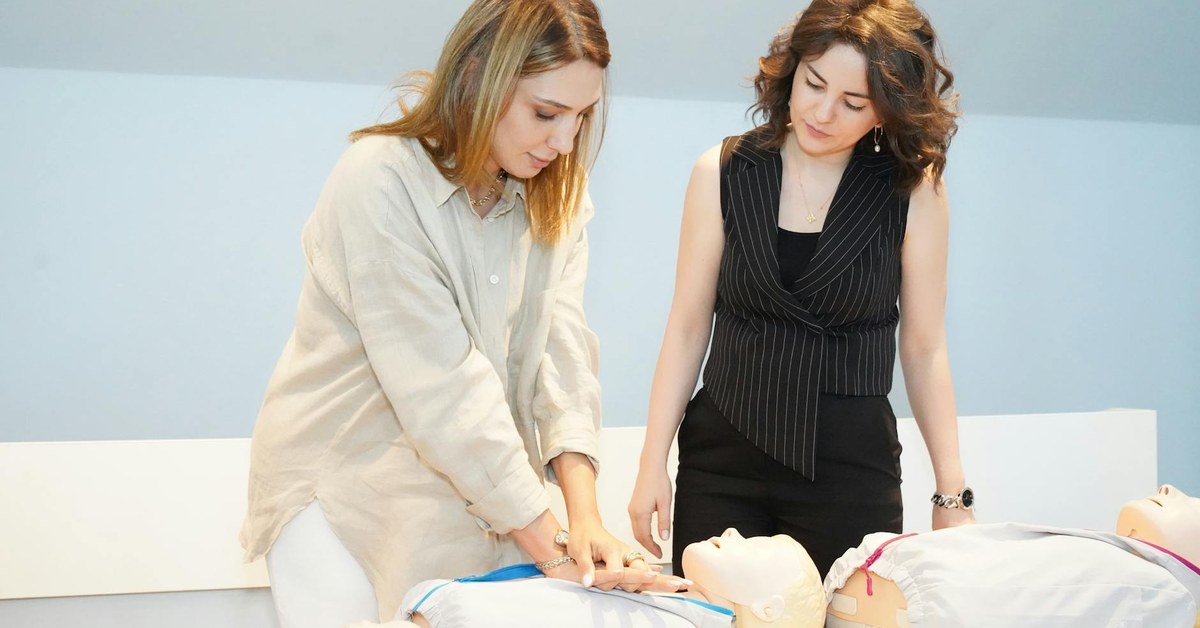
The simplified process for adult CPR is as follows. Check for response by tapping their shoulders and calling out loudly. If there is no response and they are not breathing normally, call emergency services immediately or ask someone to call while you start CPR. Place the heel of your hand on the centre of their chest, place your other hand on top with fingers interlocked, and press down firmly and quickly, compressing the chest by at least five to six centimetres at a rate of about 100 to 120 compressions per minute. This is roughly the beat of the song Stayin' Alive. If you are trained in rescue breathing, give two breaths after every 30 compressions. If you are not confident in rescue breathing, hands-only CPR, continuous chest compressions without breaths, is still highly effective and is recommended by major resuscitation organisations for untrained bystanders. Continue until the person starts breathing normally, emergency services take over, or you are physically unable to continue. If an automated external defibrillator (AED) is available, use it as soon as possible. These devices are in many public spaces, provide voice instructions, and are safe for untrained users.
Choking
Choking occurs when an object partially or completely blocks the airway. Signs include inability to speak or cry out, clutching the throat, a high-pitched noise when breathing, and turning blue. If the person can cough effectively, encourage them to keep coughing. If they cannot cough effectively or are losing consciousness, act immediately.
For adults and children over one year: give up to five firm back blows between the shoulder blades with the heel of your hand, checking after each whether the obstruction has cleared. If this does not work, give up to five abdominal thrusts, standing behind the person, one foot forward for stability, making a fist with one hand and covering it with the other, positioning just above the navel and below the breastbone, and thrusting sharply inward and upward. Alternate five back blows with five abdominal thrusts until the obstruction clears or the person becomes unconscious. If they become unconscious, call emergency services and begin CPR.
Severe Bleeding
Severe bleeding can be life-threatening within minutes. The priority is to stop the bleeding. Apply firm, continuous direct pressure to the wound using the cleanest material available, such as clothing, a scarf, or a first aid bandage. Do not remove this material if it becomes soaked; add more on top and press harder. Maintain pressure until emergency services arrive. If the bleeding is from a limb and is severe enough to be life-threatening, a tourniquet applied above the wound may be necessary. This is a last resort for limb injuries only, not for torso or neck wounds. If you apply a tourniquet, note the time and tell emergency services. Elevating the injured limb above the level of the heart, where possible, reduces blood flow to the area and slows bleeding.
Burns
Cool a burn immediately by running cool, not cold, water over it for a minimum of twenty minutes. This reduces heat damage and pain. Do not use ice, ice water, butter, oil, or any other substance. Remove clothing and jewellery from the affected area if possible, but do not remove anything that is stuck to the burn. Cover the burn with a clean, non-fluffy material such as cling film or a clean plastic bag. Do not use cotton wool or fluffy bandages that can stick to the wound. Seek medical attention for any burn larger than the size of the casualty's hand, any burn on the face, hands, feet, genitals, or over a joint, any burn that appears deep or does not cause pain, or any burn in a child or elderly person. Do not burst blisters.
Anaphylaxis (Severe Allergic Reaction)
Anaphylaxis is a severe, potentially life-threatening allergic reaction that can develop within minutes of exposure to a trigger, such as food, insect stings, or medication. Signs include difficulty breathing, swelling of the throat or tongue, a rapid pulse, dizziness or collapse, and pale or blotchy skin. If the person has an adrenaline auto-injector (such as an EpiPen), help them use it or use it for them immediately. Call emergency services. Keep the person lying down with their legs raised if possible, unless breathing is easier sitting up. Be prepared to perform CPR if they lose consciousness and stop breathing normally. A person who has received an adrenaline injection still needs emergency medical assessment even if they appear to improve.
Where to Learn More
This guide covers the basics. Formal first aid training, which includes hands-on practice of CPR and other techniques, is significantly more effective than written instruction alone. First aid courses are widely available from organisations like the Red Cross and St John Ambulance in many countries, are often free or low-cost, and typically take only a few hours. Consider taking a basic first aid course. It is one of the most valuable investments of a few hours you can make.