Helicopter Parenting vs Free-Range Parenting
A thoughtful guide exploring the spectrum from overprotective to highly permissive parenting, what research says about the impact on children, and how to find an approach that builds genuine resilience and independence.
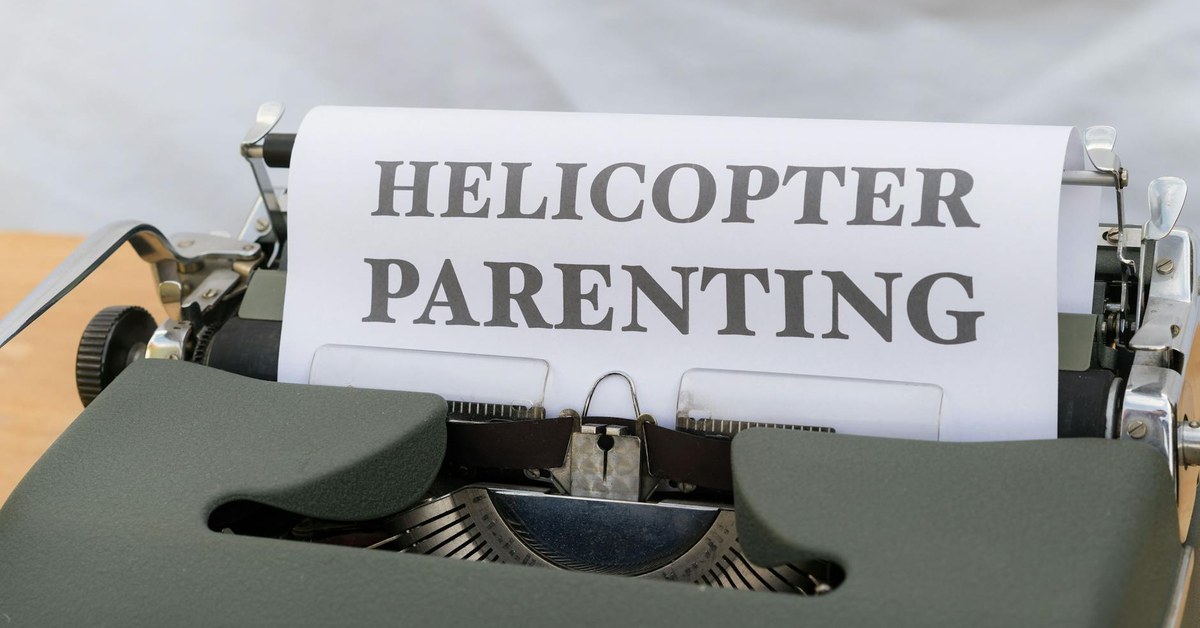

Helicopter Parenting vs Free-Range Parenting
“A thoughtful guide exploring the spectrum from overprotective to highly permissive parenting, what research says about the impact on children, and how to find an approach that builds genuine resilience and independence.”
Two Extremes, One Question
Contemporary parenting culture has produced two recognisable archetypes that sit at opposite ends of a spectrum. Helicopter parenting, characterised by close monitoring, frequent intervention, and a high degree of parental involvement in every aspect of a child's life, has been widely criticised for producing anxious, dependent adults who struggle to manage setbacks independently. Free-range parenting, characterised by granting children significant autonomy, allowing risk-taking, and trusting children to manage many situations without adult intervention, has attracted concern from those who feel it underestimates real risks to children's safety.
As with most things in parenting, the most useful insights lie not in defending either extreme but in understanding what the evidence actually shows about child development, risk, and resilience, and in calibrating your approach to your individual child's age, temperament, capabilities, and environment.
What Research Shows About Overprotective Parenting
The research on overprotective parenting, sometimes described in the academic literature as psychological control or intrusive parenting, is fairly consistent. Children who grow up in highly managed environments with frequent parental intervention tend to show several patterns:
- Higher rates of anxiety and depression, possibly because they have had fewer opportunities to develop their own coping strategies
- Greater difficulty tolerating frustration and setbacks
- Lower self-efficacy: a reduced belief in their own ability to handle challenges
- More difficulty making decisions independently as young adults
- Some evidence of reduced academic performance relative to potential, as motivation is externalised rather than internal
This does not mean that attentive, involved parenting causes harm. The research distinguishes between parental involvement, which is associated with positive outcomes, and parental intrusiveness and control, which is associated with negative ones. A parent who is closely involved in a child's life, curious about their experiences, and warmly supportive while allowing the child to manage age-appropriate challenges independently is providing something very different from one who prevents the child from experiencing any difficulty or failure.
What Research Shows About Risk and Unstructured Time
The past several decades have seen a significant reduction in children's independent mobility, unstructured outdoor play, and unsupervised time across many high-income countries. The consequences of this shift are a subject of significant concern among developmental psychologists.
Risky play, the kind that involves some element of physical challenge, height, speed, or uncertainty, appears to serve important developmental functions. It builds physical confidence and competence, develops risk assessment skills, teaches children to read their own physical limits, and provides experiences of both success and manageable failure that are essential for developing resilience. Research suggests that children who engage in risky play are not more likely to have accidents than those who do not, and may be safer in unsupervised situations because their risk judgment is better calibrated.
Unstructured, child-directed free time, ideally including outdoor play with peers, is associated with the development of creativity, problem-solving, social negotiation skills, and intrinsic motivation. All of these are capacities that structured, adult-led activities develop less effectively.
Real Risk vs Perceived Risk
One of the drivers of overprotective parenting is a significant mismatch between perceived and actual risk. High-profile media coverage of child abductions, accidents, and other rare but devastating events creates a mental availability bias: these events feel more common than they are because they are so widely reported. In most high-income countries, children today are statistically safer than at any previous point in history across virtually every measurable risk category. Crime rates involving children are at historic lows in many countries. Yet parental anxiety about child safety has risen, not fallen, over this same period.
This is not an argument for ignoring real risks, which certainly exist and are worth managing. It is an argument for calibrating protective behaviours to actual, contextualised risk rather than to fear, and for recognising that managed risk, appropriate to a child's age and capabilities, is not danger: it is a developmental necessity.
Age-Appropriate Independence: A Guide
The appropriate degree of independence increases as children develop the cognitive, physical, and social capacities to manage it safely. There is no single correct age for any milestone, and individual children vary enormously. The following are general illustrations rather than prescriptions:
- Ages 4 to 6: Playing in a safe enclosed garden without constant direct supervision, choosing their own play activities, managing minor social conflicts with peers
- Ages 7 to 9: Playing in a local park or street with peers and without adults nearby, making small purchases independently, beginning to walk short, familiar routes
- Ages 10 to 12: Walking or cycling to school independently on familiar routes, spending time at home briefly without adults, managing a mobile phone, organising their own social plans with peers
- Ages 13 and above: Travelling independently on public transport, spending evenings with peers, managing more complex social and practical situations
The key question for any developmental milestone is not just the child's age but whether they have the specific skills needed to manage the situation: road safety awareness, what to do if something goes wrong, how to seek help. Preparation is what makes independence safe, not simply withholding it until a specific birthday.
The Role of Failure
One of the most counterintuitive findings in developmental research is that failure, managed appropriately, is more beneficial than success without effort. A child who is consistently shielded from failure does not develop the coping skills, persistence, and accurate self-assessment that come from experiencing manageable setbacks and recovering from them. The experience of struggling with something difficult, tolerating the discomfort, and eventually succeeding or adapting when they do not succeed is foundational to resilience.
This has practical implications: allow children to struggle with age-appropriate challenges before intervening. Let them experience the natural consequences of minor failures. When they are upset about a setback, validate the feeling rather than immediately rescuing them from it. The message that you believe they can handle difficulty, delivered through your actions as much as your words, is one of the most powerful things a parent can communicate.
Finding Your Own Balance
The right balance between protection and independence is not a fixed point but a moving target that evolves as the child grows and as you learn more about their specific capabilities, temperament, and judgment. Parents whose children are more anxious, impulsive, or have specific vulnerabilities may need to calibrate differently from those with more confident or risk-averse children.
The most useful question is not am I being too protective or not protective enough but rather: what capacities and freedoms does my child need to develop now, and how can I give them the preparation and scaffolding to use them safely? That question keeps the focus where it belongs: on the child's development rather than on the parent's anxiety or ideology.