Helping Your Child Build Resilience: A Practical Guide
Resilience is not something children either have or don't have. It is built through experience, relationships, and specific skills that parents can actively support.

Helping Your Child Build Resilience: A Practical Guide
“Resilience is not something children either have or don't have. It is built through experience, relationships, and specific skills that parents can actively support.”
What Resilience Is and Is Not
Resilience is frequently misunderstood. It is not a fixed personality trait that some children have and others lack. It is not toughness, or the ability to never be upset by difficult things. And it is not developed by exposing children to hardship and standing back while they struggle.
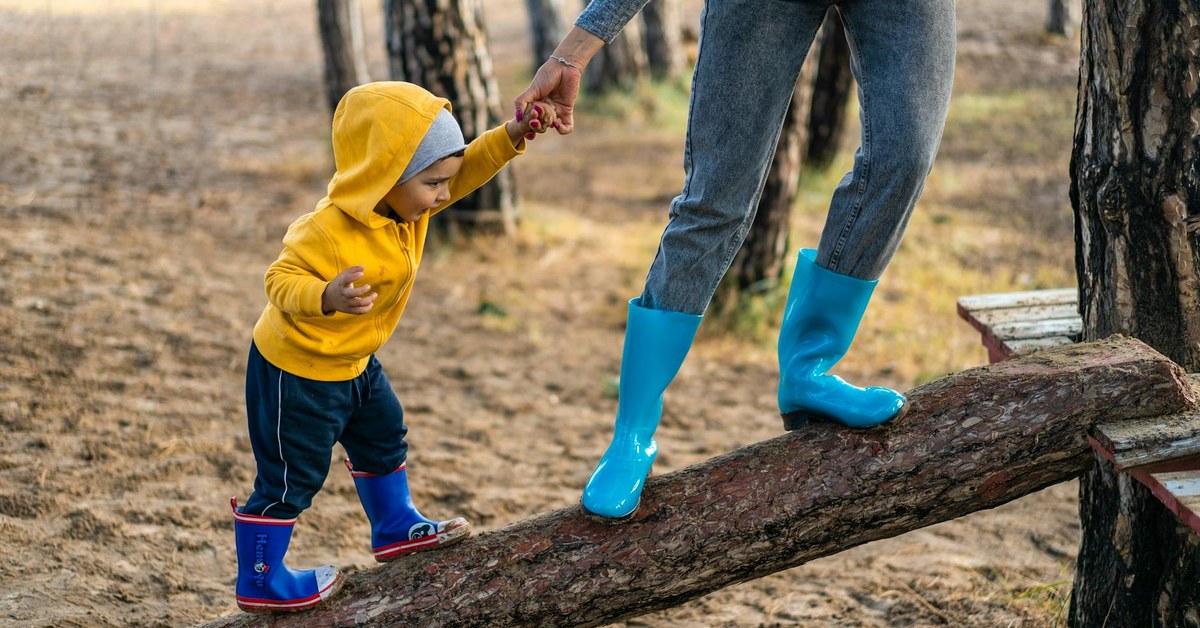
Resilience is the capacity to adapt well in the face of adversity, stress, or difficulty. It is dynamic, not fixed, and it is built through the accumulation of supported experiences of challenge, over time, within secure relationships. This has two important implications: it can be developed, and it requires both challenge and support, not one or the other.
Children who have highly resilient outcomes tend to share two things: a close, responsive relationship with at least one stable adult, and increasing, supported opportunities to navigate difficulty and solve problems. The relationship is the foundation. The opportunities are how the skills are built on it.
The Foundation: Secure, Responsive Relationships
The most consistent finding across decades of resilience research is that secure attachment to at least one trusted adult is the strongest predictor of resilient outcomes in children. This does not require a perfect parent or a perfect childhood. It requires a relationship in which the child knows they are valued, that the adult will notice when they are distressed and respond, and that they can return to the adult as a safe base when the world becomes difficult.
This relational foundation is built through thousands of small interactions over time: being picked up and comforted as a baby, having your feelings named and acknowledged by a parent, having someone sit with you when you are upset rather than simply telling you it will be fine, having an adult follow your lead in play, and having someone who is genuinely interested in your experience rather than just managing your behaviour.
No parent does this perfectly and consistently. The repair of ruptures in the relationship (apologising for losing your temper, making it right after a conflict) is itself an important part of building resilience. Children who experience rupture and repair learn that relationships can survive difficulty and that things can be made better. This is itself a profoundly resilient lesson.
Teaching Problem-Solving
Problem-solving is a skill, and like all skills it is built through practice. Children who are protected from all problems by parents who solve everything on their behalf do not develop problem-solving capacity. Children who are overwhelmed by problems that are beyond their current capacity are not developing resilience: they are developing helplessness.
The productive middle ground involves offering children problems that are slightly beyond their current ability but achievable with effort and, when needed, support. Rather than solving problems for children, asking "What do you think you could try?" and then supporting the process rather than directing the outcome builds the internal sense of agency that is central to resilience.
When things go wrong, as they will, the question to focus on is not who is to blame but what can be learned and what can be done now. This applies from small daily frustrations (the Lego model that keeps falling apart) to larger setbacks (failing a test, falling out with a friend). The consistent practice of problem-focused thinking in small situations builds the capacity to apply it in larger ones.
Emotional Regulation: Naming and Managing Feelings
Emotional regulation, the ability to recognise, tolerate, and manage difficult emotions, is central to resilience. Children are not born with this capacity: it develops through the experience of having their emotions mirrored and named by attuned adults, and gradually, through being supported to manage their own emotional states with decreasing adult help.
Naming emotions is the first step and has more practical impact than it might seem. Research by neuroscientist Matthew Lieberman shows that naming an emotional state (affect labelling) actually reduces the intensity of that state by engaging the prefrontal cortex. Saying to a distressed child, "You seem really frustrated, you were looking forward to that and it didn't work out the way you wanted" is not just empathetic: it is actively helping the child regulate.
From a foundation of emotion recognition, children can be supported to develop regulation strategies: breathing techniques, physical movement, time away from a frustrating situation to return to it later, talking about feelings, and creative expression. These are all forms of what adults know as coping strategies, and children learn them through a combination of modelling (watching how adults manage their emotions) and supported practice.
The Role of Failure
Children who are protected from failure do not develop the understanding that failure is survivable, informative, and often the beginning of something better. This understanding is essential to resilience, because resilience is not about never encountering setbacks. It is about being able to experience them and continue.
Age-appropriate failure is a genuine gift. The child who does not make the sports team and works out what to do next, the child whose science project does not work and has to debug it, the child who falls out with a friend and has to navigate the repair: all of these are experiences that build the concrete knowledge that difficulty can be survived and overcome.
The parent's role in these moments is not to prevent the distress (which is real and valid) but to sit alongside it: to validate the feeling, to express confidence in the child's capacity to cope, and to offer support without taking over. "That is really disappointing. What do you think you might do?" followed by genuine support for whatever they decide to try is more valuable than any solution a parent imposes.
Building a Growth Mindset
Carol Dweck's research on growth versus fixed mindset is directly relevant to resilience. Children with a growth mindset believe that their abilities can develop through effort and learning. Children with a fixed mindset believe their abilities are fixed and that failure reflects on their fundamental capability.
Growth mindset is nurtured through praising effort and process rather than outcomes and fixed traits. Not "You are so clever" (which ties identity to performance and makes failure threatening) but "You worked really hard on that, and look what you figured out" (which ties identity to effort and makes failure an opportunity to try harder).
Exposing children to stories of people who struggled and persisted, and framing challenge as interesting and informative rather than threatening, consistently reinforces the belief that difficulty is something to engage with rather than something to avoid. That belief is the foundation of resilient action.