Social Media Safety for Teenagers: A Real-World Guide
Social media is a real and important part of teenage life. This guide covers the actual risks and practical steps that help teenagers use it well, without being naive or patronising.

Social Media Safety for Teenagers: A Real-World Guide
“Social media is a real and important part of teenage life. This guide covers the actual risks and practical steps that help teenagers use it well, without being naive or patronising.”
Why This Guide Is Different
Most social media safety guides for teenagers fall into one of two categories: either they treat teenagers as though they have no understanding of the internet at all, or they are so hedged and mild that they fail to address anything of substance. This guide attempts something more useful: honest, specific, practical information for people who are already on social media and want to use it in ways that protect them without making them paranoid.
Social media is genuinely valuable. It connects people, builds community, enables creative expression, and provides access to information and perspectives that would otherwise be unavailable. The risks are real, but so are the benefits. The goal is not to avoid social media but to use it in a way that is genuinely worth your time and does not create unnecessary risk.
The Digital Footprint: What You Leave Behind
Everything you post online creates a trace. The most important word in digital safety is not delete: it is permanent. Screenshots can be taken before you delete something. Cached versions exist. Shares spread content beyond your control. Archived versions of websites preserve content that has been removed. The internet has no reliable undo button.
This is not a reason never to post anything. It is a reason to apply the same filter to online content that you would apply to anything with permanent consequences: would you be comfortable if this was still visible in ten years? If a prospective employer, a future partner, or your parents saw this, what would the implications be?
Specific things that create the most significant long-term footprint problems: images (once an image exists, you lose control of it), location information in posts (which can reveal your routines and your home), specific statements about opinions or behaviour, and anything that was intended to be funny in context but is decontextualised when shared elsewhere.
Privacy Settings: The Honest Truth
Privacy settings help but they are not a complete solution. A private account is visible to everyone you have accepted as a follower. It prevents discovery by strangers, but if your settings have ever been public or if someone you follow shares your content, it may be more widely visible than you think.
Review your follower lists periodically and remove people you do not know in person or no longer have contact with. These accounts remain as low-level surveillance on your life that serves no positive purpose and carries some risk.
Do not accept follower requests from people you do not know in person. If someone you do not recognise follows you, following back gives them access to your content, your connections, and the information in your posts and bio. The person following you may be exactly who they say they are, or they may not be.
Location: The Information You Might Not Realise You Are Sharing
Location information in social media can reveal more than people realise. Tagging your home in posts, sharing the name of your school in your bio, checking in at locations on a regular schedule, posting routine content from the same places, and posting in real time from your current location all create a map of your life that is available to anyone who can see your content.
The simple practices that reduce this: post after you have left a location rather than in real time, remove location tags from photos before posting (most smartphones embed GPS data in photo metadata), and avoid information in your bio that precisely identifies your location below the city level.
Recognising Grooming Online
Online grooming can happen on any platform where contact with strangers is possible. The warning signs are consistent regardless of the platform: someone who expresses interest in you that moves quickly toward personal and emotional topics, who seems particularly interested in your problems at home or your relationships with your family, who makes you feel uniquely understood and special, who gradually shifts the conversation toward more personal or sexual topics, who asks for photos or video, and who introduces the idea that what is between you should be kept private.
These patterns are not coincidental: they are a deliberate sequence. If someone online is following this pattern, that is meaningful information regardless of how genuine they seem, how long you have been talking, or how much you feel you know them. You cannot know someone from online interaction alone.
If something a contact says or asks makes you uncomfortable, you do not have to respond. You can block them, report them to the platform, and tell a trusted adult. You will not get in trouble for telling someone about an uncomfortable online contact.
Online Harassment: What to Do
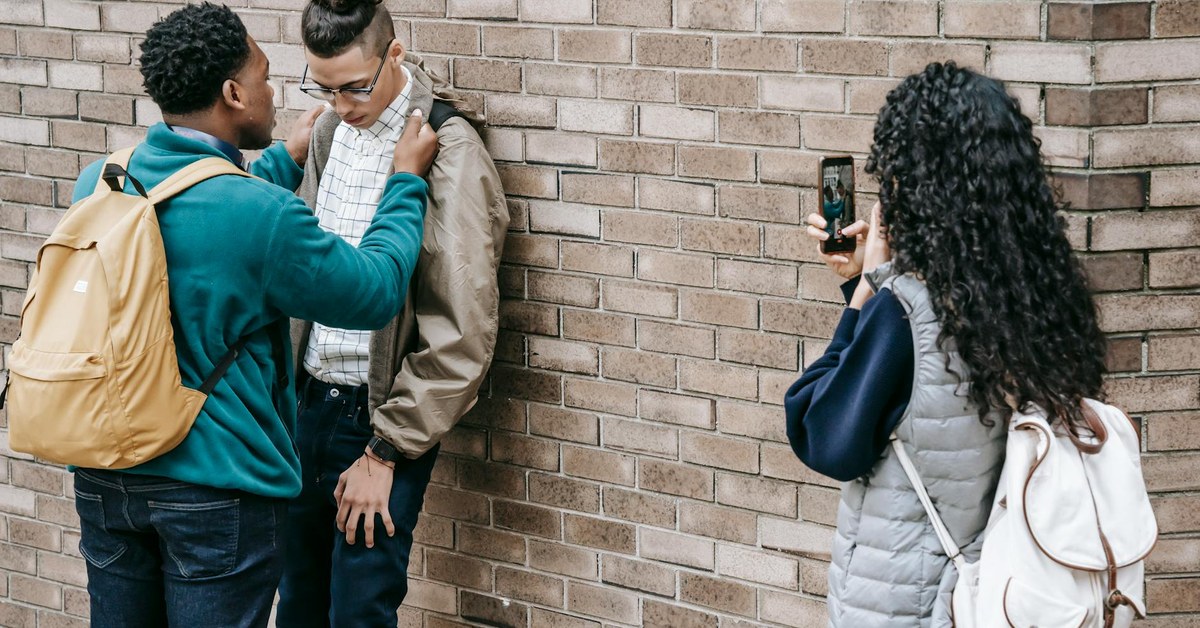
If you experience harassment, threats, or abuse on a social media platform: do not respond (engaging almost always makes things worse), take screenshots of all evidence with timestamps visible, report the account to the platform, and block the account.
For severe or persistent harassment, cyberstalking, or threats: report to the police. Serious online harassment can constitute criminal offences. Collect all the evidence before blocking, because blocking removes the record from your view.
Do not delete your account in response to harassment: this destroys evidence. Keep the evidence and then block and report.
Your Mental Health and Social Media
Social comparison on social media is real and has measurable effects on mental health. What you see on other people's profiles is a curated highlight reel, not their actual life. This is obvious when stated explicitly and very easy to forget in the moment of scrolling. Every person who appears to be having an effortlessly excellent life is experiencing exactly the same range of difficulties, boredom, and ordinary days as everyone else, just not posting them.
If you notice that your mood is consistently lower after using a particular platform or after using social media generally, that is information worth acting on. Experiment with reducing use for a week and notice the effect. Curate your feed actively: unfollow accounts that consistently make you feel worse about yourself, and follow those that add something positive.
You are in control of your relationship with these platforms. They are designed to maximise the time you spend on them, which is not the same as maximising the value you get from them. Choosing when and how you use social media rather than simply responding to notifications and scroll prompts gives you that control back.