Supporting Boys' Emotional Health
A guide for parents on supporting the emotional development of boys, challenging unhelpful stereotypes, teaching emotional literacy, and creating the conditions for boys to grow up with strong mental health.
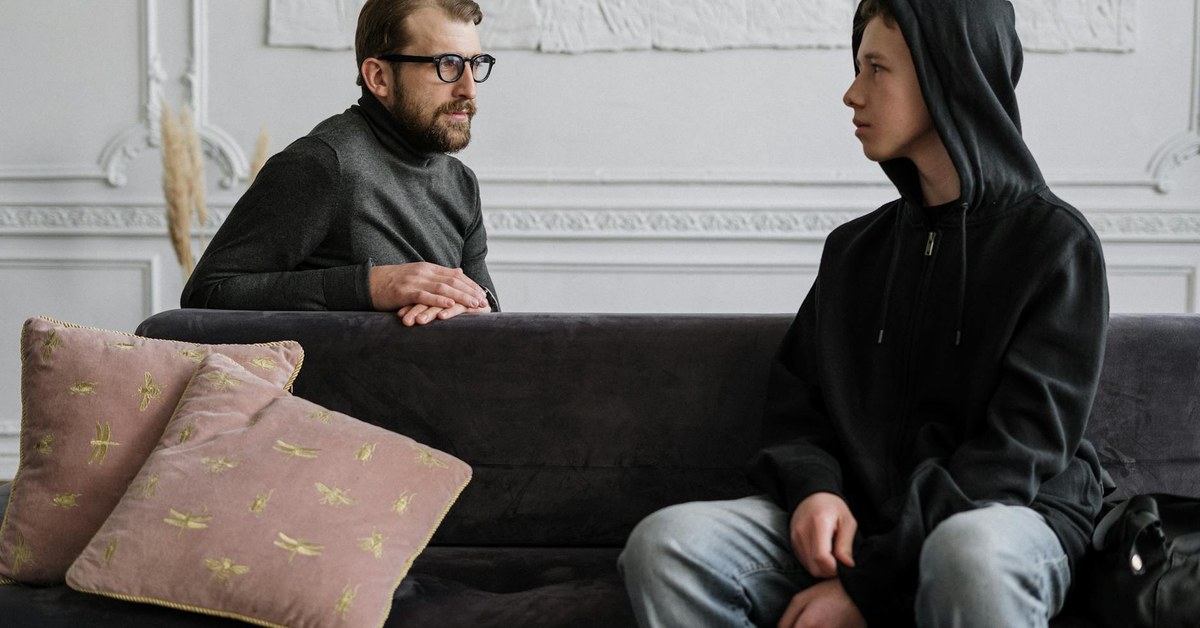

Supporting Boys' Emotional Health
“A guide for parents on supporting the emotional development of boys, challenging unhelpful stereotypes, teaching emotional literacy, and creating the conditions for boys to grow up with strong mental health.”
Why Boys' Emotional Health Needs Specific Attention
Boys and men are significantly overrepresented in suicide statistics in most countries around the world. Boys are more likely than girls to have their emotional distress expressed through behaviour, such as aggression, risk-taking, or withdrawal, rather than through direct communication. Boys are more likely to receive messages, both from peers and from culture broadly, that equate emotional expression with weakness. And boys who struggle emotionally are often slower to receive help, because they are less likely to ask for it and because the signs of their distress are more easily attributed to other causes.
None of this is inevitable. Research consistently shows that boys who grow up with permission to understand and express their emotions, who have close relationships with caring adults, and who develop genuine emotional vocabulary, fare significantly better in terms of mental health, relationships, and overall wellbeing. This is not about softening boys or dismissing the real differences that exist between individual children. It is about giving every boy the full range of human emotional tools that will serve him across his entire life.
The Messages Boys Receive
From very early in childhood, many boys receive messages about how they should and should not express emotion. Be brave. Boys do not cry. Man up. Toughen up. These messages are not usually delivered with cruelty. Parents, carers, and peers who transmit them are often trying to be helpful, passing on what they believe to be practical survival guidance. But the cumulative effect of being told, repeatedly, that emotional expression is not acceptable is the suppression of the very skills that protect mental health.
Boys may also receive conflicting messages: told on one hand to be emotionally open, and on the other hand mocked or rejected by peers when they attempt it. Understanding this complexity is important for parents, because simply telling a son to be emotionally open without addressing the social environment he navigates is not enough.
Building Emotional Literacy from the Start
Emotional literacy is the ability to recognise, understand, and name emotions in oneself and others. It is a skill that develops over time, and like any skill, it is built through practice and modelling.
With young children:
- Name emotions clearly and specifically in everyday life. Not just happy and sad, but frustrated, disappointed, proud, anxious, embarrassed, excited, and worried. The richer a child's emotional vocabulary, the better able he will be to understand and communicate what he is experiencing.
- Narrate your own emotional states in age-appropriate ways. When you feel frustrated, say so: I am finding this frustrating right now. When you feel proud, name it. Boys who see adults model emotional awareness normalise it as a human behaviour rather than a gendered one.
- When your son is upset, resist the impulse to immediately problem-solve or minimise. Make space for the feeling first. Saying that sounds really disappointing before moving to solutions validates the emotion and teaches him that emotions are worth acknowledging.
With older children and teenagers:
- Keep physical presence available. Many boys find side-by-side activities, driving in the car, kicking a ball, playing a game, easier contexts for emotional disclosure than face-to-face conversations, which can feel confrontational. Use these moments.
- Ask open questions rather than closed ones. Instead of did anything happen today, try what was the best and worst part of your day, or what is one thing that felt hard this week.
- Respond to disclosure without immediately jumping to solutions or reassurance. When a boy shares something difficult, often what he most needs is to feel heard before he needs advice.
Challenging Harmful Stereotypes Without Dismissing Your Son
Parents who want to raise emotionally healthy sons sometimes worry that challenging stereotypes means telling their son his interests or personality traits are wrong. This is not the case. A boy can love sport, physical challenge, competitive games, and traditionally masculine activities and also have excellent emotional literacy and strong mental health. These things are not in conflict.
What is worth challenging is the idea that any particular emotion, such as sadness, fear, or vulnerability, is incompatible with being male. When a son says boys do not cry, a useful response is something like it is true that some people feel that way, but crying is just something bodies do when we feel something very strongly. All people cry sometimes, and that is completely normal. This corrects the false belief without attacking the son or dismissing the social reality he is navigating.
Recognising Signs of Emotional Distress in Boys
Because boys are more likely to express distress through behaviour than through direct emotional communication, parents benefit from knowing what to look for:
- Increased aggression, irritability, or angry outbursts that are out of proportion to the trigger
- Withdrawal from activities previously enjoyed, particularly social ones
- Increased risk-taking behaviour
- Changes in sleep: difficulty sleeping, sleeping excessively, or significantly changed sleep patterns
- Changes in eating habits
- Declining academic performance or sudden loss of interest in school
- Increased time alone, particularly in a bedroom, combined with reduced communication
- Giving away valued possessions, or making comments suggesting hopelessness about the future
The last two signs in particular warrant prompt attention. If you notice them, raise your concerns directly and calmly, and seek professional advice without delay.
Relationships with Other Adults
Research consistently shows that children with strong relationships with at least one trusted adult outside the immediate family have significantly better outcomes in adversity. For boys, having male role models who demonstrate emotional openness, respect for others, and healthy ways of managing difficulty is particularly valuable.
Coaches, uncles, family friends, teachers, and youth workers can all play this role. As a parent, you can support this by actively nurturing these relationships rather than seeing them as competition to your own. A boy who has three trusted adults he can turn to is three times as well-resourced as one who has only one.
Talking About Mental Health Directly
Many families still carry a sense that mental health difficulties are shameful or that seeking help is a sign of weakness. For boys, who already receive cultural messages about toughness, this can be a significant barrier to getting support when they need it.
Normalise mental health conversations in your household. Talk about emotional wellbeing the same way you talk about physical health. When a child is physically ill, the response is to get the right help. When a child is struggling emotionally, the response should be exactly the same. Being open about your own mental health, at an age-appropriate level, is one of the most powerful ways to model this for your son.
When to Seek Professional Support
If your son is showing signs of significant or persistent distress, do not wait for it to pass. Boys are less likely to present themselves for help, which means parents often need to be proactive in accessing support on their behalf. Your family doctor or GP is the first port of call in most countries, and can refer to child and adolescent mental health services or other appropriate support.
Therapies such as Cognitive Behavioural Therapy have good evidence for depression and anxiety in children and adolescents of all genders. Some boys respond particularly well to action-oriented or solution-focused approaches. The important thing is to find a professional with experience working with young people and to persist if the first approach does not feel like a good fit.
Recovery from mental health difficulties is entirely possible. The boys who get help early and have a family environment where emotional health is taken seriously are far better positioned than those who are expected to manage alone. Your investment in your son's emotional world is among the most valuable things you can offer him.