Bicycle Safety for Children: Helmets
A practical guide for parents on keeping children safe on bicycles, covering helmet selection and fitting, road safety skills, age-appropriate cycling environments, maintenance checks, and building confident independent cyclists.

Bicycle Safety for Children: Helmets
“A practical guide for parents on keeping children safe on bicycles, covering helmet selection and fitting, road safety skills, age-appropriate cycling environments, maintenance checks, and building confident independent cyclists.”
Cycling and Children: Freedom Worth Protecting
Cycling is one of the most valuable activities a child can enjoy: it builds physical fitness, develops balance and coordination, provides independence, and connects children to their local environment in ways that car travel cannot. For many children and families, cycling is also a source of shared pleasure that lasts a lifetime. Supporting children to cycle safely is therefore not about restricting their freedom but about protecting an activity that is good for them.
The risks of cycling are real but manageable. Head injury is the most serious risk: the majority of cycling fatalities involve head trauma, and correctly fitted helmets reduce the risk of serious head injury significantly. Road traffic presents the most serious environmental risk for older child cyclists. Both risks can be substantially mitigated through appropriate equipment, skill development, and progressive exposure to more complex cycling environments.
Helmets: Non-Negotiable and Often Wrong
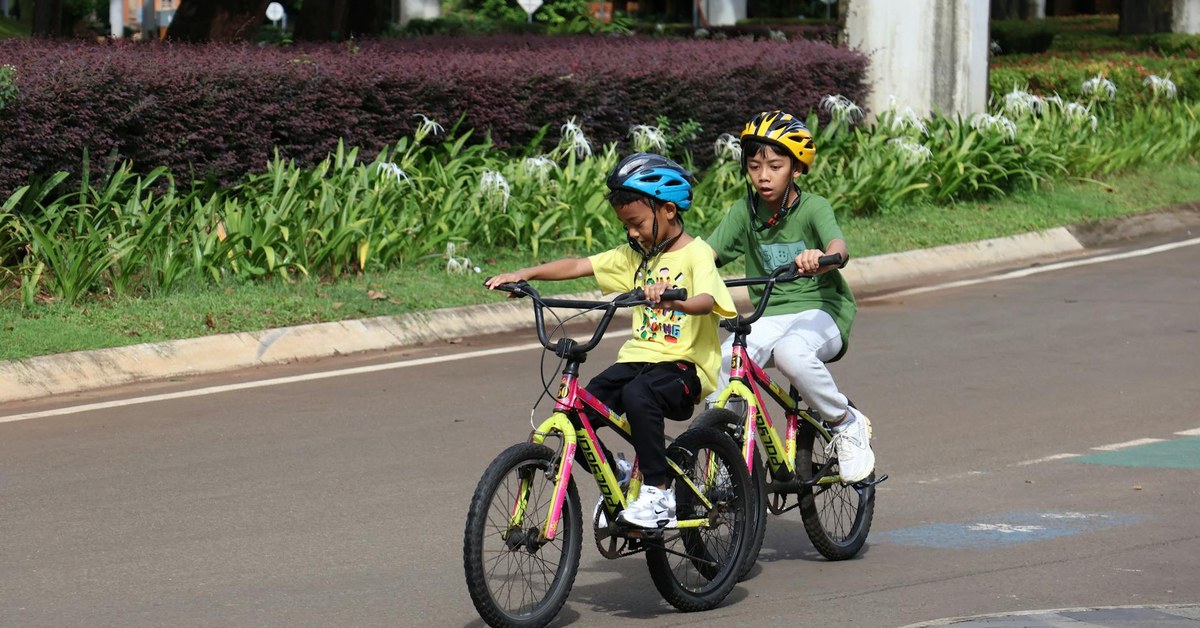
Cycling helmets are the most important piece of safety equipment for any cyclist, and the evidence for their effectiveness in reducing serious head injury is strong. Yet helmets only protect effectively when they fit correctly, and a poorly fitted helmet offers substantially less protection than one that fits well.
Key elements of correct helmet fitting:
- Size: The helmet should fit snugly but not uncomfortably. It should not rock from side to side or forward and backward when the straps are fastened. Most helmets have adjustable retention systems to tune the fit within a size range.
- Position: The helmet should sit level on the head, covering the forehead, with the front edge approximately two finger-widths above the eyebrows. A helmet tilted back to expose the forehead provides significantly less protection to the front of the skull.
- Strap adjustment: The straps should form a V-shape under each ear, meeting the chin strap just below the ear lobes. The chin strap should be adjusted so that only one or two fingers can fit between the strap and the chin. If you can push the helmet off by pushing it backward or forward, the straps need adjustment.
- Replacement after impact: Helmets that have been in a significant impact should be replaced, even if there is no visible damage. The internal foam that absorbs impact may be compressed in ways that are not externally visible, compromising future protection.
Children resist helmets for various reasons, including discomfort and the social dynamics of peer perception. Making helmet use a non-negotiable condition of cycling, modelling consistent helmet use yourself, and investing in a helmet the child finds comfortable and appealing, all help establish the habit before it becomes a conflict. A child who grows up wearing a helmet from their first cycling experiences is much less likely to develop resistance than one for whom it is introduced later as an imposition.
Age-Appropriate Cycling Environments
The environments in which children cycle should match their current skills and judgment. Progressing through increasingly complex environments as skills develop is a more effective approach than either restricting children to very limited environments indefinitely or exposing them to complex traffic before they are ready.
- First cycling (typically ages 3 to 5): Private spaces such as gardens, playgrounds, and pedestrianised areas are appropriate starting points. Balance bikes, which develop core balance skills without the complication of pedals, are an excellent introduction.
- Building skills (ages 5 to 8): Traffic-free paths, parks, and quiet residential streets where hazards are limited provide appropriate challenge. Teach children to stop and look before entering any road space, even if they believe no traffic is coming.
- Developing road awareness (ages 8 to 11): Quiet residential roads with parental accompaniment allow children to begin developing traffic awareness and basic road positioning skills. Teach road positioning, signalling, and how to identify and respond to hazards.
- Independent cycling (typically ages 11 and above): Children who have demonstrated good road sense, reliable helmet use, and understanding of basic road rules can begin cycling independently on agreed routes in appropriate environments. Cycle training programmes, available in many countries, provide structured skills development for this stage.
Core Road Safety Skills
Children who cycle on or near roads need explicit instruction in road safety skills, not just modelling. The assumption that children will absorb this through observation is not reliable; direct teaching is more effective.
Key skills to teach:
- Looking before pulling out: Always stop, look both ways, and wait for a safe gap before entering any road space, including from driveways, side roads, and cycle paths that cross roads.
- Road positioning: Cycling in the primary position, approximately one metre from the kerb rather than tight against it, is safer than cycling in the gutter. This is counterintuitive but ensures that drivers see cyclists and have space to overtake safely.
- Eye contact with drivers: At junctions, making eye contact with drivers before proceeding confirms that you have been seen. Do not assume a driver has seen you simply because you can see them.
- Signalling: Arm signals for turning right and left should be taught and practised from the time children begin cycling near traffic.
- Hazard awareness: Teaching children to identify and respond to hazards, including parked car doors opening, drains and potholes, wet surfaces, and the unpredictable behaviour of pedestrians, builds the anticipatory awareness that is central to safe cycling.
Basic Bicycle Maintenance Checks
A bicycle in poor mechanical condition is a safety risk. Teaching children, as early as age eight or nine, to perform basic pre-ride checks builds both safety habit and mechanical confidence.
The ABC check is a simple pre-ride routine:
- A for Air: Check that both tyres are properly inflated. Soft tyres affect handling significantly and increase the risk of punctures and rim damage. Tyres should feel firm when squeezed.
- B for Brakes: Squeeze each brake lever and confirm that the brake pads contact the rim or disc firmly and that the bicycle stops when the brakes are applied. Brakes that feel spongy or that require the lever to touch the handlebar before engaging need adjustment.
- C for Chain and Controls: Check that the chain is in place and not hanging loose, that the handlebars are properly aligned, and that the saddle is secure at the right height.
Quick wheel checks, confirming that both wheels are securely fastened and do not wobble laterally, should be added as children move to more challenging cycling environments.
Cycling in the Dark and Poor Conditions
Visibility is significantly reduced at dusk, dawn, and at night, and most countries have legal requirements for front and rear lights on bicycles used in conditions of poor visibility. In practice, many children cycle in low-light conditions without adequate lighting, which substantially increases the risk of collision.
Ensure that any bicycle your child rides in low-light conditions has working front and rear lights, and consider adding reflective accessories such as reflective strips on bags, helmets, and clothing. High-visibility cycling jackets significantly improve driver sightlines in poor weather.
Wet and icy conditions affect braking distances significantly. Children should understand that they need to brake earlier in wet conditions and should avoid cycling on ice or heavily snow-covered surfaces unless they have experience of these conditions.
Formal Cycle Training
Structured cycling safety training programmes, delivered by qualified instructors, are available in many countries for school-age children. These programmes provide a progression of skills from basic bicycle handling through to road riding, with assessment against recognised standards. Research on these programmes shows positive outcomes for cycling confidence, road behaviour, and willingness to cycle independently.
If formal training is available in your area, it is worth considering as a supplement to the cycling skill development you provide at home. Children who have completed structured training tend to make better decisions in complex traffic environments than those who have not.
Building Confident, Independent Cyclists
The goal of cycling safety education is not to make children anxious about cycling but to equip them to cycle confidently and safely. Children who experience cycling as enjoyable, manageable, and appropriately supported are more likely to continue cycling into adulthood, with all the benefits this brings for health, independence, and environmental footprint.
The investment in good equipment, skills teaching, and progressive exposure to appropriate environments pays dividends in confident, capable cyclists who have a skill and a habit that serves them well throughout their lives.