Bicycle Safety for Young Children
Cycling is a wonderful activity for young children, but safety must come first. Learn everything about helmets, traffic awareness, and age-appropriate cycling for children aged 4-7.
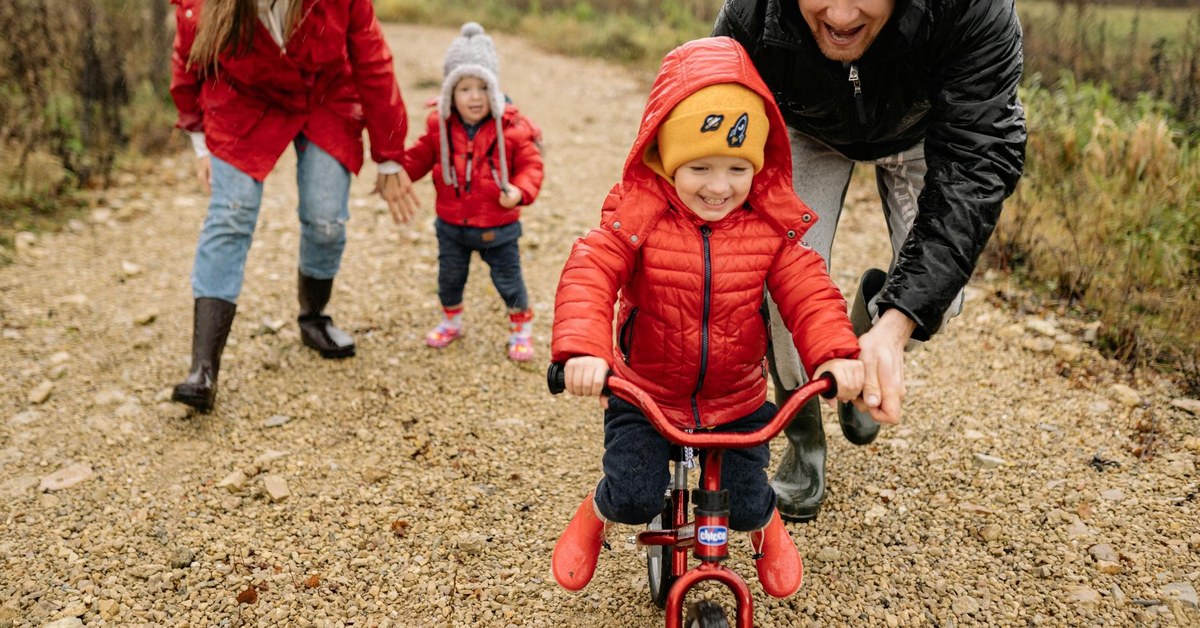

Bicycle Safety for Young Children
“Cycling is a wonderful activity for young children, but safety must come first. Learn everything about helmets, traffic awareness, and age-appropriate cycling for children aged 4-7.”
Why Cycling Safety Matters From the Very Beginning
Cycling offers enormous benefits for young children. It develops physical coordination and balance, encourages outdoor activity, supports independence, and builds confidence. Millions of children around the world learn to ride bicycles between the ages of three and seven, and for many families, cycling together becomes a cherished and lifelong activity.
However, cycling is also associated with a significant number of childhood injuries globally. Head injuries remain the most serious and potentially life-altering consequence of cycling accidents, and the vast majority are preventable with the correct helmet use. Understanding and practising bicycle safety from the very beginning not only protects children physically but also establishes habits and attitudes that will serve them throughout their lives.
The Right Age to Start Cycling
Children develop at different rates, and there is no single correct age to introduce a bicycle. Most children aged 3 to 4 are developmentally ready to begin with a balance bike or a very small pedal bike with stabilisers. By ages 5 to 7, many children are ready to transition to a pedal bike without stabilisers, though some will need more time and that is completely normal.
Balance bikes, which have no pedals and allow children to push themselves along with their feet, have become increasingly popular and for good reason. Research and practical experience both suggest that children who learn on balance bikes tend to transition to pedal bikes more easily than those who learn with stabilisers, because they have already developed genuine balance rather than relying on a crutch that is subsequently removed.
Regardless of the method, readiness signs include the ability to steer with reasonable control, an ability to follow simple instructions, and a genuine interest in cycling rather than a forced or fearful participation. Never rush a child who is not yet physically or emotionally ready.
Choosing the Right Bicycle and Equipment
Selecting an appropriately sized bicycle is critical for both safety and enjoyment. A child on an oversized bicycle cannot control it safely. The most reliable way to check fit is the standover test: when a child stands flat-footed over the frame, there should be approximately one to two centimetres of clearance between the child and the top tube. The child should also be able to reach both pedals comfortably and have a slight bend in the knee at the bottom of the pedal stroke.
Look for bicycles with reliable brakes that are sized for small hands. Many entry-level children's bicycles have poorly calibrated brakes that require too much force for a child to operate effectively. Test the brakes before purchase and adjust them if needed. Avoid second-hand bicycles that may have hidden damage to the frame, worn brake pads, or ill-fitting components without a thorough inspection.
Beyond the bicycle itself, children should wear appropriate clothing for cycling. Avoid loose clothing that can become caught in the chain or wheels. Closed-toe shoes are essential. Avoid flip-flops, sandals, or shoes with long laces that could catch in moving parts.
Helmet Fitting: The Single Most Important Safety Step
The evidence for helmet effectiveness in reducing head injury severity is robust and consistent across countries and decades of research. A correctly fitted helmet reduces the risk of serious head and brain injury dramatically. Yet helmet use remains inconsistent, and many children who do wear helmets wear them incorrectly, significantly reducing their protective value.
A correctly fitted helmet sits level on the head, approximately two finger-widths above the eyebrows. It should not tip forward, backward, or to either side when the child moves their head. The side straps should form a V-shape just below each ear. The chin strap should be snug enough that only one finger can fit comfortably between the strap and the chin. When a child opens their mouth wide, they should feel the helmet press down slightly, indicating the chin strap is correctly tensioned.
Replace a helmet after any significant impact, even if no visible damage is apparent. The internal foam that absorbs impact can be compressed in ways that are not visible externally, reducing its protective capacity. Helmets also degrade over time and should typically be replaced every three to five years regardless of impacts.
Involve children in choosing their helmet whenever possible. A helmet a child finds exciting or visually appealing is one they will wear willingly. Helmet wearing should never be presented as optional or negotiable. It is a non-negotiable rule, in the same category as wearing a seatbelt in a car.
Where Young Children Should Cycle
Children aged 4 to 7 should not cycle on public roads without very close adult supervision. This age group does not yet have the cognitive development to reliably predict vehicle speeds and trajectories, judge distances accurately, or respond quickly enough to unpredictable road situations. Their reaction times and decision-making processes are still developing, and no amount of instruction fully compensates for this developmental reality.
The most appropriate cycling environments for this age group are traffic-free paths and cycle tracks, parks with designated cycling areas, residential car parks during quiet periods, quiet residential streets with minimal traffic and direct adult supervision, and dedicated cycling facilities at schools and parks. Many urban areas globally have invested in safe cycling infrastructure specifically because of the evidence that children benefit enormously from active travel when safe environments exist.
When cycling on any public path shared with pedestrians, teach children to give way to those on foot, to cycle at a controlled speed, and to give an audible signal, such as using a bell, when approaching from behind. These are habits that build consideration as well as safety.
Teaching Traffic Awareness
Even though young children should not be cycling independently in traffic, introducing traffic awareness concepts from the earliest years builds a foundation for safe behaviour as they grow older. Combine cycling outings with observations and conversations about road behaviour.
Point out cycle lanes and explain what they are for. Discuss what traffic lights mean and practise responding to them even in off-road environments by setting up simple games. Talk about looking both ways before crossing any road or path junction, even if a cycle path crosses it. Explain why drivers may not always be able to see cyclists, particularly at junctions and when reversing. These conversations, repeated naturally over time, build understanding and caution in a way that one-off lectures do not.
Model excellent road behaviour yourself. Children absorb the cycling habits of the adults around them with remarkable fidelity. If you ride confidently, lawfully, and cautiously, you are giving your child a template for their own future cycling behaviour.
Cycling Safety Rules Every Young Child Should Know
Establish and consistently enforce a small number of clear, simple cycling rules for children in this age group. Simplicity matters because young children can reliably remember a few rules but will struggle with an extensive list.
Core rules should include always wearing a helmet before getting on any bike, never cycling on roads without an adult, stopping at the end of any path or driveway before going further, not cycling faster than they can safely control, and always listening to and responding to adult instructions immediately. These rules should be framed positively and matter-of-factly rather than as threats. Consistency in enforcement is more important than the particular rules chosen.
Praise specific safe behaviour enthusiastically and frequently. When a child stops at a path junction without being reminded, comment on it positively. When they check behind them before moving, acknowledge it. Positive reinforcement of specific behaviours is one of the most effective tools available to adults supporting young children in developing safety habits.
Handling Falls and Accidents
Falls are an inevitable part of learning to cycle and should be treated with calm reassurance rather than alarm. How adults respond to a child's fall significantly influences how the child responds to future challenges. A calm, measured adult response teaches children that minor setbacks are manageable, while an anxious or disproportionate response can create lasting fear of cycling.
For minor falls with no visible injury, check the child calmly, reassure them, and, if they are ready, encourage them to get back on the bicycle when they feel comfortable. Do not force a child back onto a bicycle immediately after a frightening fall. Allow time for recovery and return to cycling at the child's own pace.
Always check the bicycle after a fall. A bent wheel, damaged brake cable, or misaligned steering can make a bicycle unsafe to ride and the damage may not be immediately obvious to the naked eye. A quick check before resuming takes only seconds and can prevent a second accident.
For falls involving a head impact, always remove the helmet and inspect both the child and the helmet carefully. Any loss of consciousness, confusion, repeated vomiting, or unusual drowsiness after a head impact warrants immediate medical attention. When in doubt, seek medical advice.
Cycling Clothing and Visibility
Visibility is an important aspect of cycling safety even in off-road and low-traffic environments. Children should wear bright colours or high-visibility clothing when cycling, particularly in the early morning, late afternoon, or overcast conditions when visibility is reduced. A high-visibility vest or jacket is an inexpensive addition to any cycling outfit and makes a significant difference to how easily a child can be seen by others sharing a path or road space.
Lights are not typically necessary for young children cycling in daylight in traffic-free environments, but if you cycle in any road environment with a child, ensure all bicycles have working front and rear lights. Reflective strips on clothing and helmets add additional visibility at no cost.
Preparing for Independent Cycling in the Future
Children aged 4 to 7 are not ready to cycle independently, but the habits, skills, and attitudes established in these years directly determine how safe and confident they will be when they do begin cycling with greater independence. Think of every safe cycling outing as an investment in your child's future safety, not just their current enjoyment.
Progress the complexity of cycling environments gradually as a child's skills and understanding develop. Move from completely traffic-free paths to quiet residential streets, then to busier environments, always with adult supervision, always with consistent safety rules, and always at a pace the child can manage comfortably and confidently. Cycling is one of the great pleasures of childhood and, with the right approach, can be enjoyed safely from the very earliest years.