Building Resilience in Young Children

Building Resilience in Young Children
Introduction: The Link Between Resilience and Safety
When people think about keeping young children safe, the instinct is often to focus on external measures: supervision, physical barriers, safety rules, and warnings about danger. These are undoubtedly important, but they represent only one dimension of child safety. Equally significant, and often overlooked, is the role of the child's own inner resources: their emotional resilience, their confidence in their own perceptions, and their capacity to seek help from trusted adults.
Research in developmental psychology and child welfare consistently shows that children with higher emotional resilience are better equipped to navigate risky or confusing situations. They are more likely to trust their instincts when something feels wrong, to assert themselves when needed, and to reach out to a safe adult for support. Building resilience in young children aged four to seven is therefore not merely a goal of healthy development in the abstract; it is a concrete contribution to their personal safety.
What Is Emotional Resilience in Young Children?
Resilience is broadly defined as the capacity to adapt positively in the face of adversity, stress, or challenge. In young children, resilience does not mean the absence of distress or an expectation that children should manage difficult things alone. Rather, it refers to a set of skills and internal resources that allow children to recover from setbacks, manage ordinary challenges, and maintain a sense of security and self-worth even in difficult circumstances.
Key components of resilience in young children include:
- A secure attachment to one or more trusted adults
- A developing sense of self-efficacy: the belief that one's actions can make a difference
- Basic emotional vocabulary and the capacity to recognise and name feelings
- Problem-solving skills appropriate to age
- The ability to seek help from adults when needed
- A sense of belonging within family, peer group, and community
These components are interrelated and mutually reinforcing. A child with a secure attachment is more likely to develop self-efficacy; a child with emotional vocabulary is better able to solve problems and communicate distress.
How Confident Children Are More Likely to Speak Up
A central insight from research on child safety, particularly in relation to abuse prevention, is that children who have been taught that their feelings and perceptions matter, and that they have permission to say "no" or "I don't like this," are significantly better at protecting themselves in threatening situations.
Body safety programmes, which are implemented in schools across the UK, Australia, New Zealand, Canada, and many other countries, consistently incorporate resilience and assertiveness as core components. The underlying principle is that a child who has been told from an early age that their body belongs to them, that they can trust their own feelings of discomfort, and that they will be believed and supported if they report a concern, is much harder for a potential abuser to manipulate than a child who has been raised primarily on compliance and obedience to adults.
The same principles apply more broadly to safety in general. A child who confidently approaches a lifeguard when they are lost at the beach, who tells a teacher when they have witnessed something worrying in the playground, or who says clearly "I don't want to do that" when pressured by a peer, is exercising resilience-based safety skills in action.
Importantly, building this confidence does not undermine a child's respect for adults or their capacity to follow reasonable instructions. Children can simultaneously learn that most adults are trustworthy and helpful, and that they have both the right and the responsibility to speak up when something feels wrong.
Age-Appropriate Ways to Build Resilience in Children Aged Four to Seven
Problem-Solving Play
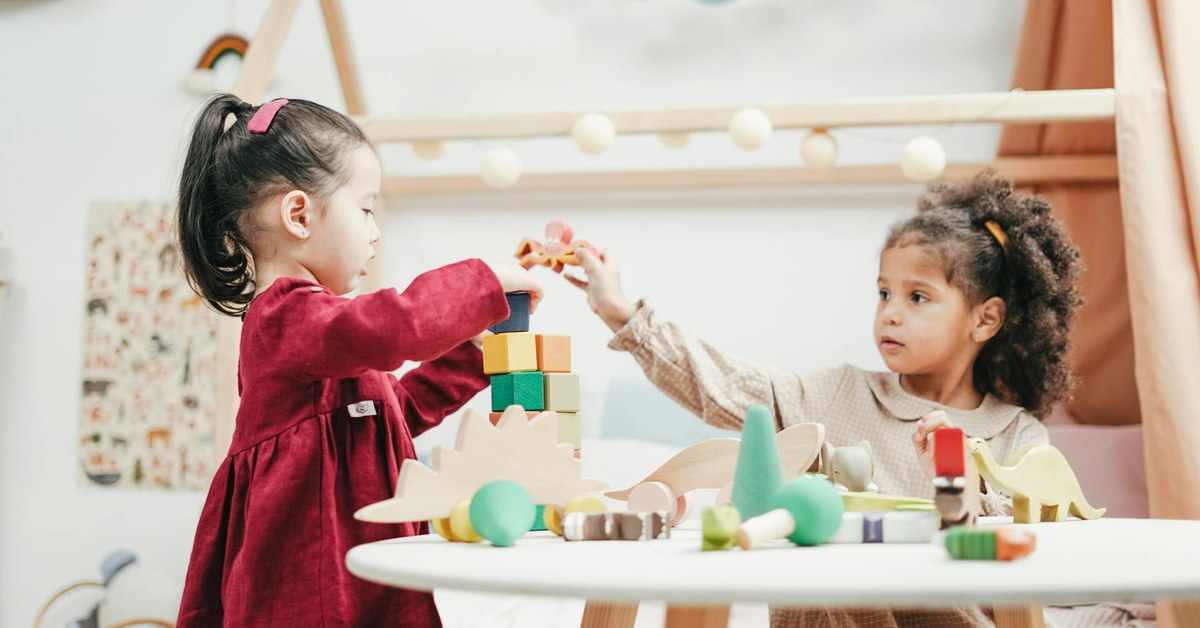
Play is the primary medium through which young children learn. Play that incorporates problem-solving, whether building with blocks, navigating an obstacle course, completing a puzzle, or engaging in imaginative role-play, develops the neural pathways associated with planning, persistence, and flexible thinking. These capacities transfer directly to real-world problem-solving, including recognising and responding to safety-relevant situations.
Open-ended play, where there is no single correct answer or predetermined outcome, is particularly valuable for developing resilience. When a child encounters a problem in play, the experience of trying multiple approaches, experiencing failure without consequence, and eventually finding a solution builds a template for approaching challenges in all areas of life.
Adults can support problem-solving play by resisting the impulse to solve problems for children, offering supportive questions ("What do you think you could try?") rather than immediate solutions, and creating an environment where mistakes are treated as information rather than failures.
Age-Appropriate Challenges
Overprotection, whilst understandable, can inadvertently undermine resilience by denying children the experience of successfully managing challenges. Research by developmental psychologist Ellen Sandseter and others has identified that children instinctively seek what she terms "risky play," and that this play, within appropriate parameters, supports healthy psychological development.
Age-appropriate challenges for children in the four to seven range might include climbing to a height that feels manageable but requires effort, negotiating a disagreement with a sibling, attempting a new physical skill, staying at a friend's house overnight, or managing a brief period independently in a familiar environment. The key is calibrating the challenge to the child's developmental level, ensuring a baseline of safety and adult availability, and allowing the child to experience genuine effort and the satisfaction of achievement.
Children who are never allowed to experience manageable difficulty are poorly prepared for the inevitable challenges of childhood and beyond, and may be more likely to feel overwhelmed or helpless when difficulty is encountered without warning.
Celebrating Effort Rather Than Outcomes
The distinction between praising effort and praising innate ability has been extensively studied, most notably in research by Carol Dweck at Stanford University, whose work on "growth mindset" has influenced educational practice internationally. Children who are praised for effort ("You worked really hard on that") rather than outcome or ability ("You're so clever") develop a more resilient relationship with challenge. They are more likely to persist in the face of difficulty and less likely to avoid challenges for fear of failure.
For young children, this means acknowledging the process of trying, the courage it took to attempt something new, and the value of persistence, regardless of whether the activity was completed successfully. This approach builds the internal motivation and sense of competence that are foundational to resilience.
Emotional Vocabulary and Emotional Coaching
Children who can name their emotions are better able to manage them. Simple emotional coaching, the practice of acknowledging a child's feeling, naming it, and helping them problem-solve around it, builds emotional literacy that is directly relevant to safety. A child who can say "I feel scared because that person is making me uncomfortable" has already taken the first step towards protective action, and is also better able to communicate their experience to a trusted adult.
Parents and carers can build emotional vocabulary through conversation, storytelling, and books, as children's literature is a rich resource for exploring complex feelings in a safe, fictional context. Regularly asking "How are you feeling?" and taking the answer seriously, rather than dismissing or redirecting, models the value of emotional awareness.
The Role of Secure Attachment in Building Resilience
As noted in the context of separation anxiety, secure attachment is the foundation on which resilience is built. Children who have experienced consistent, responsive care develop an internal sense that the world is broadly safe, that adults can be trusted, and that their own needs are valid and worthy of attention. This internal model provides the "secure base" from which children can explore, take age-appropriate risks, and return for comfort when challenges exceed their current capacity.
Secure attachment does not require perfect parenting. Research by Mary Ainsworth and subsequent developmental psychologists has established that what matters most is not the absence of misattunement between parent and child, which is inevitable, but the consistent repair of those ruptures. A parent who loses patience, apologises and reconnects, is modelling both emotional honesty and the repairability of relationships, both of which contribute to resilience.
In the context of safety, secure attachment means that a child who encounters something frightening or confusing is highly likely to tell a trusted adult, because they have learned through repeated experience that adults listen, respond, and help. This is arguably the most powerful safety mechanism available to any young child.
How Resilience Helps Children Handle Strangers, Unsafe Situations, and Peer Pressure
Strangers and Unfamiliar Adults
Traditional "stranger danger" messaging has been largely revised by child safety experts, as it created unhelpful and inaccurate ideas about risk (most harm to children comes from people known to them, not strangers) and could leave children unable to seek help from safe strangers in emergencies.
A resilience-based approach teaches children that most adults are trustworthy, but that some adults make unsafe choices. Children are empowered to trust their instincts about discomfort, to say "no" clearly, and to seek help from a safe adult in any confusing or frightening situation. They are also taught specific scenarios for seeking help, including identifying uniformed staff, parents with children, or shop workers when lost in a public place.
Unsafe Situations
Resilient children have a broader repertoire of responses to unsafe or uncomfortable situations. Rather than freezing, complying out of politeness, or feeling that they have no choices, they have practiced saying no, leaving situations that feel wrong, and seeking adult help. Role-play and rehearsal, used in many school safety programmes, is an effective tool for building these response patterns before they are needed in reality.
Peer Pressure
As children move through the primary school years, peer influence becomes increasingly significant. A child who has strong internal self-efficacy, who has experienced the satisfaction of making good decisions and following their own judgement, is better placed to resist peer pressure to participate in unsafe, unkind, or rule-breaking behaviour. This resilience is built incrementally through all the practices described above.
Evidence Base and Global Applicability
The evidence base for resilience-building in young children is robust and internationally validated. Programmes such as the PATHS curriculum (Promoting Alternative Thinking Strategies), developed in the United States and adopted in many countries, and the Bounce Back programme, developed in Australia and used across multiple continents, have demonstrated measurable improvements in emotional resilience, wellbeing, and prosocial behaviour in children aged four to twelve.
These programmes share common principles: explicit teaching of emotional vocabulary, problem-solving skills, the value of effort and persistence, and the importance of supportive relationships. They are effective across diverse cultural contexts, though implementation should always be culturally sensitive and locally adapted.
Summary
Building resilience in young children is one of the most significant investments parents, carers, and educators can make in their safety and wellbeing. A child who knows that their feelings are valid, who has experienced the satisfaction of solving problems independently, who has a rich emotional vocabulary, and who has a secure base in trusted adults is substantially better equipped to navigate the full range of challenges, risks, and uncomfortable situations that childhood inevitably presents. Resilience is not a fixed trait; it is developed through thousands of small daily interactions, challenges, and experiences of being supported and believed. It is, in the fullest sense, a safety skill.