Fireworks Safety for Young Children

Fireworks Safety for Young Children
Why Fireworks Pose a Serious Risk to Young Children
Fireworks are a beloved part of celebrations around the world, from Bonfire Night in the United Kingdom to Diwali across South Asia and its diaspora communities, the Fourth of July in the United States, and New Year festivities in virtually every country on earth. For many families, fireworks represent joy, community, and tradition. Yet for young children, fireworks carry real and serious risks that every parent, carer, and guardian should understand before heading to any display or celebration.
Children are not simply small adults. Their bodies, sensory systems, and capacity to assess danger are all still developing. This makes them considerably more vulnerable to the hazards associated with fireworks than older children or adults. Understanding these risks is the first step towards keeping families safe.
The Physical Dangers of Fireworks for Young Children
Burns
Burns are among the most common fireworks-related injuries affecting young children. Fireworks, including those marketed as safe or suitable for home use, produce flames, sparks, and hot debris that can cause serious burns within a fraction of a second. Young children's skin is thinner and more sensitive than adult skin, meaning burns that an adult might experience as minor can be significantly more serious for a small child.
Hospital emergency departments across the world see a marked increase in fireworks-related burns during peak celebration periods. In the United Kingdom, the NHS consistently records spikes in fireworks injuries around the 5th of November. In the United States, the Consumer Product Safety Commission reports thousands of fireworks-related injuries each year, with a disproportionate number involving children under the age of ten.
Noise Trauma and Hearing Damage
The sound levels produced by fireworks can exceed 150 decibels at close range. To put this in context, sounds above 85 decibels are considered potentially harmful to hearing with prolonged or repeated exposure. A single very loud explosion can cause immediate and permanent hearing damage, a condition known as acoustic trauma.
Young children's auditory systems are still maturing, and their ear canals are smaller, which can actually intensify the impact of loud sounds. Even if a child does not suffer permanent hearing loss, a sudden and very loud noise can cause significant pain, distress, and lasting anxiety around sound.
Debris and Eye Injuries
Fireworks propel fragments of casing, hot ash, and burning material at high speed. Eye injuries, including serious corneal burns and foreign body injuries, are regularly recorded in association with fireworks. Young children are often at the height where falling debris is most likely to make contact, and their natural curiosity means they may move closer to a firework rather than retreating from it.
Safe Distance Rules
Maintaining a safe distance from any firework display is one of the most important steps families can take. For professional public displays, safety perimeters are established by trained operators and enforced by event staff. Families should always remain within the designated spectator areas and follow all instructions from event organisers.
For home fireworks, where they are legal, the packaging will typically specify a minimum safety distance. These distances should be treated as absolute minimums, not guidelines. Children should be kept well beyond the stated minimum and should always be supervised closely by an adult who is not involved in lighting the fireworks.
A general principle widely recommended by fire safety organisations is that spectators, and particularly young children, should be at least 25 metres from any home firework. For larger fireworks, greater distances are advised.
The Particular Danger of Sparklers for Children Under Five
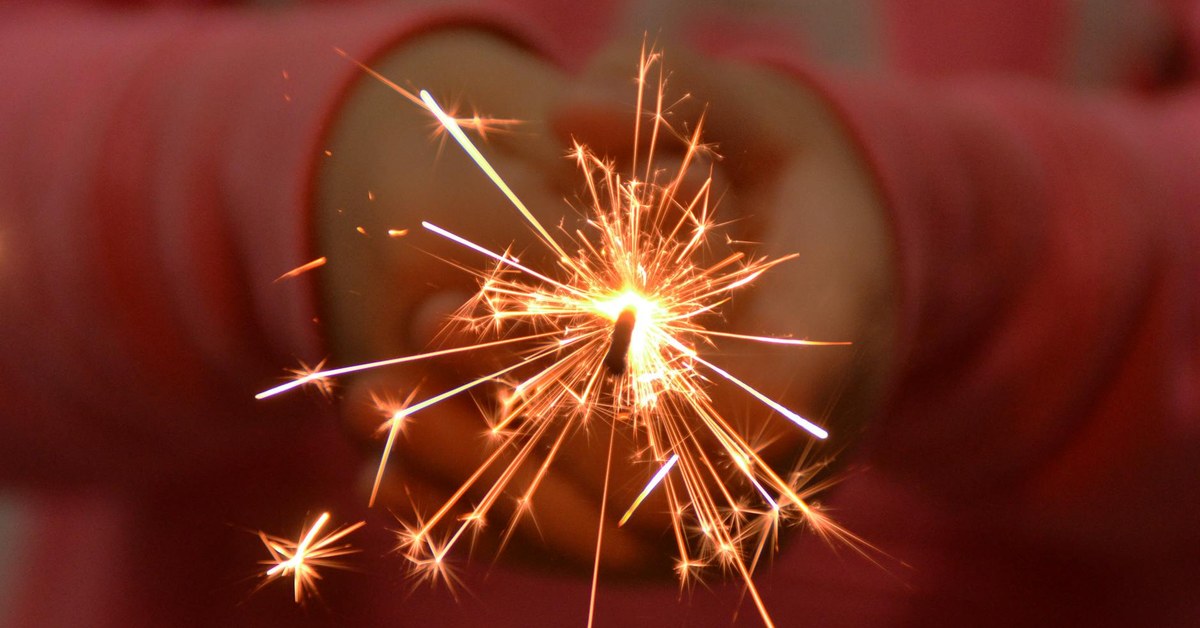
Sparklers are often perceived as the safe, child-friendly option at fireworks events. This perception is dangerously misleading, especially for children under five years of age.
A sparkler burns at temperatures of around 1,800 degrees Celsius at its tip, which is hotter than many open flames, including some blowtorches. Children's natural impulse to wave, touch, or investigate a sparkler can lead to serious contact burns in an instant. Very young children lack the motor control, coordination, and understanding of danger needed to handle a sparkler safely.
Many child safety organisations and paediatric health bodies internationally advise that sparklers should not be given to children under five under any circumstances, and that even older children should be closely supervised, wear gloves, and hold sparklers at arm's length. Used sparklers should be placed immediately into a bucket of cold water, as they remain dangerously hot long after the flame has gone out.
Professional Displays Versus Home Fireworks
Attending a professionally organised public fireworks display is considerably safer for families with young children than using home fireworks. Professional displays are run by trained pyrotechnicians who follow strict safety protocols, use commercial-grade equipment designed to minimise the risk of malfunction, and operate within legally mandated safety distances.
Home fireworks, even when purchased legally and used according to instructions, carry a significantly higher risk of accident. The most common causes of injury include fireworks that malfunction, those that are lit incorrectly, and those that are handled after they have apparently failed to ignite, so called duds. Dud fireworks are particularly dangerous because they can ignite unexpectedly.
Families who do choose to use home fireworks should do so in an open outdoor space away from buildings, trees, and vehicles. Fireworks should never be held in the hand (with the exception of sparklers used as described above), pointed at people or animals, or placed in glass containers. Alcohol and fireworks are a particularly dangerous combination and should never be mixed.
Ear Protection for Young Children
For families attending any fireworks display, ear protection is strongly recommended for young children. Earmuffs designed for infants and toddlers are widely available and can significantly reduce the sound levels reaching a child's ears. These devices are particularly important for babies and children under three years old, whose auditory development is at a critical stage.
When selecting ear protection for a child, look for products that carry appropriate safety ratings and are designed specifically for the child's age group. A general purpose pair of adult ear defenders will not provide the correct fit or protection for a small child's ears.
Even with ear protection in place, families should consider their position relative to the display. Sitting further back from the action will reduce both sound and debris exposure, and it gives children a clearer, more comfortable view of the display as a whole.
Fear and Anxiety in Young Children Around Fireworks
Not every child finds fireworks exciting. For many young children, the sudden loud noises, bright flashes, and unpredictable nature of fireworks can be genuinely frightening. This fear is a normal and understandable response, and it should be taken seriously rather than dismissed.
Forcing a frightened child to remain at a fireworks display or telling them there is nothing to be scared of can be counterproductive and distressing. Instead, adults can acknowledge the child's feelings, explain what is happening in simple terms, and give the child some sense of control over the situation, for example, by allowing them to wear ear defenders and to cover their eyes if they wish.
For children who are very anxious around fireworks, it may be worth discussing the upcoming celebration in advance so the child knows what to expect. Reading age-appropriate books about fireworks, watching short videos of displays at low volume, and practising deep breathing are all strategies that can help reduce anticipatory anxiety.
It is also worth noting that some children, particularly those with sensory processing differences, autism spectrum conditions, or anxiety disorders, may find fireworks particularly overwhelming. Their needs should be prioritised, and families should feel entirely comfortable choosing to avoid fireworks events if this is what is best for their child.
What to Do if a Child Is Injured by a Firework
Despite all precautions, accidents can happen. Knowing what to do in the immediate aftermath of a fireworks injury can make a significant difference to outcomes.
For Burns
- Cool the burn immediately with cool (not cold) running water for at least 20 minutes.
- Do not apply butter, toothpaste, ice, or any other home remedy to a burn, as these can worsen the injury.
- Remove any clothing or jewellery near the burned area, unless it is stuck to the skin.
- Cover the burn loosely with cling film or a clean, non-fluffy material such as a clean plastic bag.
- Seek immediate medical attention for any burn affecting a child, regardless of how minor it appears.
For Eye Injuries
- Do not rub or touch the eye.
- Do not attempt to remove any foreign objects from the eye.
- Cover the eye loosely and seek emergency medical care immediately.
For Hearing Concerns
- If a child complains of pain, ringing, or reduced hearing after a loud noise, seek medical advice promptly.
- Hearing injuries from noise exposure should always be assessed by a medical professional.
Fireworks Around the World: A Global Celebration with Common Risks
The cultural significance of fireworks is undeniable across many societies. In China, where fireworks were invented, they are central to Lunar New Year celebrations and are believed to ward off evil spirits. In India and across the South Asian diaspora, Diwali is marked by spectacular firework displays. In Australia, New Year celebrations in Sydney are famous worldwide. In Latin America, fireworks are a fixture of national and religious holidays.
Regardless of the cultural context, the physical properties of fireworks and the vulnerabilities of young children remain constant. The safety principles described in this article apply universally, regardless of which celebration is taking place or in which country a family is located.
Many countries have introduced legislation to regulate the sale and use of fireworks, with particular attention to noise levels, permitted hours of use, and age restrictions on purchase. Families should familiarise themselves with the relevant rules in their own country and locality, and follow the guidance issued by local fire and emergency services during celebration periods.
Summary
Fireworks can be a magical part of childhood when experienced safely. The key principles for keeping young children safe are straightforward: maintain safe distances, avoid giving sparklers to children under five, attend professional displays where possible, use appropriate ear protection, take fear and anxiety seriously, and know what to do if an injury occurs. By approaching fireworks celebrations with care and preparation, families around the world can enjoy these traditions while keeping their youngest members safe.