Garden Safety for Young Children: Outdoor Hazards

Garden Safety for Young Children: Outdoor Hazards
Introduction
Gardens are wonderful spaces for young children. Fresh air, natural textures, space to run and explore, and the sensory richness of plants, soil, and wildlife all contribute to healthy development. Yet the garden is also one of the most hazard-dense environments in a family home. From toxic plants and sharp tools to garden chemicals and bodies of water, outdoor spaces require careful assessment and ongoing supervision to keep young children safe.
This guide covers the most common garden hazards for children aged one to seven, offers practical prevention strategies, outlines supervision guidelines, and provides a reference for toxic plant identification. It also explains what to do if a child eats a plant or berry they should not have consumed.
Common Garden Hazards for Young Children
Ponds and Water Features
Water is one of the most serious hazards in any garden. A young child can drown in as little as five centimetres of water, and drowning can happen silently and within seconds. Garden ponds, ornamental water features, paddling pools left with standing water, and even large plant pot saucers filled with rainwater all present a drowning risk.
The safest approach for families with children under five is to fill in or securely fence off any pond or open water feature. If filling in a pond is not desirable, robust metal mesh grids placed just below or at the waterline can prevent a child from falling in. Standard decorative pond covers or lightweight netting are not sufficient barriers. Any paddling pool should be emptied and turned upside down after each use.
Water butts used for collecting rainwater should have lockable or child-resistant lids. Even a large barrel can pose a serious risk if a curious child leans over the edge.
Garden Tools
Spades, forks, rakes, hoes, secateurs, and shears all have sharp edges or pointed ends that can cause serious injuries. Many garden accidents involving tools happen not while an adult is using them, but when they have been left unattended on the lawn or leant against a wall within reach of a child.
All garden tools should be stored in a locked shed or a high, secured cabinet when not in use. Long-handled tools should never be left propped upright where they can fall. Powered garden tools such as lawnmowers, hedge trimmers, and strimmers should always be used when children are inside or at a safe distance, and should be stored with fuel containers out of reach.
Toxic Plants
A significant number of common garden and hedgerow plants are toxic to children. Young children explore the world by touching and tasting, which makes plant poisoning a genuine risk. A more detailed list of toxic plants appears later in this guide.
Garden Chemicals and Pesticides
Pesticides, weedkillers, slug pellets, fertilisers, and other garden chemicals can be highly toxic if ingested, inhaled, or absorbed through the skin. Many are stored in sheds or garages in their original containers or, more dangerously, in unlabelled bottles or old food containers.
All garden chemicals must be stored in their original, labelled containers in a locked area that children cannot access. Slug pellets, even those labelled as pet-friendly, should be used with caution around young children and placed only in areas the child cannot reach. Treated lawns and beds should be kept off-limits until dry and for the period recommended on the product label.
After using any garden chemical, adults should wash their hands thoroughly before handling children or food.
Garden Furniture and Structures
Heavy garden furniture can topple if children climb on it. Folding chairs and tables present a pinching and crushing risk. Glass-topped tables can shatter and cause severe lacerations. Wooden furniture may develop splinters over time. When selecting garden furniture for homes with young children, heavy, stable pieces without glass surfaces are the safest choice.
Hammocks require supervision as young children can become trapped or roll out unexpectedly. Sunloungers with folding mechanisms should be stored folded when not in use to prevent finger trapping.
Trampolines
Trampolines are a source of considerable enjoyment but also a significant cause of fractures, sprains, and head injuries in children worldwide. The most serious injuries tend to occur when multiple children bounce simultaneously, when a child falls off the edge, or when children attempt somersaults or other aerial moves without training.
Safety enclosure nets reduce but do not eliminate the risk. Trampolines should be positioned on grass rather than hard surfaces, and the area beneath and around the trampoline should be clear of obstacles. Most safety guidelines recommend that children under six use only small, ground-level mini-trampolines with a handlebar for stability. Only one child should use a standard trampoline at a time, and adult supervision is necessary for young children.
Climbing Frames and Play Equipment
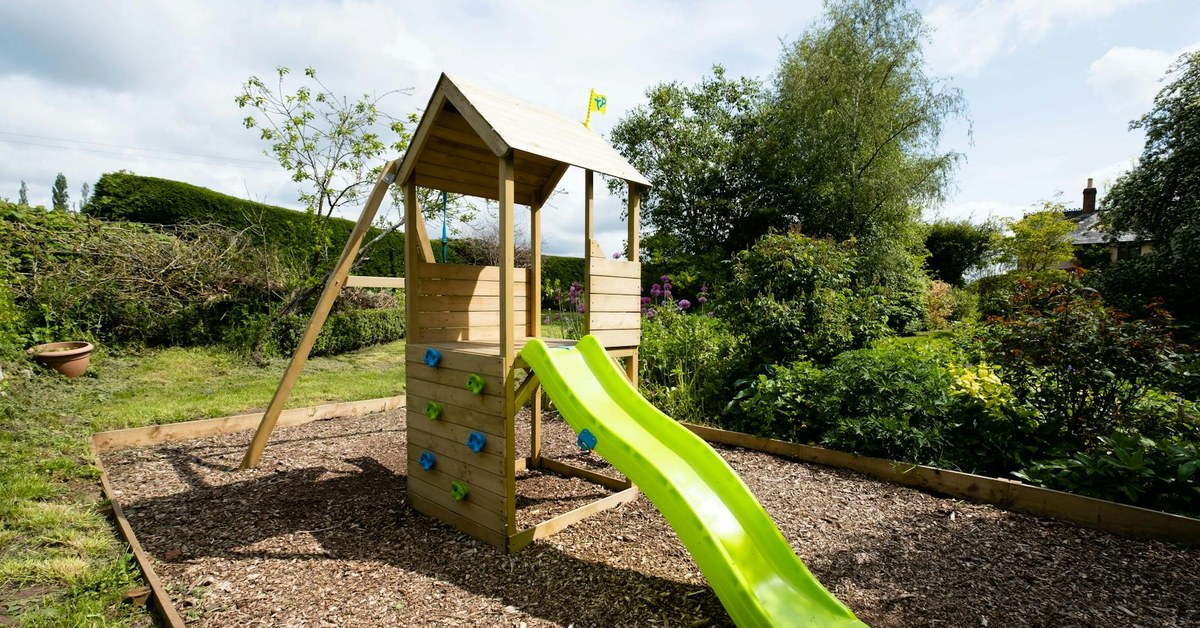
Outdoor climbing frames, swings, and slides provide excellent opportunities for physical development. Risks include falls from height, entrapment of heads or limbs in gaps, and strangulation hazards from drawstrings, ropes, or clothing caught on equipment.
Play equipment should be installed on a soft, impact-absorbing surface such as rubber matting, bark chips, or sand, with a depth appropriate to the fall height. Equipment should be inspected regularly for rust, splinters, loose bolts, and worn or frayed ropes. Drawstring cords on clothing should be removed or tucked in before children use climbing equipment.
Always check that there are no gaps between 9 cm and 23 cm wide in climbing structures, as these are the sizes most likely to trap a child's head.
BBQ Safety
Barbecues present burn and fire risks that persist long after cooking has finished. Charcoal barbecues retain dangerous heat for many hours and should never be left accessible to children. Gas barbecues have the added risk of gas leaks and unexpected ignition. Children should be kept well back from any active barbecue, and a clear exclusion zone should be communicated firmly before cooking begins.
Once a barbecue has been used, it should be allowed to cool completely in a safe area before being moved or stored. Lighter fluid and matches must be stored out of reach and sight.
Insect Stings
Bee and wasp stings are painful but rarely dangerous for most children. However, for children with an allergy to insect venom, a single sting can trigger anaphylaxis, a severe and potentially life-threatening allergic reaction. Parents who know or suspect their child has a venom allergy should carry an adrenaline auto-injector as directed by their doctor.
For children without a known allergy, stings should be treated by removing the sting if present (using a flat-edged item rather than tweezers to avoid squeezing more venom), applying a cold compress, and monitoring for any signs of unusual swelling or breathing difficulty.
Ticks are also a concern in gardens with long grass or adjacent to woodland in many parts of the world. After outdoor play in such environments, check children's skin for ticks, paying particular attention to the scalp, behind the ears, and in skin folds.
Making a Garden Safer: Practical Steps
- Audit the space: Walk through the garden from a child's perspective, looking for hazards at ground level and within reach.
- Fence or fill water features: Any open water should be secured before a young child is allowed in the garden unsupervised.
- Secure the perimeter: Garden gates should be self-closing and have child-proof latches positioned out of reach. Gaps in fencing should be checked and filled to prevent escape onto roads or neighbouring properties.
- Lock the shed: All tools, chemicals, and powered equipment should be stored behind a locked door.
- Create a designated play zone: Where possible, designate a specific area of the garden for children's play, away from ponds, compost heaps, and tool storage areas.
- Remove or fence toxic plants: Identify all plants in the garden and remove those that are toxic, or fence off areas where they grow.
- Keep pathways clear: Tripping hazards such as garden hoses, cables, and uneven paving should be addressed.
- Use sun protection: Sunburn is a serious health risk for children. Apply a broad-spectrum sunscreen of at least SPF30, provide shade, and use hats and protective clothing during peak sun hours.
Supervision Guidelines for Garden Play
No amount of physical safety measures replaces attentive adult supervision. The level of supervision needed depends on the child's age, the hazards present, and the layout of the garden.
- Under twos: Constant, within-arm's-reach supervision in any outdoor space. This age group is at the highest risk of accidental ingestion, drowning, and falls.
- Ages two to four: Active supervision, meaning the adult is present in the garden and watching the child, not engaged in another activity that diverts attention for more than a few seconds.
- Ages four to seven: Close supervision with regular visual checks. Children of this age are developing independence, but still require adult presence nearby. They should understand and follow key garden rules.
Teaching children simple garden rules helps build safety awareness alongside supervision. Clear, consistent messages such as "we do not pick or eat anything from the garden without asking a grown-up" and "we stay away from the pond" establish boundaries that children can internalise over time.
Toxic Plant Identification: Common Plants That Are Dangerous to Children
The following plants are found in gardens, parks, and wild areas across many parts of the world and are known to be toxic to children. This list is not exhaustive, and regional plant varieties vary significantly. When in doubt, consult a local poisons information service or a plant identification resource specific to your country.
Highly Toxic Plants
- Deadly nightshade (Atropa belladonna): All parts are extremely toxic. Berries look attractive to children.
- Laburnum: Seeds, pods, and flowers are highly toxic. Common in European gardens.
- Foxglove (Digitalis purpurea): All parts are toxic, including water in which the flowers have been placed.
- Monkshood (Aconitum): One of the most toxic plants in temperate regions. Touching the plant can cause skin irritation; ingestion can be fatal.
- Yew (Taxus baccata): All parts except the red fleshy outer coating of the berry are highly toxic. Common in hedging across Europe.
- Oleander (Nerium oleander): All parts are extremely toxic. Common in Mediterranean climates and warm regions worldwide.
Moderately Toxic Plants
- Daffodil (Narcissus): Bulbs and leaves are toxic. Can cause vomiting, abdominal pain, and, in large quantities, more serious effects.
- Lily of the valley (Convallaria majalis): All parts are toxic, including the water in flower vases.
- Rhubarb leaves: The stalks are edible; the leaves are toxic due to oxalic acid content.
- Wisteria: Seeds and pods can cause severe gastrointestinal symptoms.
- Elder (Sambucus nigra): Unripe berries, leaves, and bark contain compounds that can cause vomiting and nausea.
- Ivy (Hedera helix): Berries and leaves are toxic, though poisoning is rarely severe.
- Lupin: Seeds can be toxic, particularly in large amounts.
Plants Causing Skin or Eye Irritation
- Giant hogweed (Heracleum mantegazzianum): Sap causes severe phototoxic burns when skin is exposed to sunlight afterwards. Common in parts of Europe and North America.
- Euphorbia: Milky sap causes skin and eye irritation.
- Rue (Ruta graveolens): Sap causes phototoxic reactions.
What to Do If a Child Eats a Plant or Berry
If you suspect a child has eaten any part of a plant or berry and you are unsure whether it is safe, treat the situation as a potential poisoning emergency and act promptly.
Immediate Steps
- Stay calm. Panicking can distress the child and make it harder to gather information.
- Remove any remaining plant material from the child's mouth and hands.
- Do not make the child vomit unless specifically instructed to do so by a medical professional. Inducing vomiting can sometimes make certain poisonings worse.
- Try to identify the plant. If possible, take a sample of the plant (including leaves, berries, or flowers) or photograph it to assist with identification.
- Note how much you think the child may have eaten and when it happened.
When to Seek Emergency Help
Call the emergency services or take the child to the nearest emergency department immediately if the child:
- Is unconscious or unresponsive
- Has difficulty breathing
- Is having a seizure
- Has a rapid or irregular heartbeat
- Has severe swelling of the mouth, tongue, or throat
Poisons Information Services
Most countries have a dedicated poisons information or toxicology helpline that can advise on next steps. Key examples include:
- UK: NHS 111 or the National Poisons Information Service (accessible via healthcare professionals)
- USA: Poison Control Center: 1-800-222-1222
- Australia: Poisons Information Centre: 13 11 26
- Ireland: Poisons Information Centre: 01 809 2166
- Canada: Provincial poison control centres (numbers vary by province)
Keep the relevant number for your country saved in your phone so it is accessible immediately when needed.
Conclusion
A garden can be one of the safest and most enriching places for a young child to spend time when the environment has been carefully assessed and thoughtfully managed. The hazards are real, but with practical safety measures, appropriate supervision, and a few simple rules, the garden can remain a place of discovery, play, and joy throughout childhood.