Food Safety and Healthy Eating for Young Children

Food Safety and Healthy Eating for Young Children
Introduction
Food is central to a child's daily life. It is nourishment, routine, connection, and discovery. Yet food also presents genuine safety considerations that are worth addressing early and clearly. From basic hygiene habits to understanding when food is safe to eat, the knowledge and habits that children develop in their early years around food will serve them throughout their lives.
This guide covers food hygiene rules that young children can learn and practise, age-appropriate food safety practices, how to teach children to recognise when food may have gone off, safe food handling when children are involved in cooking, and the broader link between healthy eating and physical resilience. It is written for a global audience and is relevant to families across a wide range of food cultures and kitchen environments.
Food Hygiene Rules Children Can Learn
Young children are capable of learning and following basic food hygiene habits from a surprisingly early age. The preschool years (roughly three to five) are an ideal time to introduce these habits, because children at this age are developing routines and are highly responsive to clear, repeated, practical instruction.
Handwashing Before Eating
Handwashing is the single most effective food hygiene habit a child can develop. Hands carry bacteria, viruses, and other pathogens that can cause foodborne illness when transferred to food or to the mouth. Teaching children to wash their hands before every meal and snack, and after using the toilet, touching animals, or playing outside, establishes a habit that protects them from a wide range of illnesses throughout life.
Effective handwashing involves:
- Wetting the hands with clean running water
- Applying soap and lathering for at least 20 seconds, covering the backs of the hands, between fingers, and under fingernails
- Rinsing thoroughly under running water
- Drying with a clean towel or air dryer
Children often rush through handwashing. A useful trick is to have them sing a short song (many nursery rhymes take approximately 20 seconds) or count slowly while they scrub, making the habit both effective and engaging.
In parts of the world where access to running water is limited, using clean water from a container and soap, or an alcohol-based hand sanitiser, provides an alternative.
Not Eating Food That Has Fallen on the Floor
The informal idea that food dropped on the floor is safe to eat within a few seconds is not supported by food science. Bacteria can transfer to food almost instantaneously upon contact with a contaminated surface. While a single instance of eating a dropped piece of food is unlikely to cause illness in a healthy child, teaching children not to eat food from the floor is a straightforward hygiene habit that avoids unnecessary risk and is easy to establish early.
This rule is also relevant to food that has fallen in outdoor settings such as parks or sandpits, where the floor surface is likely to carry significantly more pathogens and environmental contaminants than a clean indoor floor.
Not Sharing Drinks, Cutlery, or Utensils
Sharing drinks and utensils is a common way for viruses and bacteria to spread between children, particularly in school and nursery settings. Illnesses including colds, influenza, gastroenteritis, and certain bacterial infections can be transmitted through shared saliva.
Teaching children from an early age that their cup, bottle, and cutlery are their own items that they do not share with others is a practical way to reduce transmission. This does not need to be taught in a way that implies fear or exclusion; a simple, matter-of-fact explanation is sufficient: "Your cup is just for you, and your friends have their own cups."
In practice, this can be reinforced by ensuring children have clearly labelled personal water bottles and cups, particularly in group care settings.
Age-Appropriate Food Safety Practices
Not Eating Raw Dough or Batter
Raw dough and batter are a genuine food safety risk for children (and adults). They contain two potential hazards:
- Raw eggs: May carry Salmonella bacteria, which can cause serious foodborne illness, particularly in young children whose immune systems are still developing.
- Raw flour: Is an unprocessed agricultural product that can be contaminated with bacteria including E. coli. Flour is not treated to kill pathogens during milling; it is cooking that makes it safe.
Children who help in the kitchen are at risk of eating raw dough or batter as part of the natural curiosity of cooking. Explaining clearly that raw dough is not food to taste while cooking, and providing an alternative tasting opportunity (finished, baked goods) helps manage this risk without dampening the enjoyment of cooking together.
This applies to bread dough, cake and biscuit batter, pancake batter, pastry, pasta dough, and any other mixture containing raw flour or raw eggs.
Safe Food Temperatures
Understanding why food needs to be cooked, and what "properly cooked" looks and feels like, is a concept that older children (five and above) can begin to grasp in age-appropriate terms.
The core message is simple: cooking food until it is piping hot all the way through kills most harmful bacteria. Food that looks cooked on the outside but is cold or cool in the middle may not be safe. This is particularly relevant for:
- Poultry (chicken, turkey), which must be cooked thoroughly with no pink remaining and juices running clear
- Minced meat products such as burgers and meatballs, which must be cooked through rather than served pink
- Reheated leftovers, which must be heated until steaming throughout
Children can learn to associate the idea of "piping hot" with safety in a basic way. Encouraging children to note whether food is hot all the way through before eating it builds a habit that serves them when they begin to prepare food independently in later childhood and adolescence.
Conversely, cold foods such as dairy products, eggs, and cooked meats should be stored in the refrigerator and not left out at room temperature for extended periods. In warm climates, this is particularly important; bacteria multiply rapidly in foods left in the temperature range between approximately 5°C and 60°C (the "danger zone" in food safety terms).
Recognising When Food Has Gone Off
Teaching children to assess whether food is safe to eat builds a skill that protects them throughout their lives. Young children can learn simple, practical checks that are appropriate for their age and cognitive development.
Smell
A sour, off, or unusual smell from food that should smell neutral or pleasant is one of the most reliable indicators that food is no longer safe to eat. Spoiled dairy products, rotting fruit and vegetables, and fermented meat all have distinctive unpleasant odours that are detectable even to young children.
Teaching children to notice whether food smells right before eating it encourages them to pay attention to sensory cues rather than eating automatically.
Visible Mould
Mould on food is visible as fuzzy or powdery growth, often white, green, blue, grey, or black. Its presence on food indicates microbial spoilage. While some foods have edible moulds (certain cheeses, for example), mould on bread, fruit, leftovers, or other everyday foods indicates that the food should be discarded.
An important nuance for children to understand is that cutting or scraping mould off the surface of food does not make the rest safe to eat. Mould produces invisible filaments and sometimes toxins that can penetrate further into soft foods than the visible growth suggests. The entire item should be discarded.
Expiry Dates: Simplified
Most packaged food carries a date label. The two most common types are:
- Use by: The date after which the food may not be safe to eat, regardless of how it looks or smells. This applies particularly to foods with a higher risk of bacterial contamination, such as meat, fish, and dairy products.
- Best before: The date until which the food is at its best quality. Food past its best before date may still be safe to eat but may have deteriorated in flavour, texture, or nutritional quality.
For children, the simplified rule is: check the date, and if the food is past its "use by" date, do not eat it. If it is past its "best before" date, check with an adult. This level of understanding is achievable from approximately age six with simple, repeated explanation.
Safe Food Handling When Children Help in the Kitchen
Cooking with children is a valuable activity that builds practical skills, encourages healthy attitudes towards food, and provides rich opportunities for learning. It also requires thoughtful management of food safety risks.
Age-Appropriate Kitchen Tasks
- Ages three to four: Washing vegetables and fruit, tearing salad leaves, stirring ingredients in a bowl, adding pre-measured ingredients.
- Ages four to six: Rolling pastry, kneading bread dough (before it contains raw eggs), peeling soft-cooked foods, washing and drying produce.
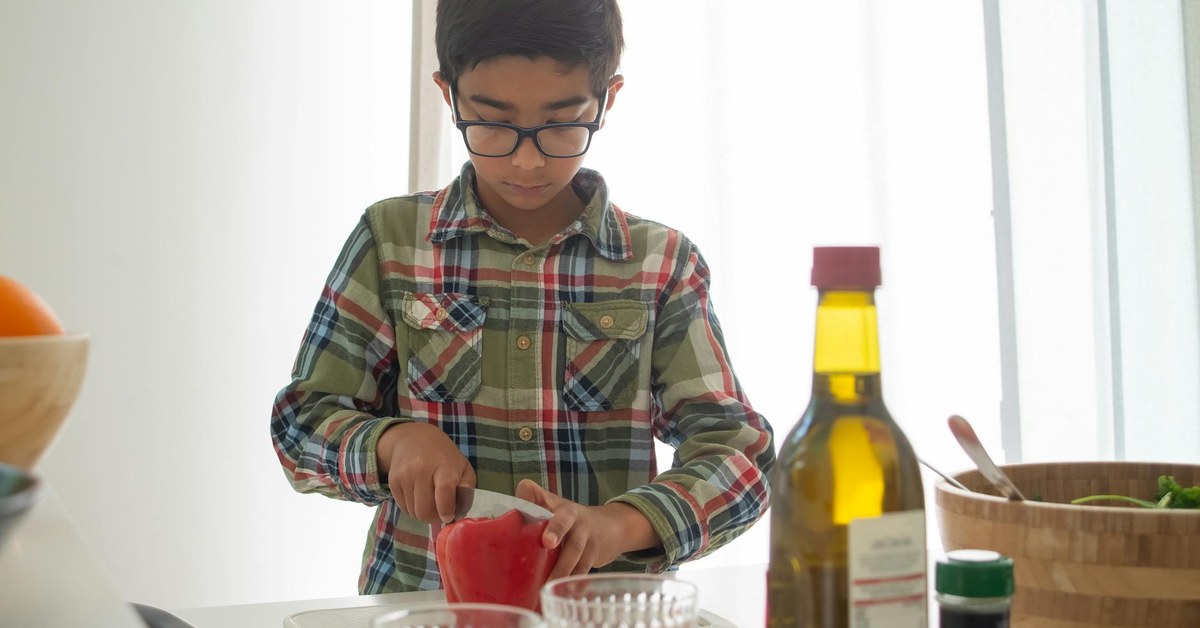
- Ages six to eight: Beginning to use child-safe knives under close supervision, learning to measure and weigh ingredients, understanding temperature controls on cooking equipment.
Kitchen Hygiene Rules for Young Cooks
- Wash hands before starting to cook
- Tie back long hair
- Do not taste food that contains raw eggs, raw flour, or raw meat
- Tell an adult immediately if raw meat or poultry touches another food, a surface, or themselves
- Keep raw meat and poultry away from other foods, using a separate chopping board if possible
- Wash hands after handling raw meat, poultry, or fish
- Do not lick fingers during cooking; use a clean spoon to taste safely where appropriate
Establishing these rules as consistent kitchen habits, rather than one-off reminders, means they become second nature as children grow.
Knife and Equipment Safety
Sharp knives, graters, peelers, electric mixers, and hobs all carry injury risks. Children should only handle these items under direct adult supervision, using tools appropriate to their size and skill level. A cut-resistant glove designed for children is a useful addition when older children are learning to use knives.
Never leave a child unsupervised near a lit hob, an operating oven, or hot liquids.
The Link Between Healthy Eating and Immune Resilience
A child's diet has a direct relationship with their immune system's capacity to respond to infection and illness. This is relevant to food safety in two ways: a well-nourished child is better able to resist and recover from foodborne illness, and a child who has learned healthy eating habits is more likely to maintain practices (such as eating fresh, varied foods and avoiding spoiled or unsafe foods) that support health throughout their life.
The key nutritional foundations for immune resilience in young children include:
- Adequate fruit and vegetable intake: Provides vitamins C and E, beta-carotene, and other antioxidants that support immune function.
- Zinc: Found in meat, legumes, seeds, and dairy. Essential for normal immune development.
- Iron: Deficiency is common in young children globally and impairs immune function. Sources include red meat, fortified cereals, legumes, and leafy green vegetables.
- Vitamin D: Important for immune regulation. Produced by skin exposure to sunlight and found in oily fish, fortified foods, and eggs. Supplementation may be recommended depending on geographic location and dietary patterns.
- Probiotics and fibre: Support a healthy gut microbiome, which plays an increasingly recognised role in immune function. Found in fermented foods (yoghurt, kefir, fermented vegetables) and in a varied, fibre-rich diet.
A broadly varied diet that includes plenty of fruit, vegetables, whole grains, protein from a range of sources, and dairy or dairy alternatives provides the nutritional foundation a child's immune system needs. This is achievable across a wide range of culinary traditions and food cultures worldwide.
Building a Positive Relationship With Food
Food safety and healthy eating are most effectively taught within a broader context of a positive relationship with food. Children who are pressured to eat, who experience food as a source of anxiety or conflict, or who have very limited exposure to a range of foods are less likely to develop the confident, enquiring, health-conscious approach to food that is the real goal.
A balanced approach acknowledges that:
- Children's appetites vary naturally from day to day
- Food refusal and "fussy eating" are common in the preschool years and usually resolve with patience and repeated, low-pressure exposure
- Eating together as a family or household, where possible, models healthy eating behaviours and makes mealtimes a positive social experience
- Involving children in growing, shopping for, and preparing food increases their interest in and acceptance of a wider range of foods
Conclusion
Food safety is a set of practical, learnable habits, not a complex specialist subject. Young children are entirely capable of understanding and following the core principles: wash your hands, do not eat food that has fallen on the floor or been left out, do not share drinks, do not eat raw batter, and check with an adult if food looks or smells wrong. These habits, introduced early and consistently, contribute to a child's physical safety in a tangible and ongoing way. Alongside a varied, nourishing diet, they provide a foundation for lifelong health.