Managing Screen Time for the Whole Family: A Realistic Guide
The debate about screen time has moved beyond simple time limits. What research actually shows, and what genuinely works, might surprise you.

Managing Screen Time for the Whole Family: A Realistic Guide
“The debate about screen time has moved beyond simple time limits. What research actually shows, and what genuinely works, might surprise you.”
Beyond Simple Time Limits
For years, screen time advice centred on specific time limits: two hours a day for children, one hour for under-fives. The evidence behind these specific figures was always weaker than their confident presentation suggested, and the research landscape has evolved significantly. The current position from major paediatric and child health organisations is more nuanced: the quality and context of screen use matters as much as, and sometimes more than, the quantity.
This does not mean that unlimited screen use is fine. It means that the question how long has my child been on a screen? is not the only useful question, and that obsessing over hours while ignoring content, context, and displacement of other activities is missing the point. This guide reflects what the evidence actually supports.
What the Research Actually Shows
Research on screen time and children's outcomes is genuinely complicated. The strongest negative associations are with screens displacing sleep, physical activity, and face-to-face social interaction. A child who sleeps less because they use a device at night, who sits for hours instead of moving, or who retreats from in-person relationship to online interaction, is experiencing harm that is related to screen use but not simply caused by duration.
The strongest evidence for harm from specific content relates to violent content and young children, social media use and adolescent mental health (particularly teenage girls), and the addictive design of some platforms and games. These are content and design issues as much as time issues.
Positive associations exist too. Video calling maintains family and social relationships. Educational content provides genuine learning. Creative tools including art apps, music apps, and coding platforms develop real skills. Collaborative gaming can support social skills. The all-screens-are-bad framing is empirically unsustainable.
For Young Children: Under 5
For babies and very young children, the guidance to minimise or avoid screen use is sound. Young children learn through physical interaction with people and the world around them, and passive screen exposure does not offer equivalent learning. Video calling close family members is different and valuable. The concern is primarily with passive consumption of content that provides stimulation without the social interaction and physical exploration that support healthy development.
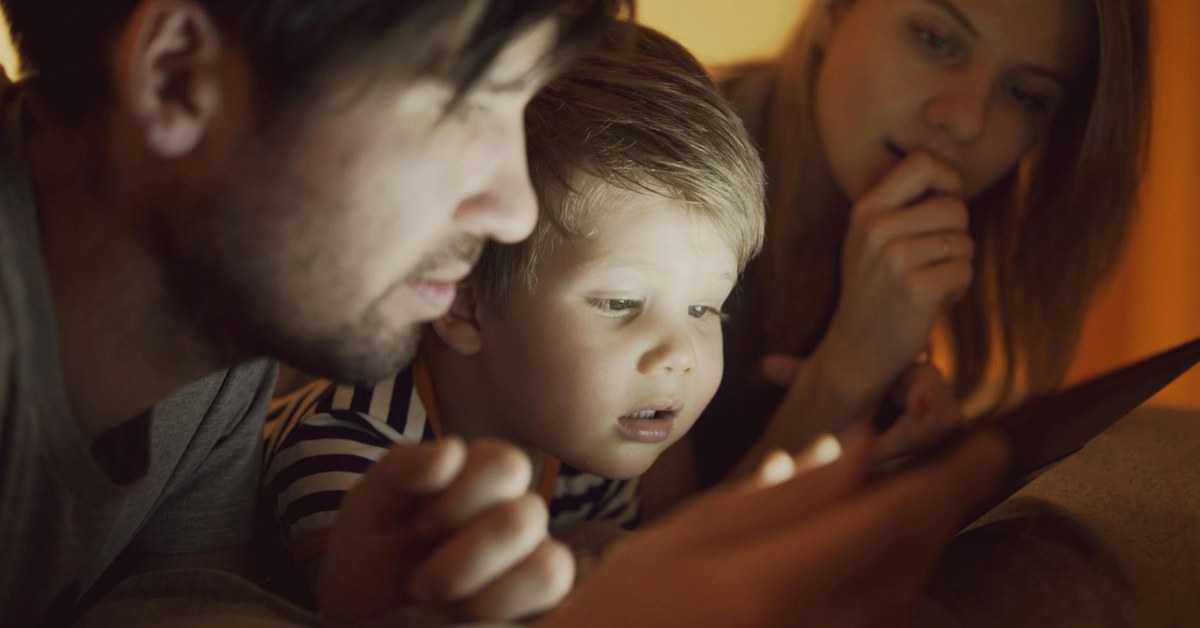
For children aged two to five, limited, high-quality content watched with an engaged adult who talks about what they are seeing provides significantly more developmental value than the same content watched alone. Co-viewing transforms passive consumption into an interactive experience.
For School-Age Children
For school-age children, the most useful questions are: Is screen use affecting sleep? Is it displacing physical activity? Is it interfering with homework, reading, or other valuable activities? Is the content appropriate? Is any online interaction safe and monitored?
If the answers to these questions are no, the precise duration of screen use is a less important concern. If screens are being used in a balanced life that includes adequate sleep, physical activity, face-to-face relationships, and appropriate learning, moderate to significant screen use is unlikely to be causing harm.
Practical strategies that work include screens in shared family spaces (bedrooms are where screens most consistently displace sleep and invite unsupervised use), charging devices outside the bedroom at night, having no-screen times that the whole family observes (mealtimes are the most commonly cited), and ensuring that screen use is not the automatic first response to boredom.
For Teenagers
Teenagers require a different approach from young children. Direct parental control of screen use is less feasible and less appropriate as children gain independence, and adolescence is a critical period for developing self-regulation. The goal is to help teenagers develop their own healthy relationship with screens, including the ability to recognise when their mood is being affected by what they are consuming and to choose to step away.
Social media use by teenage girls in particular is associated with declining mental health in research, though the relationship is complex and the effect size varies. Monitoring how your teenager feels after periods of social media use and helping them notice patterns is more sustainable and more empowering than simply restricting access.
Modelling Matters More Than Rules
Perhaps the most robust finding in research on family screen use is that parental modelling is one of the strongest predictors of children's screen habits. Adults who are constantly on their phones, who check work email during family meals, and who default to screens in moments of boredom are communicating something about screens regardless of the rules they set for their children.
This is not a counsel of guilt. It is an invitation to awareness. Making small, visible choices about your own screen use, and naming them aloud, provides a powerful model. I am putting my phone away so we can have dinner together, and I can put it back on afterwards is a simple act that demonstrates exactly what you want your child to learn.