Bunk Bed Safety for Young Children: Rules
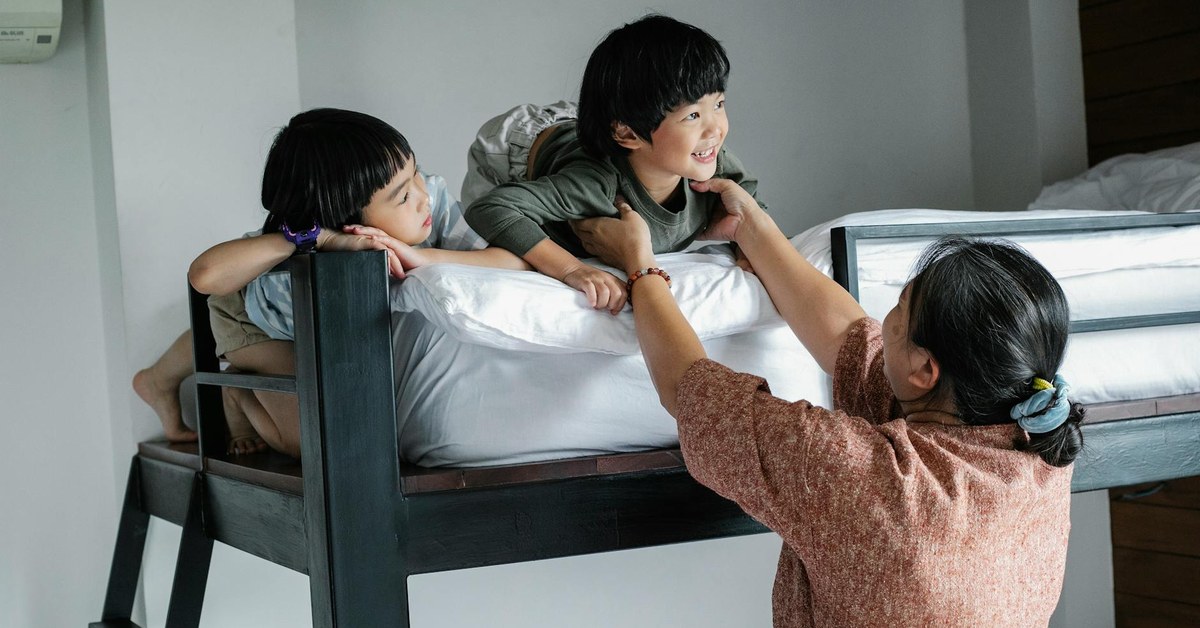

Bunk Bed Safety for Young Children: Rules
Introduction
Bunk beds are a practical and popular solution in many family homes around the world, particularly where space is limited or where children share a bedroom. They are also a genuine source of injury. Falls from bunk beds account for a significant number of childhood hospital admissions globally each year, and many of these injuries are preventable.
This guide covers the key safety principles around bunk beds, including why children under six should not sleep on the top bunk, what to look for when assessing or purchasing a bunk bed, how to inspect an existing bed for safety issues, bedroom layout considerations, what to do if a child falls from a bunk bed, the rules children should understand around climbing during play, and an overview of the product safety standards that apply to children's beds in different parts of the world.
Why Children Under Six Should Not Sleep on the Top Bunk
The recommendation that children under six should not sleep on the top bunk is consistent across major child safety organisations, paediatric health bodies, and product safety regulators in countries including the United Kingdom, the United States, Australia, Canada, and across the European Union.
The reason is rooted in the developmental stage of young children rather than in any single hazard. Children under six:
- Are more likely to roll during sleep and may roll off even a guarded bunk
- Have a higher centre of gravity relative to their head size, making falls more dangerous
- Do not reliably understand or remember safety rules, particularly when drowsy
- May need to use the toilet at night and are at risk of falling when climbing down from the top bunk in the dark, half-asleep
- Are more vulnerable to head injuries from falls due to their skull development
This is not simply a cautious recommendation. Falls from the top bunk at night, including from bunk beds fitted with guard rails, are a consistent cause of serious head injuries in young children. The risk is sufficiently established that the lower bunk (or a standard bed) is unambiguously the safer option for any child under six.
Safe Bunk Bed Standards
Guard Rails
Guard rails are the primary safety feature of an upper bunk. A safe guard rail should:
- Run along both sides of the upper bunk, not just the open side
- Have no gap greater than 7.5 cm (3 inches) between the rail and the mattress surface. If a gap is larger, a child's body could slip into it
- Extend at least 16 cm (approximately 6 inches) above the top of the mattress when the mattress is in place
- Be firmly attached and not flex or loosen when pressure is applied
- Have no opening on the wall side that is wide enough for a child to fall through
Guard rails with the ladder opening should have a gap no larger than 30 cm (approximately 12 inches) to allow access while limiting the risk of a child rolling through the opening.
Ladder Safety
The ladder is the access point to the upper bunk and a source of fall risk in itself. A safe ladder should:
- Be firmly attached to the bed frame and not wobble
- Have rungs that are wide enough for a child's foot, typically at least 28 cm (11 inches) wide
- Have rungs with a non-slip surface
- Be positioned at an appropriate angle, neither so steep that it is difficult to climb nor so angled that it extends far into the room
- Have no sharp edges or projecting hardware
Children should always face the ladder when climbing up or down, holding on with both hands. Teaching this habit from the beginning reduces the risk of falls significantly.
Mattress Fit
The mattress used in a bunk bed must fit the frame precisely. An ill-fitting mattress creates gaps at the sides or ends between the mattress and the bed frame or guard rail, which can trap a child's head or limbs and create an entrapment or strangulation risk.
When purchasing a replacement mattress for a bunk bed, always measure the bed frame and purchase a mattress that matches those dimensions exactly. The mattress should fit snugly with no gap exceeding 3 cm (just over an inch) on any side.
The mattress thickness also matters. A very thick mattress reduces the effective height of the guard rail above the sleep surface. Check that the guard rail still extends at least 16 cm above the mattress top surface after the mattress is installed.
How to Inspect a Bunk Bed for Safety
Whether you are purchasing a second-hand bunk bed or assessing one that has been in use for some time, a thorough inspection is important. Children's bodies and normal use put significant structural stress on bunk beds over time.
Inspection Checklist
- Frame stability: Push and pull the frame in all directions. It should be completely rigid with no wobble or flex.
- Joints and bolts: Check all bolts, screws, and fittings. Tighten any that have worked loose. Replace any that are missing, stripped, or corroded.
- Guard rail attachment: Attempt to pull the guard rail away from the frame. It should not move. Check that all fixings are intact.
- Ladder fixings: Check that the ladder is firmly attached at all fixing points and does not move when weight is applied.
- Surface condition: Check wooden surfaces for splinters, cracks, or rough patches. Sand and refinish as needed. Check metal frames for rust or sharp edges.
- Slats: If the mattress sits on slats, check that all slats are present, undamaged, and properly seated in their supports. A gap in the slats can allow a mattress to sag or a child to fall through.
- Mattress condition: Check that the mattress is in good condition, with no sagging, lumping, or damage to the cover. A damaged mattress may indicate underlying structural problems.
Inspect the bunk bed at the beginning of each school year and after any significant incident such as a fall or rough play on the bed.
Bedroom Furniture Placement Around Bunk Beds
The placement of other furniture in the bedroom affects the safety of a bunk bed in ways that are easy to overlook.
- Ceiling clearance: There should be enough clearance between the upper bunk surface and the ceiling for a child to sit upright without bumping their head on the ceiling or any light fitting, beam, or fan.
- Window proximity: A bunk bed placed immediately next to a window creates a risk of a child falling through or damaging the window. Ensure there is no direct access to a window from the upper bunk.
- Climbing routes: Assess what is near the bunk bed that a child could use to climb onto the upper bunk from outside the bed, such as desks, chairs, or chests of drawers. Remove or reposition these where possible.
- Landing zone: Ensure the area directly around and below the bunk bed is as clear as possible of hard furniture, toys, and objects that could increase injury severity in a fall.
What to Do If a Child Falls From a Bunk Bed
Falls from bunk beds can cause a range of injuries from minor bruising to serious head trauma, spinal injuries, and fractures. The correct response depends on the nature and severity of the injury.
Immediate Steps
- Stay calm. A calm adult is more effective and less frightening for the child.
- Do not move the child immediately if you suspect a spinal or neck injury. Signs that warrant caution include the child complaining of neck or back pain, tingling, or numbness; the child being unable to move a limb; or the child having fallen from a significant height onto their head or neck.
- Call emergency services immediately if: the child is unconscious or difficult to rouse; there is a suspected spinal injury; the child is having a seizure; there is a visible significant wound, deformity, or heavy bleeding; or the child is vomiting repeatedly after the fall (a sign of possible concussion or head injury).
- If the child is conscious, alert, and moving normally, check for obvious injuries. Comfort and reassure the child.
Monitoring After a Fall
Any fall from a bunk bed warrants observation for at least 24 hours afterwards, even if the child seems fine initially. Signs of a delayed or developing head injury include:
- Increasing drowsiness or difficulty waking
- Unequal pupil size
- Persistent vomiting
- Severe or worsening headache
- Confusion or unusual behaviour
- Weakness or numbness in limbs
If any of these symptoms develop, seek medical attention immediately.
Rules for Climbing on Bunk Beds During Play
Bunk beds are designed for sleeping, not for active play. However, for most children, the upper bunk presents an irresistible climbing and playing space, and it is unrealistic to expect that a child will never use their bunk bed as anything other than a bed.
Rather than prohibiting all play near bunk beds, which is unlikely to be effective, establish clear rules and teach them consistently:
- Only one child on the upper bunk at a time. Multiple children jumping or playing on the upper bunk dramatically increases the risk of falls and structural damage.
- No jumping on the upper bunk. Jumping exerts significant force on the mattress, guard rails, and frame, and increases fall risk.
- Always use the ladder to get up and down. Climbing the frame, swinging off the side, or jumping down from the upper bunk are not acceptable.
- Always face the ladder when climbing.
- No playing on the upper bunk with items that could fall and injure the person below (heavy toys, filled water bottles, etc.).
These rules should be communicated clearly, reinforced consistently, and understood not as arbitrary restrictions but as safety measures with a reason behind them.
Global Product Safety Standards for Children's Beds
Different countries have developed their own product safety standards for children's bunk beds. While the specific requirements vary, the underlying principles are consistent: structural integrity, guard rail specifications, gap dimensions, and surface safety.
- European Union: EN 747 is the standard for bunk beds and high beds for domestic use. It specifies requirements for structural strength, guard rail dimensions, gap sizes, and surface finish.
- United Kingdom: Post-Brexit, the UK has retained equivalent standards to EN 747 under UK product safety legislation. Bunk beds sold in the UK should carry appropriate safety markings.
- United States: The Consumer Product Safety Commission (CPSC) has mandatory federal safety standards for bunk beds, covering structural integrity, guard rails, and entrapment prevention. The standard reference is 16 CFR Part 1213.
- Australia and New Zealand: The relevant standard is AS/NZS 4220, which covers domestic bunk beds and high beds.
- Canada: Health Canada regulates children's furniture safety. The Cribs, Cradles and Bassinets Regulations and general consumer product safety legislation apply.
When purchasing a bunk bed, particularly from online marketplaces or international retailers, verify that the product meets the safety standards applicable in your country. Second-hand bunk beds, especially older ones, may pre-date current safety standards and should be inspected especially carefully.
Conclusion
Bunk beds are a practical and often beloved feature of children's bedrooms, and with appropriate precautions they can be used safely. The core message is straightforward: children under six should sleep on the lower bunk, the bed should meet current safety standards and be inspected regularly, clear play rules should be in place, and any fall should be treated with appropriate seriousness. With these measures in place, the bunk bed can be a source of pleasure and practicality rather than a cause for concern.