Scooter, Skateboard, and Wheeled Toy Safety for Children
Scooters and skateboards are hugely popular with young children but carry real injury risks. Learn how to choose age-appropriate wheeled toys, fit protective equipment correctly, and keep young riders safe on every outing.
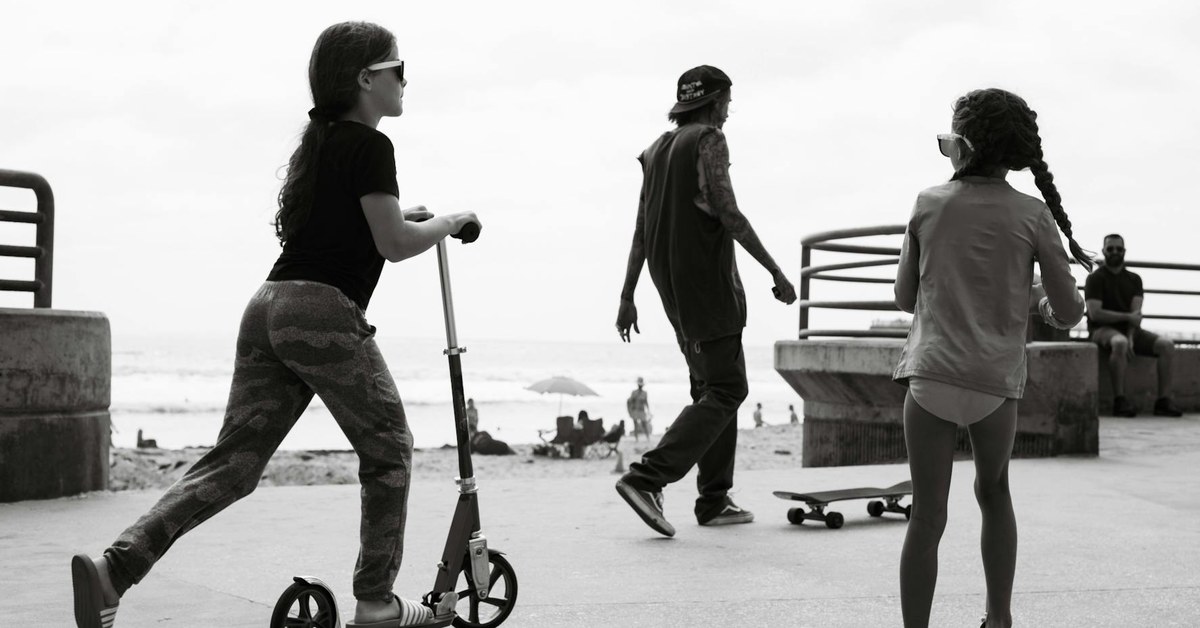

Scooter, Skateboard, and Wheeled Toy Safety for Children
“Scooters and skateboards are hugely popular with young children but carry real injury risks. Learn how to choose age-appropriate wheeled toys, fit protective equipment correctly, and keep young riders safe on every outing.”
The Popularity and the Risk
Scooters, skateboards, balance bikes, and roller skates are among the most popular outdoor toys for children aged 4 to 7 globally. They offer genuine developmental benefits including improved balance, coordination, spatial awareness, and confidence in physical activity. They also provide hours of outdoor play and are an accessible, affordable way to encourage active lifestyles in young children.
They also carry real and well-documented injury risks. Emergency department data from many countries consistently identifies wheeled recreational toys as a significant source of fractures, lacerations, concussions, and other injuries in the 4 to 12 age group. The most common injuries involve the wrists, elbows, knees, and head. Wrist fractures from outstretched arm landings when falling, and head injuries from falls without helmets, are the most serious injury types and the ones most reliably prevented by correct use of protective equipment.
The goal is not to discourage children from using scooters and wheeled toys. The physical, developmental, and social benefits of active outdoor play are too significant to sacrifice. The goal is to ensure that the risks are managed effectively through appropriate equipment selection, correct protective gear, and supervision and skill-building appropriate to the child's age and ability.
Choosing Age-Appropriate Wheeled Toys
Not all wheeled toys are equally appropriate for all children in the 4 to 7 age range. Developmental readiness, balance, strength, and coordination all affect which type of equipment a child can use safely.
Three-wheeled scooters with a wide deck and low platform are generally the most appropriate starting point for children aged 4 to 5 who are new to scootering. The wider base of three-wheeled models provides significantly more stability than two-wheeled versions and allows children to build confidence and coordination before transitioning to the greater challenge of a two-wheeled scooter. Look for models with a low deck height that allows the child to push comfortably without overextending, a smooth steering mechanism, and a reliable rear brake.
Two-wheeled scooters become appropriate as children develop stronger balance and coordination, typically around ages 5 to 7 for most children, though this varies with individual development and prior wheeled toy experience. These require more active balance control and a steeper learning curve, but most children transition well with adult support and appropriate protective gear.
Skateboards carry a higher injury risk than scooters and require greater skill, balance, and coordination. Most paediatric safety organisations recommend waiting until children are at least 8 before beginning skateboarding. For children aged 4 to 7, skating on a board is generally beyond developmental readiness, and the risk-to-benefit ratio for this age group favours waiting. If a child is very keen, consider a mini-ramp or smooth flat surface with close adult supervision and full protective gear as a first introduction, with clear understanding that more technical skateboarding should wait.
Roller skates and inline skates are achievable for many children from age 5 or 6 with practice and appropriate protective gear. Quad skates with four wheels in a rectangular pattern offer more stability than inline skates and are generally a better starting point for younger children. Fitting is important: skates should fit snugly with no significant heel lift, as loose skates reduce control and increase ankle injury risk.
Helmets: The Non-Negotiable Protective Item
Helmet use is the single most effective intervention for preventing serious head injuries from wheeled toy falls and collisions. Research consistently demonstrates that correctly fitted helmets reduce the risk of head injury in cycling and wheeled sport accidents by 45 to 88 percent. Despite this, helmet use is inconsistent among young riders in many countries, either because helmets are not provided, because they are not fitted correctly, or because children remove them during rides when adult supervision is not present.
Choose a helmet certified to a recognised safety standard appropriate to the activity. In many countries, bicycle helmets are certified to national or international standards including EN 1078 in Europe, CPSC in the United States, and AS/NZS 2063 in Australia and New Zealand. Check the certification marking inside the helmet before purchase. A helmet that has not been certified to a recognised standard may not provide the protection it appears to offer.
Fit the helmet correctly every time. The helmet should sit level on the head, covering the forehead to within approximately 2 centimetres of the eyebrows. The straps should form a V shape under each ear, and the chin strap should be snug enough that only one or two fingers fit between the strap and the chin. The helmet should not move more than approximately 2 centimetres in any direction when pushed firmly. A helmet that sits too far back on the head leaves the forehead unprotected, which is one of the most common helmet fitting errors.
Replace a helmet after any significant impact, even if visible damage is not apparent. The foam liner of a helmet absorbs energy by compressing during impact. After a significant impact, this compression has occurred and the liner may not provide equivalent protection in a subsequent impact. Replace the helmet.
Make helmet wearing non-negotiable and consistent. Children are significantly more likely to wear helmets consistently when adults model helmet use themselves and when helmet wearing is treated as an automatic, expected behaviour rather than an optional extra. Establish the rule that wheeled toy use does not begin until the helmet is fitted, every time, without exception. This rule is easiest to establish from the first use of any wheeled toy and becomes progressively harder to introduce if children have become accustomed to riding without one.
Wrist Guards, Knee Pads, and Elbow Pads
After helmets, wrist guards are the most important piece of protective equipment for young scooter and skate users. The outstretched arm reflex is automatic and essentially impossible to suppress in a fall: when people fall forward, they instinctively extend their arms to break the fall, and the impact on the wrist is the cause of the most common serious injury in this activity category. Wrist guards designed for skate sports have a plastic splint that distributes the impact over a larger area and prevents the wrist from hyperextending, significantly reducing fracture risk.
Knee pads protect against the lacerations and contusions that are the most common result of falls onto hard surfaces. While knee injuries are rarely as serious as wrist fractures or head injuries, they are painful, can become infected if not treated appropriately, and can put a child off wheeled play. Good knee pads for children should fit snugly over the kneecap, stay in place during active movement, and have a hard outer shell with foam padding inside.
Elbow pads are the third element of a full protective set and protect against the abrasions and bruising that result from elbow-first falls. Many children's protective gear sets include helmet, knee pads, and wrist guards as a combined package, though elbow pads are frequently sold separately. For children who are learning a new wheeled skill and who are falling regularly while they develop balance and control, full protective sets are recommended.
Ensure all protective gear fits correctly. Gear that is too large will move out of position during a fall and may not protect the intended area. Gear that is too tight is uncomfortable and children will resist wearing it. Try gear on the child before purchase, check that it stays in position when the child moves, and replace it as the child grows.
Safe Environments for Young Riders
The environment in which children use wheeled toys significantly affects the risk of injury. Choosing appropriate surfaces and locations reduces risk considerably.
Smooth, flat surfaces are safest for beginners and for younger children. Tarmac paths, smooth concrete, and purpose-built skate areas provide predictable surfaces with fewer obstacles and trip hazards than grass, gravel, or uneven pavement. Avoid areas with significant cracks, raised paving stones, or debris that could catch a wheel unexpectedly.
Keep young riders away from road traffic. For children aged 4 to 7, wheeled toy use should take place in off-road environments including parks, playgrounds, private driveways, and shared pedestrian areas away from vehicle traffic. Children in this age group do not have the cognitive development, hazard perception, or reaction times required to navigate traffic safely on wheeled toys. Even a very short stretch of road carries significant risk. Gradual introduction to shared-use paths with pedestrians is appropriate as children develop skill and control, with adult supervision maintained throughout.
Avoid steep gradients until skill is well established. A slope that is gentle for an adult may be fast and unmanageable for a young child on a scooter. Children in this age group often do not have reliable braking skills and may not anticipate how quickly a slope will accelerate their speed. Introduce gentle gradients with adult support present and progress gradually as braking skill improves.
Teaching Road Awareness to Young Riders
As children develop confidence on wheeled toys, they will inevitably encounter situations where they approach roads, shared paths, or pedestrian areas. Building basic road and path awareness is an important part of safe wheeled toy use for this age group.
Teach children to stop completely before any kerb or road junction, always, without exception. This habit should be established from the very beginning of wheeled toy use and reinforced consistently. Stopping before road junctions and looking both ways before crossing is the fundamental pedestrian safety habit transposed into wheeled toy use.
Teach path sharing etiquette in shared pedestrian areas. Children on scooters in pedestrian areas need to be aware of pedestrians around them, move at appropriate speeds that allow safe stopping, and give way to pedestrians. Ringing a bell before overtaking, slowing down near children or older pedestrians, and avoiding weaving unpredictably through crowds are skills that older children and adults have internalised but that young children need explicit guidance on.
Maintain close supervision whenever children on wheeled toys are near any vehicle environment. The combination of speed, reduced situational awareness during active physical play, and the unpredictability of traffic makes close adult supervision essential for children in this age group. This supervision means maintaining a position from which you can physically intervene quickly rather than watching from a distance.
Building Skills Progressively
Injuries are more likely to occur when children attempt manoeuvres or environments that are beyond their current skill level. Supporting progressive skill development, where children move from simpler to more complex challenges as their competence grows, reduces injury risk while supporting the confidence and capability development that makes wheeled play enjoyable and rewarding.
Begin with stationary skills, including mounting, dismounting, and basic balance, before moving to rolling. Practise braking from slow speeds before faster ones. Introduce turning and steering on gentle gradients before steeper ones. Celebrate progress at each stage rather than pushing on to the next challenge before the current one is genuinely consolidated. A child who has reliable control at their current skill level is a safer rider than one who has moved on to more challenging environments before developing that reliability.