Understanding and Managing Screen Time for Under-5s
Screen time guidance for very young children is often confusing and anxiety-inducing for parents. This balanced guide cuts through the noise with practical, evidence-based advice.

Understanding and Managing Screen Time for Under-5s
“Screen time guidance for very young children is often confusing and anxiety-inducing for parents. This balanced guide cuts through the noise with practical, evidence-based advice.”
The Anxiety Around Screens and Young Children
Few parenting topics generate more anxiety, guilt, and conflicting advice than screen time for young children. Parents encounter strict time limits in one article, nuanced research in another, and anecdotal horror stories across social media. The result is often either paralysing guilt about any screen use at all, or a complete abandonment of the question as too complicated to navigate.
A more useful starting point is to look at what the evidence actually shows, acknowledge what is not yet known, and focus on the specific ways that screen use can support or hinder development in the early years, rather than treating time as the only variable that matters.
What the Research Actually Shows
The most widely cited guidance, from the World Health Organisation and the American Academy of Pediatrics, recommends no screen time at all for children under two (except video calling with family), and limited, high-quality screen time for children aged two to five.
This guidance is sometimes misunderstood as suggesting that screens cause direct developmental harm. The evidence is more nuanced. What the research consistently shows is that passive, unrelated screen time replaces activities that are more beneficial for development at these ages: physical play, face-to-face interaction, language-rich conversation, and hands-on exploration of the physical world.
The issue is not screens themselves but displacement. A two-year-old watching a screen for two hours is not doing something categorically harmful to their brain. They are spending two hours not doing things that would be significantly more beneficial for their cognitive, social, and physical development.
For language development specifically, young children learn language through interaction rather than passive exposure. They learn words from caregivers who respond to them, adjust their language to the child, and engage in back-and-forth exchange. Television and video content, however high quality, does not provide this responsive interaction, which is why language learning from screens is significantly less efficient than from live human interaction at this age.
What Matters More Than Time: Quality and Context
Once you move beyond the bluntest version of screen time guidance, the evidence points to quality and context as more significant variables than raw minutes.
Co-viewing, watching content with a child and talking about it together, significantly improves the developmental value of screen time. A parent who watches a programme with a two-year-old, pauses to discuss what is happening, names what the characters are doing, and asks questions is turning passive viewing into an interactive language-learning experience.
Content quality matters. Educational content designed specifically for young children (CBeebies programmes, carefully produced apps designed around developmental principles) is meaningfully different from adult content or content designed purely for engagement. Not all screen time is equivalent.
The context around screen use also matters. Screens as a short-term tool to allow a parent to prepare dinner, shower, or manage another task are very different from screens as the primary child-management strategy for hours each day. The former is normal family life. The latter warrants attention.
Specific Areas to Pay Attention To
Sleep is one area where screen use has a more direct relationship with a specific outcome. Screens in the hour before bedtime, and particularly in the bedroom at sleep time, are associated with shorter, lower-quality sleep in young children. This is worth taking seriously because sleep is fundamental to early development, mood, and health.
The content of screen time matters for emotional and psychological development. Very young children can be frightened by content that older children or adults find manageable. They are not yet able to reliably distinguish fiction from reality, and images of threat or conflict can be more distressing than they appear. Monitoring content and following age ratings is genuinely useful, not just box-ticking.
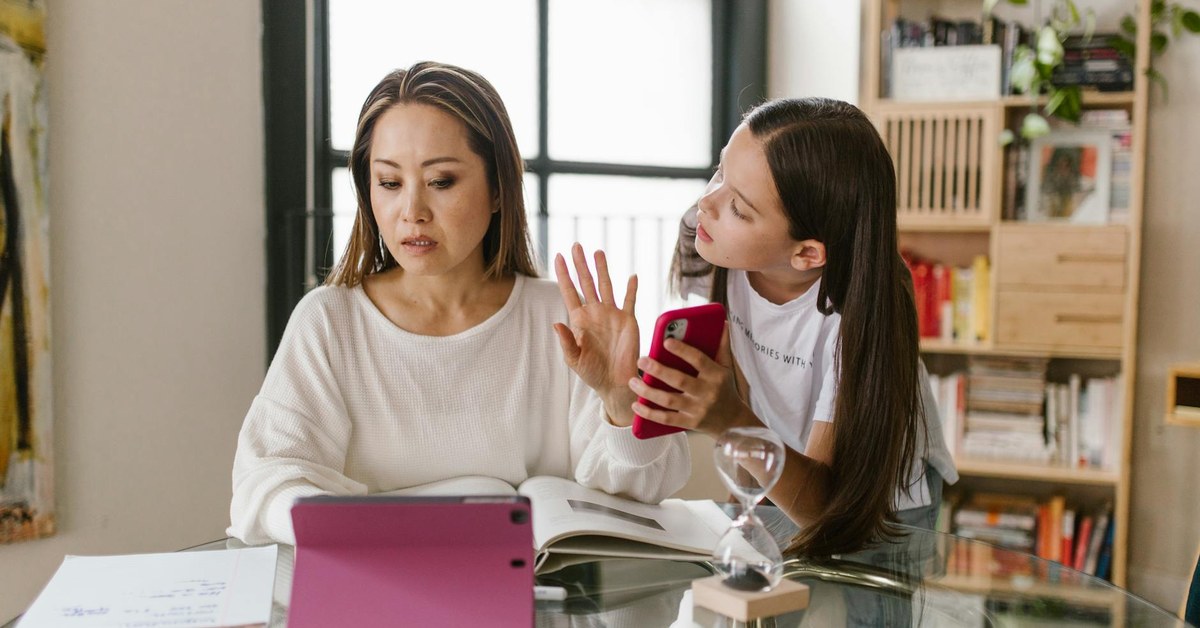
Phone use by parents during child interactions is an area that receives less attention but is relevant. Research suggests that caregiver phone use during child-directed play and conversation reduces the richness of interaction in ways that matter for language and social development. This is not to add guilt to an already guilt-laden topic, but to note that the direction of the screen matters as well as its size.
Practical Approaches for Families
Establish screen-free times and spaces in the home: mealtimes, the hour before bed, and ideally the bedroom are worth keeping screen-free as a default. These boundaries are easier to maintain from the beginning than to introduce once habits are established.
When screens are in use, try where possible to be involved: sit with your child, talk about what you are watching, choose content together. This is not always possible and that is fine; the point is to make co-viewing the norm rather than the exception.
Be honest about your own screen use. Children observe what adults do more than what they are told. A household where parents are constantly on their phones while telling their children to put screens away creates a confusing message. This is not about perfection but about modelling the relationship with technology that you actually want your children to develop.
Focus on sufficiency rather than elimination. The question to ask is not "how do I get the screen time to zero" but "are my children getting enough of the things that matter: physical activity, sleep, face-to-face interaction, reading, creative play, and hands-on exploration?" If those things are happening abundantly, modest screen time is very unlikely to be causing harm.