Travel Safety With Hearing Loss
Hearing loss affects millions of older adults and presents specific challenges when travelling. From airport announcements to hotel fire alarms, from ordering in restaurants to communicating in emergencies, this guide covers the practical steps that make travel safe and enjoyable for those with hearing impairment.

Travel Safety With Hearing Loss
“Hearing loss affects millions of older adults and presents specific challenges when travelling. From airport announcements to hotel fire alarms, from ordering in restaurants to communicating in emergencies, this guide covers the practical steps that make travel safe and enjoyable for those with hearing impairment.”
Hearing Loss and Travel: More Manageable Than You Might Think
Hearing loss is one of the most common conditions affecting older adults, with estimates suggesting that more than a third of people over 65 and the majority of those over 75 experience some degree of hearing impairment. Yet hearing loss is often invisible to others and can be invisible even to the person experiencing it, particularly in the early stages when it may be mistaken for inattentiveness or dismissed as a normal part of ageing.
For travellers with hearing loss, the challenges are real but manageable. The key difficulties involve missing spoken announcements in airports, stations, and on transport; failing to hear hotel fire alarms and other safety alerts; difficulty communicating in noisy restaurants, busy markets, and foreign language environments; and potential gaps in emergency communication. Understanding these challenges in advance and planning for them transforms what might feel like an insurmountable barrier into a series of practical problems with practical solutions.
This guide addresses each of these areas and provides specific strategies that allow older adults with hearing loss to travel with genuine confidence and enjoyment.
Preparation Before Travel
Good preparation reduces the frequency and impact of hearing-related difficulties during travel. Several steps taken before departure pay dividends throughout the journey.
If you use hearing aids, ensure they are serviced and functioning optimally before a trip. Book an appointment with your audiologist a few weeks before departure to have them cleaned, checked, and adjusted if necessary. Carry spare batteries in your hand luggage, not in checked baggage, in larger quantities than you think you need. Battery life can be affected by changes in temperature and humidity, and replacement batteries may be difficult to find or may be a different specification in some countries. Rechargeable hearing aids require access to a charging source, so research whether your accommodation has accessible power outlets of the right type, and carry appropriate adapters.
Many modern hearing aids pair with smartphones via Bluetooth and can stream audio directly from the phone, including navigation instructions, entertainment, and video calls. If your aids have this capability, ensure it is set up and tested before you travel, as it provides a significant communication advantage in many travel situations.
Inform the relevant parties of your hearing needs before you travel. When booking flights, add a note to your booking about hearing impairment. Airlines can flag your record so that staff are aware, enabling them to ensure you receive safety briefings in a format you can access and to provide written or visual information where needed. Similarly, when booking hotels, note your hearing needs and ask what visual alerting systems are available.
Airports and Air Travel
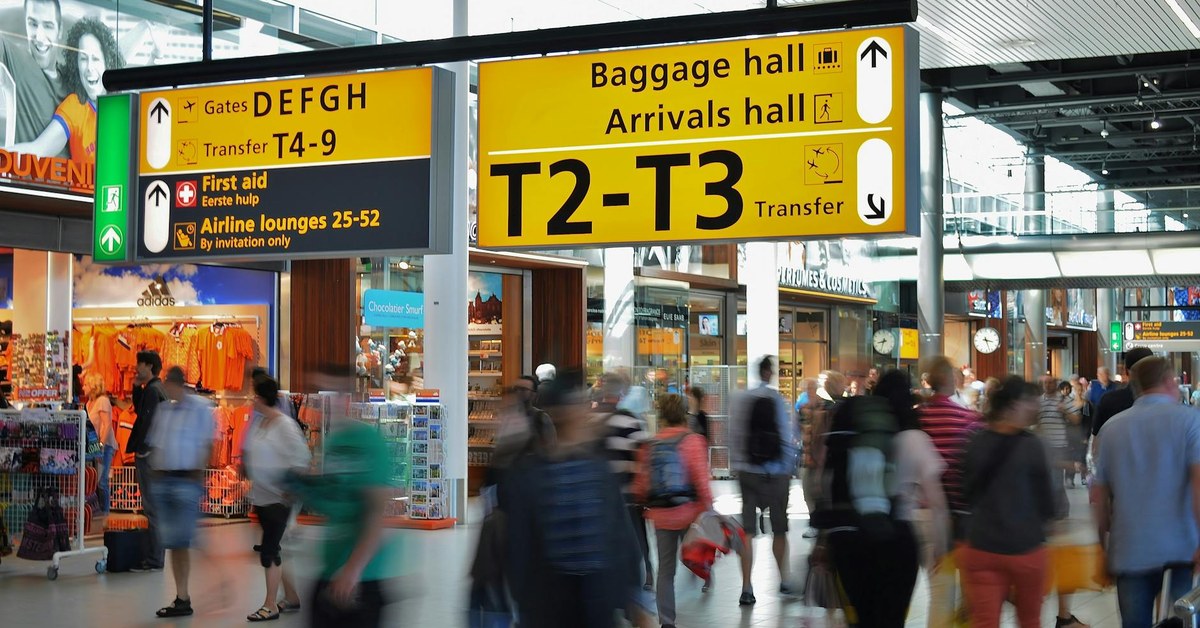
Airports are among the most acoustically challenging environments for people with hearing loss. Public address announcements echo, background noise is high, and important information about gate changes, delays, and boarding is often conveyed primarily through sound.
Arrive early to give yourself more time to check departure boards and seek information from staff before time pressure becomes stressful. Most modern airports display flight information prominently on screens throughout the terminal, and this visual information is the reliable reference for gate numbers and boarding times rather than announcements. Make a habit of checking screens regularly rather than listening for your flight to be called.
Download the airport's app if one is available, as many airports now send gate information and boarding notifications directly to your phone. Airline apps similarly provide notifications about flight status, boarding times, and gate changes that do not depend on hearing an announcement.
At the gate, position yourself where you can see the gate agent and the display screens clearly. If you are concerned about missing a boarding call, introduce yourself briefly to the gate agent, explain that you have a hearing impairment, and ask them to ensure you are included when boarding begins. Most airline staff are accommodating of this request.
On the aircraft, inform a crew member at the start of the flight that you have a hearing impairment. In the event of an in-flight announcement or safety instruction, they can ensure you receive the information. The safety briefing at the start of a flight follows a standard format that is worth familiarising yourself with in advance so you know what to expect, and safety cards in the seat pocket provide the essential information visually.
Hotel Safety: Fire Alarms and Emergency Alerts
Standard hotel fire alarms are auditory and may not reliably wake or alert guests with significant hearing loss. This is a genuine safety concern that requires active management rather than assumption that the standard alarm system is adequate.
When checking in, ask specifically whether the hotel has visual alerting systems available for guests with hearing impairment. These typically include a strobe light unit that plugs into the room and flashes in response to the fire alarm, and a vibrating pad placed under the pillow that vibrates when an alarm is triggered. Many hotels that serve international guests in countries with strong accessibility legislation have these systems available, but they may need to be specifically requested rather than automatically provided.
If the hotel cannot provide visual alerting equipment, contact a specialist supplier of travel accessibility equipment before your trip. Portable visual alarm alerters that plug into a standard wall socket and connect to an existing alarm system, or that respond to the sound frequency of a smoke alarm, are available for purchase and are a worthwhile investment for regular travellers with hearing loss.
Identify the location of the nearest fire escape from your room on the first day. Knowing this in advance means that in an emergency, you can act immediately rather than taking time to find the exit. A room closer to the fire escape, and on a lower floor, is also sensible for guests who rely on visual rather than auditory alerting.
Communicating in Restaurants, Shops, and Public Spaces
Noisy environments, foreign languages, and unfamiliar accents all compound the challenges of hearing loss in daily travel situations. Several strategies help.
Positioning matters in conversations and at restaurant tables. Seat yourself with your back to the main source of noise, such as a kitchen or a busy street, so that conversation partners are facing you and their voices travel toward you rather than competing with the noise source. Choose window seats or corner tables in restaurants where possible, which typically have lower ambient noise levels than central tables.
Do not hesitate to explain your hearing loss clearly to people you are communicating with, and to ask them to speak clearly and at a moderate pace rather than loudly. Many people instinctively raise their volume when asked to speak more clearly, which distorts speech rather than improving it. A clear, moderate-speed voice with well-formed words is far more intelligible than a shouted one.
Writing is a reliable fallback for important information such as addresses, prices, and names. Carrying a small notepad, or using the notes function on your phone, allows you to ask someone to write a key piece of information if spoken communication is proving impossible. Many people across language and hearing barriers find that writing, or showing information on a phone screen, resolves communication difficulties that would otherwise be frustrating for both parties.
Translation and communication apps on smartphones can be extremely helpful. Some apps convert speech to text in real time, displaying what has been said as readable text on the screen. Others allow you to type a message and have it spoken aloud in a chosen language. These tools are not perfect, but they meaningfully extend communication possibilities in challenging situations.
Protecting and Caring for Hearing Aids During Travel
Hearing aids are small, expensive, and essential, making their protection during travel a priority. A few habits significantly reduce the risk of loss or damage.
Keep hearing aids in a hard case when not in use, and store the case in a consistent, memorable location such as a specific pocket of your bag or on the bedside table. The consistency of storage location prevents the absent-minded misplacement that is the most common cause of hearing aid loss.
Remove hearing aids before swimming, showering, or any water activity. Modern hearing aids vary in their water resistance, and while some are rated for exposure to moisture and sweat, none are designed for submersion. Dry hearing aids thoroughly if they become unexpectedly wet, using a hearing aid drying kit or dry capsule rather than a hairdryer, which can damage the electronics.
Heat can damage hearing aids. Do not leave them in direct sunlight, in a hot car, or in luggage stored in a vehicle boot in warm weather. Airport X-ray machines are generally safe for hearing aids and cochlear implant processors, but body scanners use a different technology and it is worth asking for a manual search if you are uncertain about the scanning method being used.
Register your hearing aids with the manufacturer before travelling. Some manufacturers have international service networks that can assist with repairs or replacements abroad. Knowing the international customer service contact details before you need them is far less stressful than searching for them in the middle of a crisis.
Emergency Communication
In a genuine emergency abroad, communication becomes more difficult and more critical simultaneously. Preparing for this scenario specifically is worthwhile.
Carry a card in your wallet or handbag, alongside your travel documents, that identifies your hearing impairment and provides key information in the local language of your destination. The card might read: 'I have a hearing impairment. Please communicate with me in writing or by showing me information on a screen.' Having this card available allows you to communicate your needs to emergency responders, medical staff, or other helpers quickly and without fumbling for words in a stressful situation.
Know the local emergency number before you arrive at each destination. In Europe, 112 is the standard emergency number. In the US, it is 911. In Australia, 000. Many countries also have SMS-based emergency services that allow you to send a text message to emergency services rather than making a voice call, which can be enormously useful for people with hearing loss. Research whether this is available at your destination before you travel.
Travel companions who are aware of your hearing impairment and who have agreed to assist with critical communication in an emergency provide an important safety net. Even if you travel largely independently, having a travel companion who is briefed on your needs reduces the risk of a communication gap in a genuinely high-stakes situation.
The Right Attitude Makes the Difference
Many older adults with hearing loss report that the anticipation of communication difficulties is often worse than the reality of managing them. With preparation, the right tools, a willingness to explain your needs clearly, and a pragmatic attitude toward the occasional imperfect communication, travel with hearing loss is not just possible but genuinely enjoyable. The world is a richer, more interesting place when you are in it, and hearing loss is not a reason to experience it at a distance.