Beach and Ocean Safety for Young Children

Beach and Ocean Safety for Young Children
Introduction: The Beauty and the Hazard of the Sea
For many families, a trip to the beach is one of the most cherished summer activities. The combination of open space, fresh air, and the excitement of the ocean makes the seaside a beloved destination for young children across the world. Yet coastal and beach environments also present a unique set of hazards that parents and carers must understand thoroughly before allowing children near open water.
Young children, typically those aged between one and seven, are particularly vulnerable at the beach. Their limited swimming ability, natural curiosity, and tendency to underestimate danger mean that adult supervision and preparation are not merely helpful but absolutely essential. Every year, drowning and beach-related injuries claim the lives of hundreds of young children globally, and many more sustain non-fatal injuries from a variety of coastal hazards.
This article provides a thorough, evidence-based guide to keeping young children safe at the beach, drawing on guidance from organisations in the United Kingdom, Australia, the United States, and the broader Mediterranean and Pacific regions.
Understanding Ocean Hazards for Young Children
Rip Currents
Rip currents are one of the most dangerous and least understood hazards at any beach. A rip current is a narrow, fast-moving channel of water that flows away from the shore, sometimes reaching speeds of up to 2.5 metres per second. They form when water pushed to shore by waves finds a pathway back out to sea, typically through gaps in sandbars or alongside piers and jetties.
For a small child, even a slow rip current is life-threatening. Because rip currents flow away from shore, a child caught in one will be carried rapidly out to sea. Children lack the strength and swimming knowledge to escape a rip, and panic compounds the danger significantly. Rip currents account for the majority of lifeguard rescues on surf beaches globally.
Adults should learn to identify rip currents before entering the water. Signs include a choppy, discoloured patch of water, a line of foam or debris moving seaward, and an area where waves are noticeably smaller or absent. On unfamiliar beaches, always ask lifeguards to point out the location of any active rips.
Waves and Surf
Even small waves pose a significant risk to toddlers and young children. A wave that an adult might not notice can knock a young child off their feet, pull them under, and disorient them entirely. Dumping waves, which are common on surf beaches in Australia and South Africa, break with sudden force directly onto the seafloor and can cause serious spinal injuries even in shallow water.
Young children should only play in the shallow wash of spent waves, and even then, an adult should be within arm's reach at all times. Surf beaches require a higher level of vigilance than calm, sheltered beaches or tidal pools.
Shallow Water Diving Risks
Diving, jumping, or leaping into shallow water is a significant cause of serious injury in older children and adults, but the hazard exists even among very young children who may jump from rocks or the edge of a pool. Spinal cord injuries resulting from shallow water diving are life-altering and preventable. Children should be taught from the earliest age that jumping into unknown water is never safe, and that only feet-first entry in shallow water is acceptable.
Rocks, Rockpools, and Coastal Terrain
Rocky beaches and headlands present slipping, cutting, and entrapment hazards. Wet rocks covered in algae are extremely slippery. Children exploring rockpools may step into deeper water than expected or become trapped in crevices. Protective footwear, close supervision, and teaching children to move slowly on rocks are all important preventative measures.
Jellyfish and Marine Stings
Jellyfish stings vary significantly in severity depending on species and geography. In Australia and South-East Asia, the box jellyfish (Chironex fleckeri) is potentially fatal, and children are at higher risk due to their smaller body mass and thinner skin. In Europe and North America, stings from common jellyfish are painful but rarely life-threatening, though allergic reactions are always possible.
Children should be taught not to touch jellyfish, either in the water or on the beach, as beached jellyfish can still sting. If a sting occurs, rinse with seawater (not fresh water for some species), remove any tentacles with a card or shell rather than bare hands, and seek medical assistance promptly if symptoms are severe.
Hot Sand Burns
This hazard is frequently overlooked. Sand on exposed beaches can reach temperatures exceeding 60 degrees Celsius in full summer sun. Young children's feet are more sensitive than adults' and can sustain serious burns from brief contact with hot sand. Always test sand temperature with your hand before allowing barefoot children to walk on it, and provide appropriate footwear or ensure a shaded, cooler path to the water's edge.
Lifeguard Flags and What They Mean
Across much of the world, patrolled beaches use a standardised flag system to communicate water conditions. Parents must understand these flags before visiting any beach.
- Red and Yellow Flags: These mark the patrolled swimming area. In the UK, Australia, and many other countries, this is the safest zone for swimming and is actively monitored by lifeguards. Always swim between these flags.
- Red Flag: Dangerous conditions. No swimming. This may indicate rip currents, large surf, or other severe hazards. This instruction applies to everyone, including strong swimmers.
- Orange Windsock: Strong offshore winds. Inflatables are particularly dangerous in these conditions, as they can be rapidly carried out to sea.
- Black and White Chequered Flag: Zone designated for surfboards, kayaks, and other watercraft. Swimmers and children should remain out of this area.
- Blue Flag (in some countries): Used to indicate various conditions depending on the country. Always check locally.
In countries without a standardised patrol system, such as many beaches across southern Europe, South America, and parts of Asia, there may be no flags at all. In these situations, parents must be especially cautious and rely entirely on their own assessment of conditions.
Supervision Rules Near Open Water
The single most important factor in preventing childhood drowning is active, uninterrupted adult supervision. This is not the same as passive supervision, where an adult is present nearby but distracted by a phone, book, or conversation.
The Royal Life Saving Society UK, along with counterparts in Australia and the USA, recommends that young children near open water should have a designated adult whose sole responsibility is watching the child. This adult should not be engaged in any other activity. Drowning is silent and fast; it does not involve the dramatic splashing and shouting often depicted in films.
The concept of "touch supervision" is recommended for children under five. This means the supervising adult is within arm's reach at all times whenever the child is near or in water. For children aged five to seven, "close supervision" where the adult is within a few metres and maintaining constant visual contact is the minimum appropriate standard.
Supervision must not be delegated to older siblings or other children, regardless of their age or swimming ability.
Flotation Devices Versus Swimming Ability
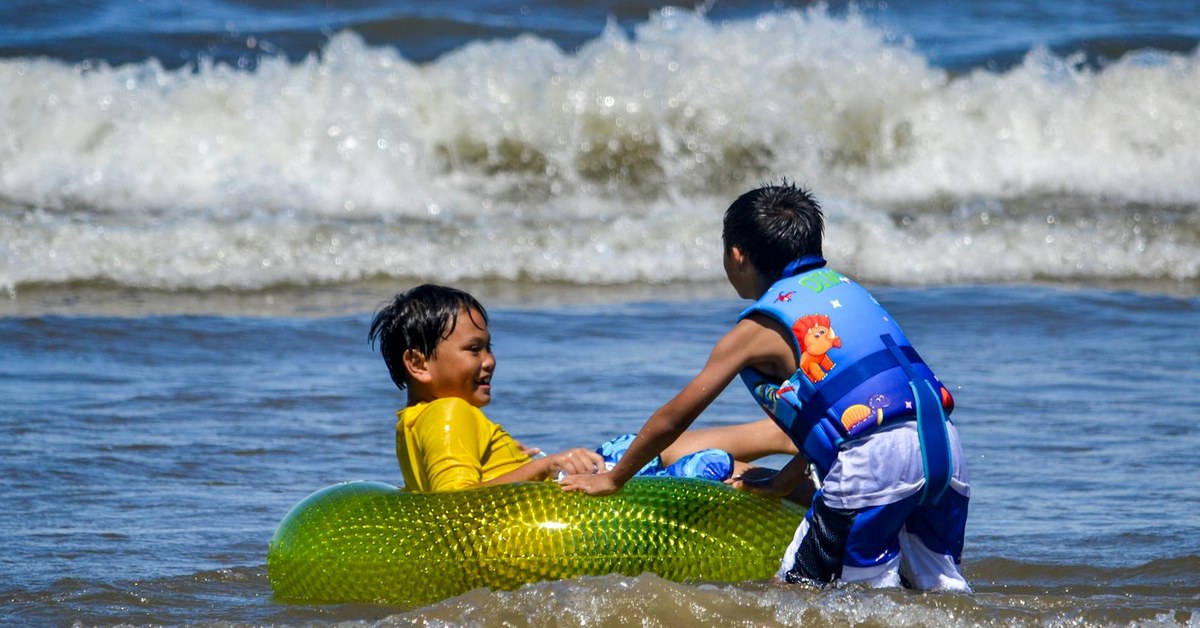
There is a common misconception that armbands, inflatable rings, and other pool toys provide meaningful protection in open water. They do not. These items are not certified life-saving devices and can deflate, slip off, or tip over unexpectedly. They can also give children and carers a false sense of security that leads to reduced vigilance.
Approved life jackets and buoyancy aids, meeting standards such as ISO 12402 in Europe or USCG approval in the United States, are a different matter entirely. These devices are designed to keep a person's face above water even if they are unconscious and are appropriate for use in open water environments. They should be correctly fitted to the child's weight and age.
Swimming ability is valuable but does not eliminate risk. Most childhood drownings occur in children who can swim. Open water presents different challenges to a swimming pool: cold water shock, currents, waves, and poor visibility all affect even competent swimmers. Swimming lessons from an accredited provider are strongly recommended from around age four, but lessons should always be accompanied by appropriate supervision and safety practices.
Sun Protection at the Beach
Sun-related illness is a serious risk for young children at the beach, where UV radiation is intensified by reflection from both water and sand. The World Health Organisation recommends the following for children at the beach:
- Apply broad-spectrum sunscreen of at least SPF 30 (SPF 50 in high UV countries such as Australia) 20 minutes before sun exposure and reapply every two hours, and after swimming.
- Dress children in UV-protective swimwear where available, including long-sleeved rash vests and wide-brimmed hats.
- Seek shade between 10am and 3pm when UV radiation is at its peak.
- Ensure children drink water regularly, as heat and sun exposure increase the risk of dehydration.
- Babies under six months should not be exposed to direct sunlight at all.
What to Do If a Child Is Swept Away
Despite all precautions, incidents can still occur. Knowing how to respond quickly and correctly can be the difference between life and death.
- Shout for help immediately. Alert nearby people and any lifeguards. Do not assume someone else is already doing this.
- Do not enter the water yourself unless you are a trained rescuer. Many adult drownings occur when untrained individuals attempt to rescue a child and are themselves overcome. The force of surf or a rip current can overpower even a strong swimmer.
- Throw something that floats. If a lifebuoy or buoyant object is nearby, throw it towards the child. Many patrolled beaches have these mounted at intervals along the waterfront.
- Keep the child in sight at all times while others seek help or emergency services are contacted.
- If the child is retrieved and not breathing, begin child CPR immediately if trained, and call the emergency services without delay.
How to Find Help at a Beach
Before your family enters the water, establish the location of the nearest lifeguard station or first aid point. On patrolled beaches, lifeguards are identified by their uniforms, which vary by country but typically include distinctive colours such as red and yellow in the UK and Australia.
Agree on a meeting point with older children in case anyone becomes separated. Teach children to approach a lifeguard, a uniformed official, or a family with children if they are lost or in difficulty. In the UK, the RNLI (Royal National Lifeboat Institution) operates many beach lifeguard services. In Australia, Surf Life Saving Australia provides volunteer and professional lifeguard services. In the USA, lifeguard services vary by municipality.
If the beach is unpatrolled, note the nearest emergency telephone number before arriving. In most countries, calling the standard emergency number (999 in the UK, 000 in Australia, 911 in the USA, 112 in Europe) and stating your location is the correct procedure for a water emergency.
Global Beach Safety Standards
Beach safety standards and infrastructure vary considerably around the world. Families travelling internationally should not assume that the safety measures they are accustomed to at home will be present at their destination. Research the specific beach before visiting, check whether it is patrolled during your visit times, and understand that seasonal variations mean some beaches are patrolled only during peak summer months.
The International Life Saving Federation (ILS) coordinates drowning prevention efforts globally and publishes resources suitable for families in all regions. Their guidance consistently highlights that supervision, swimming education, and the use of designated swimming areas are the most effective preventative strategies available.
Summary
The beach is a wonderful environment for children, offering sensory experiences, physical activity, and family connection that are genuinely beneficial. The goal of beach safety education is not to discourage coastal play but to ensure that it happens within a framework of informed, attentive care. Understanding the specific hazards present at any given beach, knowing the meaning of safety flags, providing uninterrupted supervision, using appropriate flotation devices, and knowing how to respond in an emergency are all achievable goals for any family. With proper preparation, the seaside can remain a joyful and safe destination for young children throughout the world.