Water Safety for Children: Swimming Pools
A comprehensive guide to water safety for children of all ages, covering swimming pool safety, open water risks, supervision guidelines, teaching children to swim, and what to do in a water emergency.

Water Safety for Children: Swimming Pools
“A comprehensive guide to water safety for children of all ages, covering swimming pool safety, open water risks, supervision guidelines, teaching children to swim, and what to do in a water emergency.”
Water Safety: A Critical Parenting Priority
Drowning is one of the leading causes of accidental death in children worldwide, and it happens with a speed and silence that most parents do not anticipate. Contrary to the dramatic splashing and calling for help seen in film and television, drowning is typically quiet and swift. A child in difficulty in water often cannot call out because they are using every effort simply to keep their airway above the surface, and they may submerge within 20 to 60 seconds of getting into difficulty.
The good news is that drowning is almost entirely preventable. The combination of close adult supervision, swimming education, physical barriers around water hazards, and teaching children about water safety creates overlapping layers of protection that significantly reduce risk. No single measure is sufficient on its own, but together they are highly effective.
The Age and Developmental Picture
Very young children, particularly those under five, are at the highest risk. They can drown in very shallow water, including garden water features, paddling pools, and even buckets. Their physical inability to self-rescue, combined with their curiosity and lack of understanding of danger, makes constant, close supervision essential whenever water is present.
As children grow and learn to swim, the nature of the risk changes but does not disappear. Older children may become overconfident in their abilities, particularly in open water settings where conditions are very different from a swimming pool. Teenagers may take risks, particularly around peer pressure, that they would not take alone.
Swimming Pool Safety
Home Swimming Pools
If you have a home swimming pool, the single most important safety measure is a four-sided fence with a self-closing, self-latching gate. Research consistently shows that four-sided pool fencing (surrounding the pool on all sides, not just connecting to the house) dramatically reduces drowning risk compared to three-sided fencing. The gate should latch at a height children cannot reach, and should never be propped open.
Additional pool safety measures:
- Never rely on pool covers as safety barriers. A child who falls onto a pool cover may become trapped beneath it as it deflates into the water.
- Install a pool alarm. These devices alert when something enters the water and provide additional warning time.
- Keep rescue equipment, including a reaching pole and a life ring, beside the pool and ensure adults know how to use them.
- Ensure that adult supervisors know CPR. Time to resuscitation is critical in drowning outcomes, and CPR before emergency services arrive saves lives.
Public Swimming Pools
Public pools with lifeguards provide an important additional layer of supervision, but a lifeguard is not a substitute for parental attention. Lifeguards are responsible for many swimmers across a large area. Parental eyes on your own child remain essential.
Teach children to always walk, not run, at pool edges. Establish clear rules about diving: diving into pools of unknown or insufficient depth causes serious spinal injuries. Teach children to enter an unfamiliar pool feet-first until the depth is established.
Open Water Safety
Rivers, lakes, the sea, reservoirs, canals, and other natural bodies of water present a very different risk profile from swimming pools. They are unpredictable, often cold, may have hidden currents or undertows, and can have poor visibility that makes spotting a child in difficulty much harder. Open water drowning statistics show a disproportionate number of incidents involving young men in their teens and early twenties, often related to risk-taking and alcohol, but children of all ages are vulnerable.
Cold Water Shock
One of the most underappreciated open water dangers is cold water shock. Even in summer, many rivers, lakes, and coastal waters remain cold enough to trigger an involuntary gasping response on sudden immersion. This can cause immediate inhalation of water, hyperventilation, and cardiac arrest in some individuals. Cold water shock affects even strong, confident swimmers and can incapacitate them within seconds of entering the water.
Teach children that even if they can see others swimming in open water, they should never jump or dive into open water of unknown temperature, and that a cold gasp on entry is a warning signal, not something to push through.
Currents and Tides
Rivers often have currents that are far stronger than they appear from the surface, particularly after rain. Tidal waters are safe at some stages and dangerous at others. Rip currents at beaches can carry strong adult swimmers out to sea. Children and families who are unfamiliar with a particular water environment should seek local information before entering the water and should observe any safety flags or signs displayed at beaches and waterways.
Supervision at Open Water
In open water settings, close supervision is even more critical than at a pool. Water visibility is often lower, the boundaries are less defined, and the range of hazards is broader. Children should never swim alone in open water, and adults supervising children in open water should be within immediate reaching distance for young children, and should maintain close visual contact at all times for older children.
Teaching Children to Swim
Swimming lessons are one of the most effective drowning prevention tools available, and most organisations recommend starting lessons as early as possible, with many programmes accepting children from infancy for water familiarisation and from around three or four for formal swimming lessons.
The goal of swimming lessons is not just the ability to perform strokes in a pool. True water safety includes the ability to float and tread water, to self-rescue in a controlled way, to enter the water safely, and to manage the unexpected experience of falling in unexpectedly while clothed. Some swimming programmes specifically include survival skills such as float-on-back recovery after an unexpected fall, which is more relevant to real-world safety than stroke technique alone.
Inflatable and Pool Toys
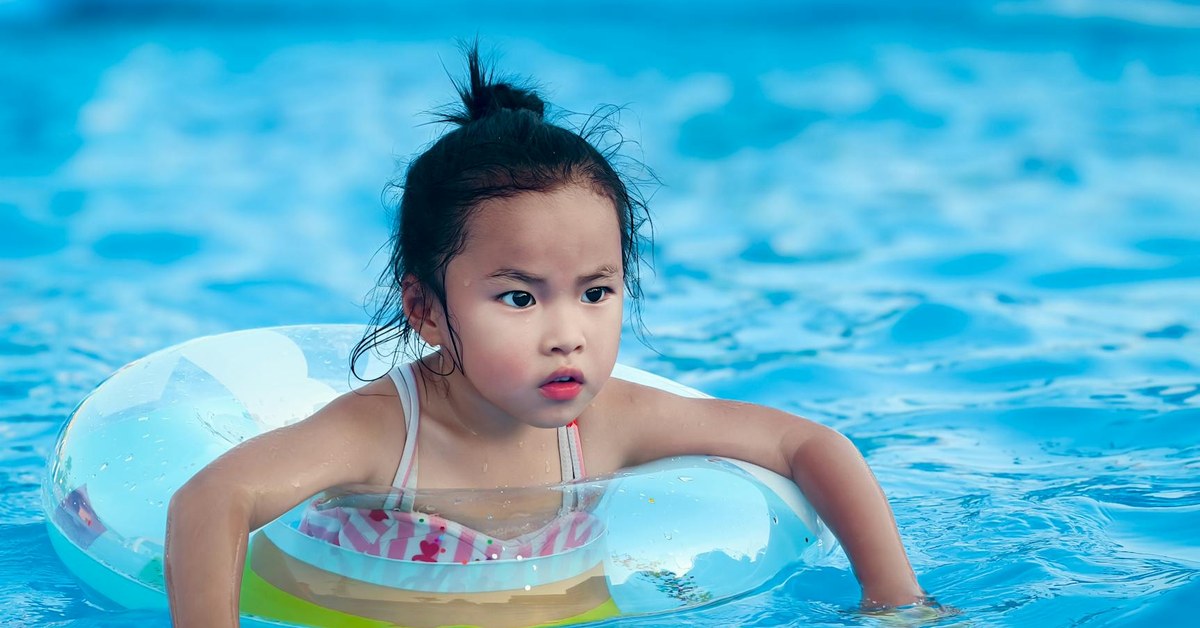
Inflatable armbands, rings, and pool toys are not safety devices and should never be used as a substitute for supervision or swimming ability. A child wearing armbands can still fall face-down in water and be unable to right themselves. Inflatable pool toys can carry young children beyond the safe area of a pool. Always supervise children in water regardless of what they are wearing or using, and ensure they understand that pool toys are not life-saving equipment.
Garden Water Hazards
Domestic gardens often contain water hazards that parents may not immediately recognise as dangerous: ornamental ponds, water butts, paddling pools that have not been emptied, birdbaths, and even large plant pot saucers can pose a drowning risk to toddlers. Very young children can drown in as little as five centimetres of water.
Fence or cover garden ponds when very young children are present. Empty paddling pools after every use and store them upside down or deflated. Check your garden regularly for other water accumulations, particularly after rain.
What to Do If a Child Is Drowning
If you see a child in difficulty in water:
- Call for help immediately. If others are present, direct a specific person to call the emergency services, as bystanders may assume someone else has already done so.
- Do not enter the water yourself unless you are a trained rescuer. Many drowning incidents involve would-be rescuers who also get into difficulty, particularly in cold or fast-moving water.
- Reach from the bank or poolside using a reaching pole, rope, or any available object. Throw a buoyancy aid if available.
- If the child is retrieved from the water and is not breathing, begin CPR immediately and do not stop until emergency services take over. In drowning incidents, prompt CPR has a significant impact on survival and neurological outcomes.
Learning CPR is one of the most valuable skills any parent can acquire. Many organisations offer short, accessible CPR courses for members of the public, and the knowledge is immediately transferable to any emergency situation, in water or otherwise.