Water Safety on Holiday Abroad with Young Children
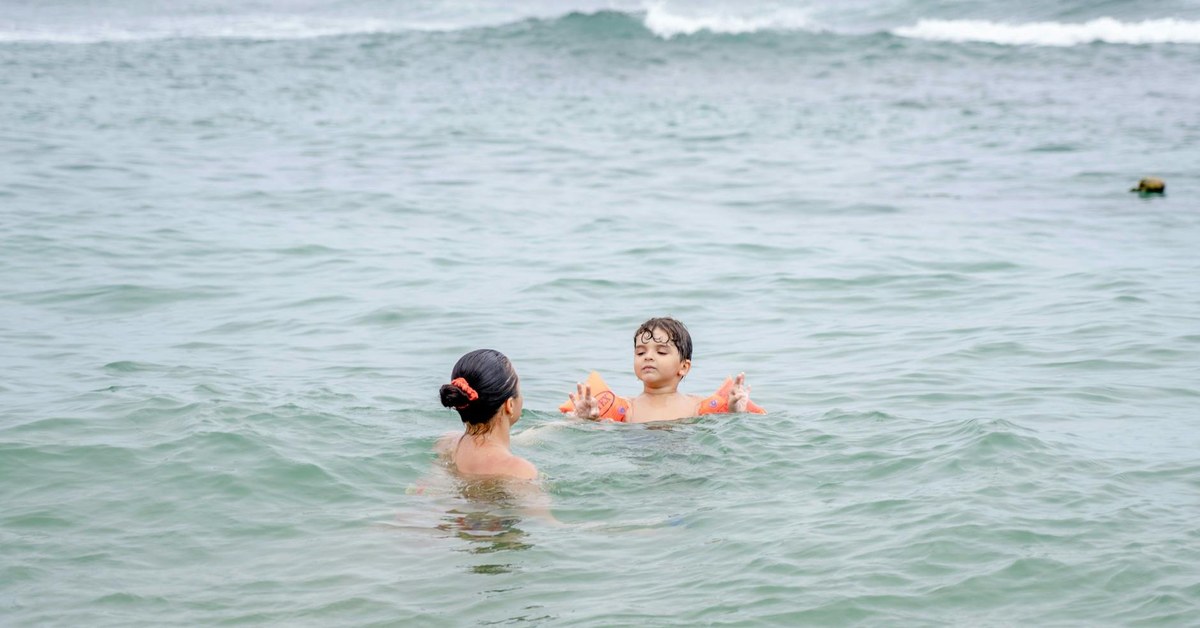

Water Safety on Holiday Abroad with Young Children
The Particular Risks of Water Abroad
Taking young children on holiday abroad introduces water safety challenges that differ significantly from those at home. Familiar swimming venues, known lifeguards, understood warning systems, and established routines provide a degree of automatic safety at home that disappears when families travel. In an unfamiliar environment, parents must actively reconstruct the safety framework they take for granted in their usual setting, often while managing the competing demands of relaxation, jet lag, and excited children who want to get into the water immediately.
Drowning is one of the leading causes of unintentional injury death in children worldwide, and a disproportionate number of these incidents occur during holiday periods. The combination of unfamiliar water environments, altered supervision routines, the relaxed attention that holidays encourage, and the consumption of alcohol by supervising adults creates conditions in which children are at considerably elevated risk. Understanding these risks and planning specifically to mitigate them is a fundamental part of travelling safely with young children.
Hotel and Apartment Pool Safety
Hotel and apartment complex pools abroad vary enormously in their safety standards. Unlike public swimming pools in many countries, which are subject to regulated safety requirements, holiday pools may have little or no oversight. The presence or absence of a lifeguard, the depth marking and accessibility of depth information, the condition of pool surfaces and surroundings, and the quality of any fencing or gating around the pool all require assessment by parents.
When arriving at holiday accommodation, inspect the pool before allowing children near it. Specific things to assess include:
- Whether there is a fence or barrier preventing unsupervised access, and whether any gate self-closes and latches at height
- The depth of the pool at various points, and whether this is clearly marked
- Whether a lifeguard is present, and during what hours
- The condition of the pool surround (slippery tiles significantly increase the risk of falls)
- Whether emergency equipment (a reaching pole, lifebuoy, or similar) is visible and accessible
- The proximity of the pool to sleeping areas where a child could potentially access it unsupervised
Children have drowned in hotel pools in very short periods of time when adult attention was diverted briefly. The "touch supervision" rule, which requires a designated adult to remain within arm's reach of a non-swimming child at all times while in or near the water, should apply without exception. During pool time abroad, one adult should be designated the "water watcher" and should not be reading, looking at a phone, or in conversation in a way that diverts attention from the children in the water.
Unfenced Pools in Self-Catering Accommodation
Private holiday villas and self-catering properties with private pools present a specific and serious risk. These pools are frequently unfenced, particularly in countries where pool fencing is not legally required. A child who wakes early, or who slips away from adult supervision for a few minutes, can access an unfenced pool with fatal consequences.
When booking self-catering accommodation with a pool, parents should explicitly ask whether the pool is fenced and whether the gate is self-closing. Photographs on rental websites do not always show fencing clearly, and even where fencing appears in images, its adequacy should be confirmed before booking. Some rental platforms allow parents to filter for "fenced pool" but this feature is not universally available.
If you arrive at accommodation and find the pool is not adequately fenced, this is a significant safety concern that should be raised immediately with the property owner or rental company. In the interim, parents of young children should consider whether rooms with direct access to pool areas can be locked from the inside, and should ensure that any accessible doors or gates near the pool are secured at night and during nap times.
Open Water Safety Abroad
Rivers, lakes, reservoirs, and other open water bodies abroad present hazards that are often underestimated by families accustomed to relatively safe swimming environments at home. Open water can be cold even in warm weather countries, with cold water shock a serious risk. Currents, submerged objects, weeds, and rapidly changing depths create dangers that are invisible from the surface. Water quality varies significantly, and contamination that is not visible can cause serious illness.
Children who are confident swimmers in a pool may find open water dramatically more challenging. The absence of lane lines, the limited visibility below the surface, the presence of currents, and the physical demands of water that may be significantly colder than a pool can all reduce a child's effective swimming ability substantially.
Before allowing children to swim in any open water abroad, parents should:
- Check whether the location is designated as safe for swimming, ideally by a local authority
- Look for posted signs indicating water quality and any known hazards
- Assess the entry and exit points for stability and ease of access
- Observe the water for visible currents, particular roughness, or colour that might indicate contamination
- Ask local people or accommodation staff about the safety reputation of the specific location
In many popular holiday destinations, deaths and serious injuries in open water are a recurring issue that local authorities are well aware of. Local knowledge about which areas are safe and which are not is invaluable and should be sought actively.
Rip Current Awareness at Unfamiliar Beaches
Rip currents, sometimes called rip tides, are powerful, narrow channels of water flowing away from shore. They are responsible for the majority of lifeguard rescues at beaches worldwide and are a significant cause of drowning. They are most dangerous because they are often not visible from the shore to the untrained eye, and because swimmers who encounter one frequently exhaust themselves attempting to swim directly back against the current.
Signs that a rip current may be present include:
- A choppy, turbulent patch of water extending outward from the shore
- A discoloured streak of water, often darker or browner than the surrounding sea
- An area where the surface appears flatter, with fewer breaking waves than the surrounding sea
- Foam or debris being carried steadily offshore
At unfamiliar beaches, parents should always seek out the safest swimming area, which in many beach destinations is indicated by red and yellow flags and patrolled by lifeguards. Swimming between the flags should be treated as a firm rule for children, and ideally for adults too. Parents who are not strong ocean swimmers should not swim in areas where rip currents are present, as the ability to assist a child in difficulty depends on the adult being a capable swimmer.
Teaching children the correct response to a rip current, specifically to swim parallel to the shore rather than against the current, is a valuable piece of water safety education that can save lives. Children of an appropriate age (generally from around seven or eight years, depending on maturity and swimming ability) can understand and remember this instruction.
Beach Safety Beyond Rip Currents
Beaches abroad carry other hazards beyond rip currents. In some coastal areas, jellyfish are present in significant numbers, and several species produce stings that are intensely painful and occasionally dangerous, particularly for young children. Local advice on jellyfish risk should be sought; in many beach destinations, jellyfish presence is monitored and reported through local media and beach authority websites.
Waves, including unexpected larger waves, pose a significant risk to young children who are playing in shallow water. Children can be knocked off their feet and tumbled by waves that appear manageable to an adult. Young children should not be left to play at the water's edge without close supervision, even in apparently calm conditions. Wave conditions can change rapidly, and children lack the physical strength and experience to recover from unexpected wave activity.
Sun exposure at beaches abroad can be intense, particularly in tropical and subtropical destinations. Heat exhaustion and severe sunburn represent serious health risks for young children, and parents should ensure adequate sun protection (appropriate SPF sunscreen applied regularly, UV protective clothing, hats) and regular breaks from the direct sun, with access to shade and adequate hydration.
Water Park Safety
Water parks are a popular holiday activity for families, and most operate under commercial safety requirements. However, parents should not assume that all water parks abroad operate to the same safety standards as those at home. Standards vary considerably between countries and between individual parks.
Key safety considerations at water parks include:
- Age and height restrictions: These restrictions exist for physical safety reasons, not as arbitrary rules. Children who do not meet the minimum height for a particular ride may be unable to maintain safe positioning through the ride, increasing the risk of injury. These restrictions must be observed even when a child is disappointed.
- Wave pools: Wave pools present particular risks for young children and non-confident swimmers. The sudden and powerful waves can overwhelm small children, and the density of bodies in the water can make it difficult for lifeguards to spot a child in difficulty. Young and non-swimming children should not be in wave pools without an adult immediately alongside them.
- Queue and entry supervision: The transition points, when children are waiting to use a ride and when they enter the water at the bottom, are common points for incidents. Maintaining visual contact at these points requires active attention.
- Lifeguard coverage: Observe whether lifeguards appear alert and positioned appropriately. A lifeguard looking at their phone or engaged in conversation is not performing their safety function effectively.
Life jackets or buoyancy aids should be used for any child who is not a confident swimmer in deep water environments, including wave pools. Many water parks provide these free of charge; parents should ask if they are not prominently available.
Swimming Ability Differences Across Contexts
It is worth noting that swimming ability varies considerably around the world, and parents should not assume that activity recommendations or supervision standards at a holiday destination reflect the same benchmarks they are familiar with at home. In some countries, a majority of children receive structured swimming instruction from an early age; in others, this is much less common. This does not affect the practical safety requirements for your child, but it may affect how local providers and facilities perceive risk and set expectations.
Parents should make an honest assessment of their child's swimming ability in the specific context of the holiday environment. A child who can swim a length of a pool with confidence is not necessarily safe in the sea, in a large hotel pool, or in a fast-flowing river. Applying conservative supervision standards in unfamiliar water is always appropriate, regardless of the child's demonstrated ability in familiar settings.
Emergency Procedures and Numbers Abroad
Before arriving at any holiday destination, parents should identify the local emergency number for water rescue and medical emergencies. These vary by country: 999 in the UK, 112 across the European Union (including all EU member states), 000 in Australia, 911 in North America. In some destinations, the beach rescue service may have a separate number from the general emergency number, and where a lifeguard service operates, knowing how to contact them directly is valuable.
Parents should also locate the nearest hospital or emergency medical facility to their accommodation before any water activities take place. In remote holiday destinations, the distance to medical care may be significant, and knowing in advance where to go removes a critical delay in an emergency. Travel insurance that covers emergency medical evacuation is an important protection for families travelling to destinations where hospital facilities are limited.
Carrying a waterproof phone case or having one adult remain on the pool or beach side with a phone readily available is practical preparation that ensures communication is possible in an emergency without delay.
Preparing Children for Water Safety Abroad
Discussing water safety with children before a holiday, in age-appropriate terms, is a valuable preparation. Children who understand why rules exist are generally more likely to observe them. Explaining that the sea works differently from a pool, that pools abroad might be deeper or not have a shallow end, or that they should always tell an adult before going near water prepares children to cooperate with safety arrangements rather than experience them as arbitrary restrictions.
For children who are not yet confident swimmers, a holiday that involves significant water activity is an excellent motivation to enrol in swimming lessons in advance. Even a short block of lessons can significantly improve a child's safety in the water. Building basic water skills, including floating on the back, is one of the most important things parents can do to reduce drowning risk for their children, whatever the water environment.